

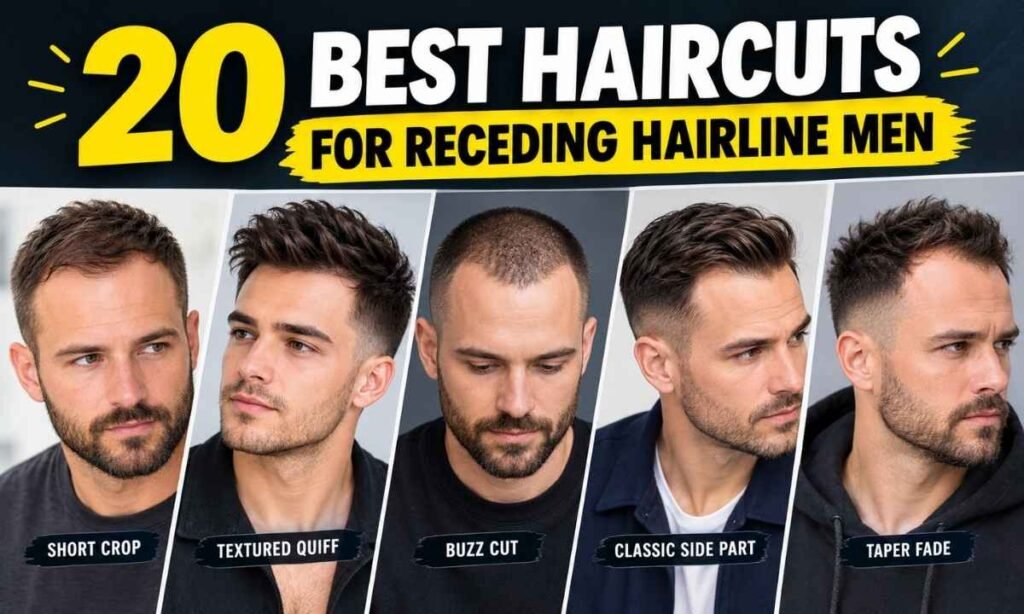
The best haircuts for a receding hairline are short to medium styles with texture. Good options include a textured crop, crew cut, taper or fade with a short top, and a buzz cut. These cuts reduce the contrast between your temples and the hair around them, and they put visual weight where you still have density. Long slick-backs and comb-overs usually do the opposite.
No haircut stops hair loss, but the right one changes how noticeable it is. This guide covers 20 cuts grouped by style, how to match a cut to your stage of recession, face shape and hair type advice, what to avoid, how to talk to your barber, how to style the cut at home, and what actually treats the underlying cause.
Quick Answer: Which Haircut Should You Pick?
| Your situation | Best options |
|---|---|
| Early recession, good density | Textured crop, quiff, side part with taper |
| Deeper temples, medium density | Crew cut, mid fade, French crop |
| Thinning on top as well | Buzz cut, skin fade, clean shave |
| Curly or coily hair | Curly top with taper, shaped coily top with fade |
| Low-maintenance preference | Buzz cut, high and tight, crew cut |
| Office or formal setting | Low taper, side part, Ivy League |
Is It a Receding Hairline or a Mature Hairline?
Before choosing a cut, it helps to know what you’re dealing with. Many men notice their teenage hairline move back slightly in their late teens or twenties. This is called a mature hairline. It usually settles a finger-width or so above the highest forehead crease, and it’s a normal part of development.
Signs of a Mature Hairline
- The hairline has held steady for a couple of years
- The front edge is as thick and dark as the rest of your hair
- There is no visible thinning behind the hairline
- Recession is fairly even on both sides
Signs of Pattern Hair Loss
- The hairline keeps moving back over months or years
- Hairs at the front edge look finer, shorter, or lighter than before
- The temples recede into a deepening M or V shape
- The crown or mid-scalp is also thinning
- There’s a family history of hair loss on either side
Take photos every few months in the same lighting and from the same angles. This tells you far more than a single mirror check. If the change is ongoing, a dermatologist can confirm the cause with a magnified scalp exam and rule out other conditions such as thyroid problems, nutritional deficiency, or traction hair loss.
Understanding the Norwood Scale
The Norwood scale is the standard way to describe male pattern hair loss. It runs from stage 1 (no recession) to stage 7 (extensive loss). Stage 3 is commonly treated as the first stage of clinically noticeable balding, when the M-shape at the temples deepens. Stage labels are a rough guide rather than a diagnosis, but they help you choose a cut.
| Stage | What you see | Cuts that work |
|---|---|---|
| Norwood 1 | No significant recession | Almost any cut |
| Norwood 2 (mild) | Slight, even temple recession | Textured crop, quiff, side part with taper |
| Norwood 3 (moderate) | Deeper M-shape at the temples | Crew cut, mid fade, French crop, faux hawk |
| Norwood 3 vertex / 4 | Front recession plus thinning at the crown | Short crop, buzz cut, skin fade |
| Norwood 5 and up | Large bald areas, thin bridge of hair between them | Buzz cut, clean shave |
What Makes a Haircut Work for a Receding Hairline?
Two principles explain almost every recommendation below.
1. Reduce the contrast between the temples and nearby hair. The eye notices sharp differences. A long, dense top beside bare temples makes the recession stand out. Shorter, more uniform lengths make the transition less noticeable.
2. Put volume where you still have hair. Height and texture on the top and center draw attention upward and away from the front corners.
Cuts that outline the hairline, such as flat slick-backs and razor-sharp line-ups, tend to fail because they highlight the exact area you’re trying to downplay.
The 20 Best Haircuts for a Receding Hairline
Best Short Haircuts
1. Buzz Cut
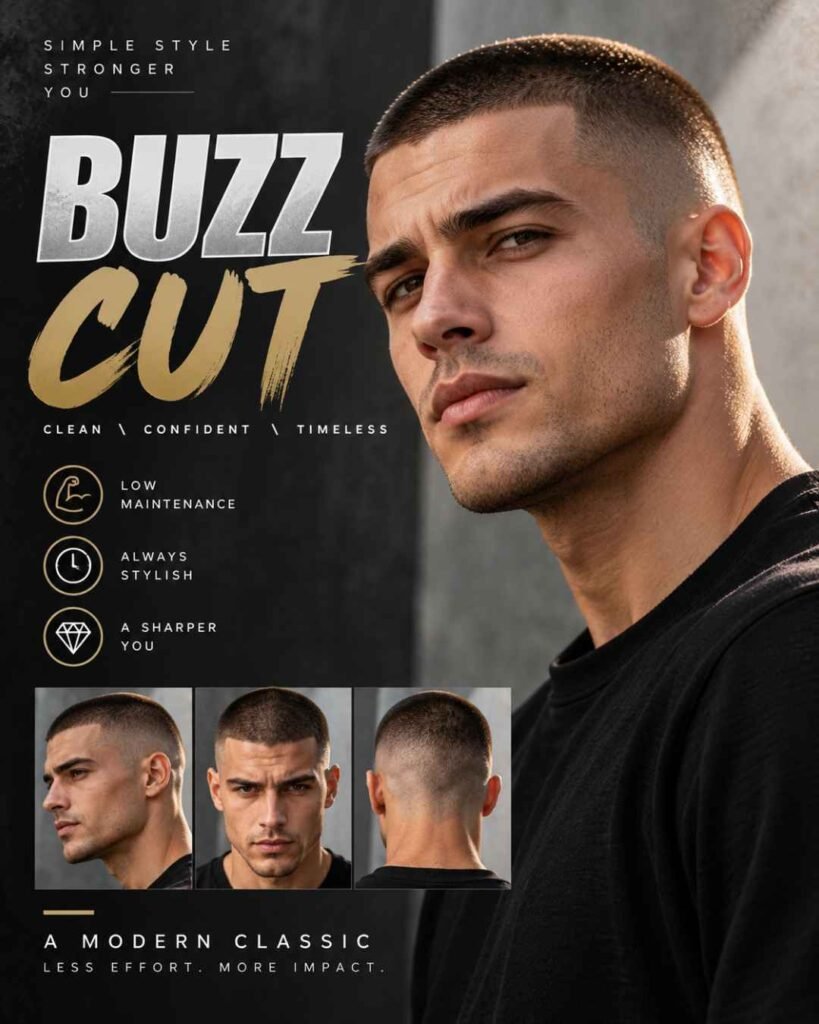
One even length, usually a number 2 to 4 guard, removes the contrast that makes temples stand out. It suits nearly every face shape and needs no styling. If your scalp is pale, avoid going as short as a number 1, which can show skin through thinner areas.
- Best for: Moderate to advanced recession
- Maintenance: Trim every 2 to 3 weeks
- Tip: Try a number 3 first. You can always go shorter.
2. Crew Cut
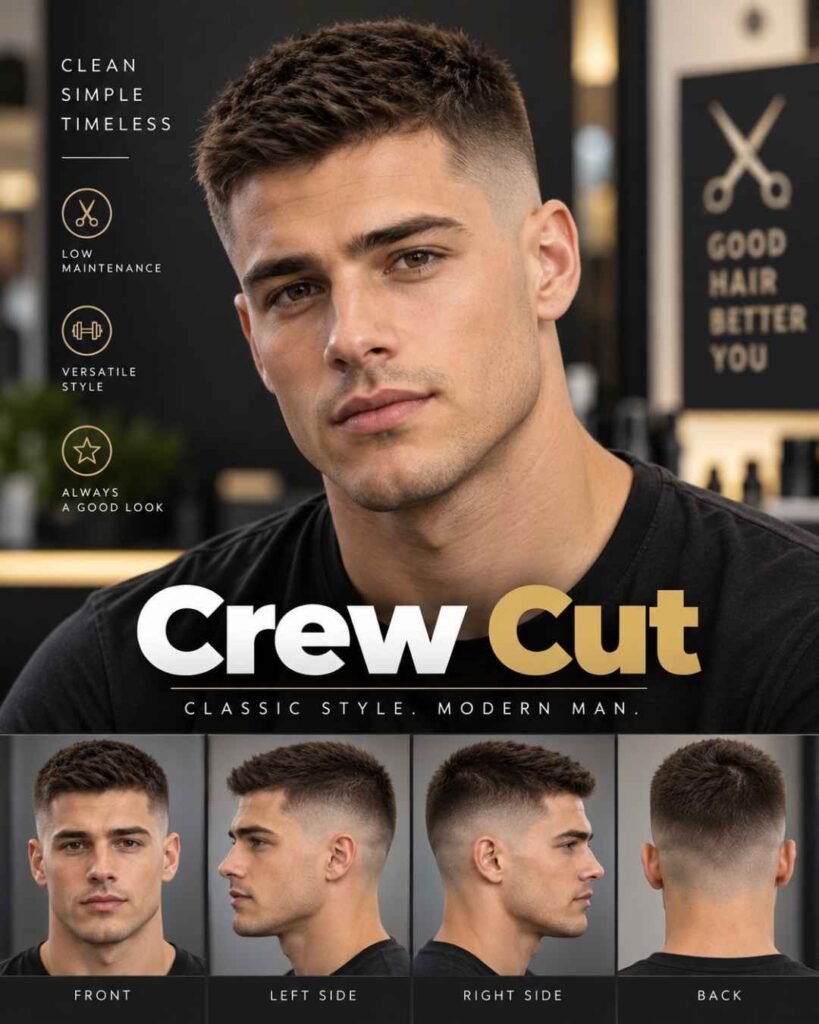
Tapered sides with about an inch on top, brushed slightly up and forward. The lift makes the front look fuller, and the tight sides stop the temples from looking deep. A pinch of matte product is all it needs.
- Best for: Norwood 2 to 3
- Maintenance: Every 3 to 4 weeks
- Tip: Ask for the top to be left slightly longer at the front so it can be brushed forward.
3. Caesar Cut
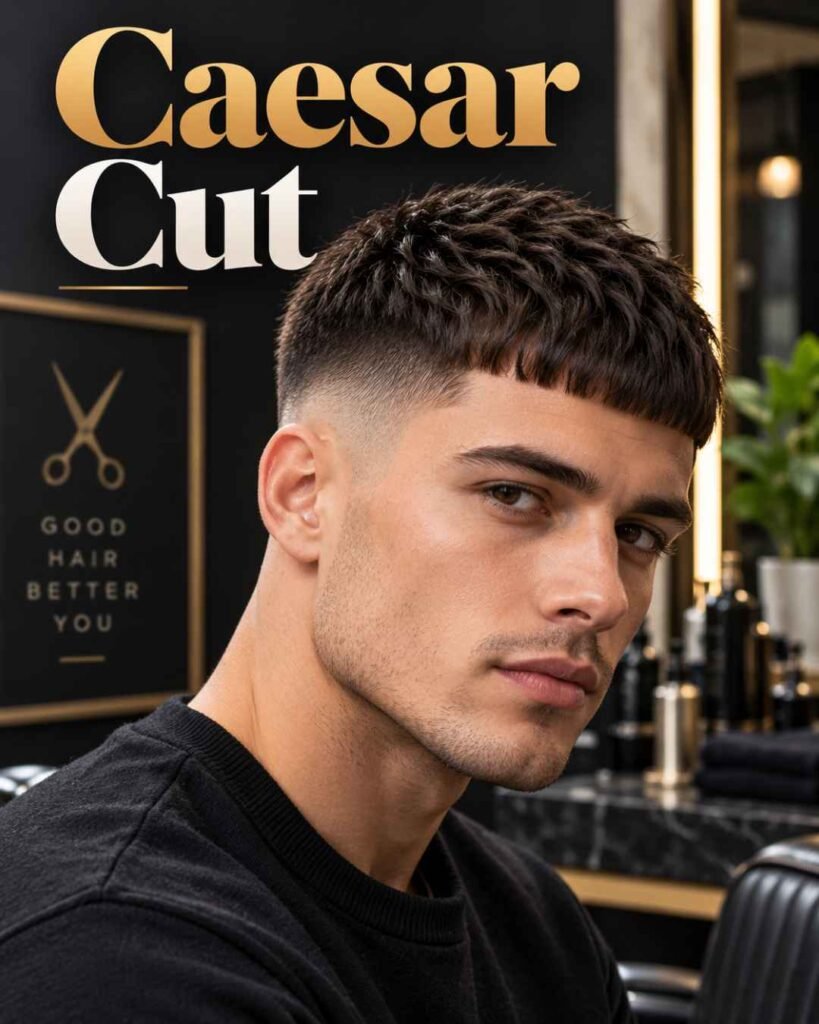
A short, even length combed forward into a horizontal fringe. The fringe sits over the front edge and hides mild recession without looking like a comb-over. Keep it around half an inch to an inch and ask for a straight-across cut.
- Best for: Mild to moderate recession with decent frontal density
- Maintenance: Every 3 to 4 weeks
- Tip: Works best on straight to slightly wavy hair.
Textured Cuts That Cover a Receding Hairline
4. Textured Crop

Short sides with a choppy, point-cut top and a forward fringe. The texture breaks up the hairline instead of outlining it. Keep the fringe short with a soft edge, because a long, heavy one starts to look like a comb-over.
- Best for: Mild to moderate recession
- Products: Matte clay or sea salt spray
- Tip: Ask your barber to point-cut or razor-texture the top.
5. French Crop
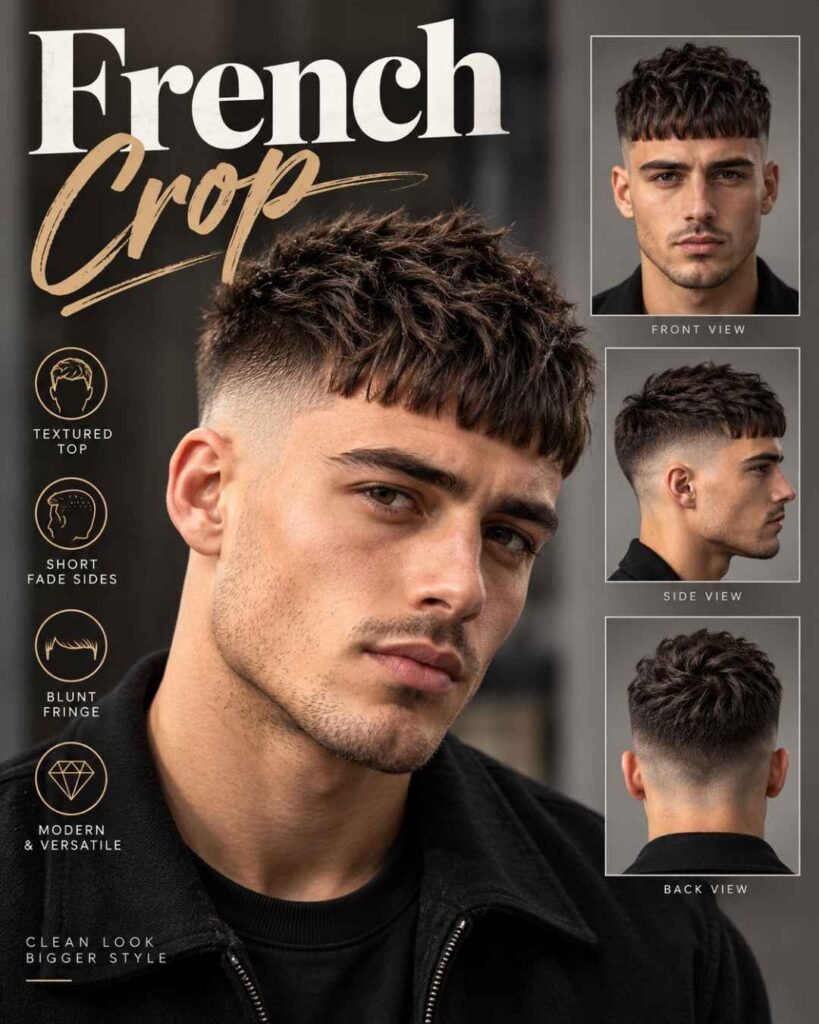
A short, blunt fringe over a low fade or taper. It works best on straight to wavy hair with decent density at the front. Choose this if you want a defined style without much height.
- Best for: Norwood 2 to 3 with a solid front
- Maintenance: Every 3 to 4 weeks
- Tip: The fringe should end well above the eyebrows.
6. Messy Forward Fringe
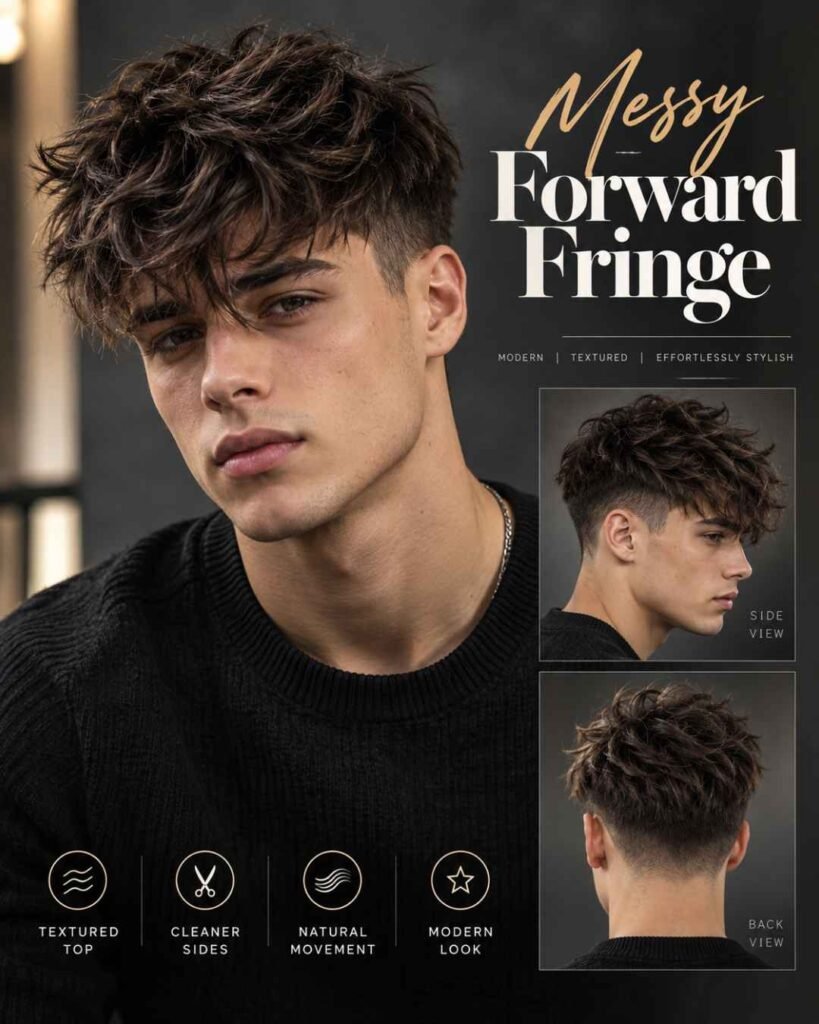
Slightly longer than a crop and pushed forward and sideways with paste. Wavy hair does well here because natural movement hides the exact hairline. Skip it if the front is very sparse, since thin hair separates.
- Best for: Wavy hair, mild recession
- Products: Light paste or fiber
- Tip: Dry with your fingers rather than a brush for a looser look.
Volume Styles for Early Recession
7. Quiff
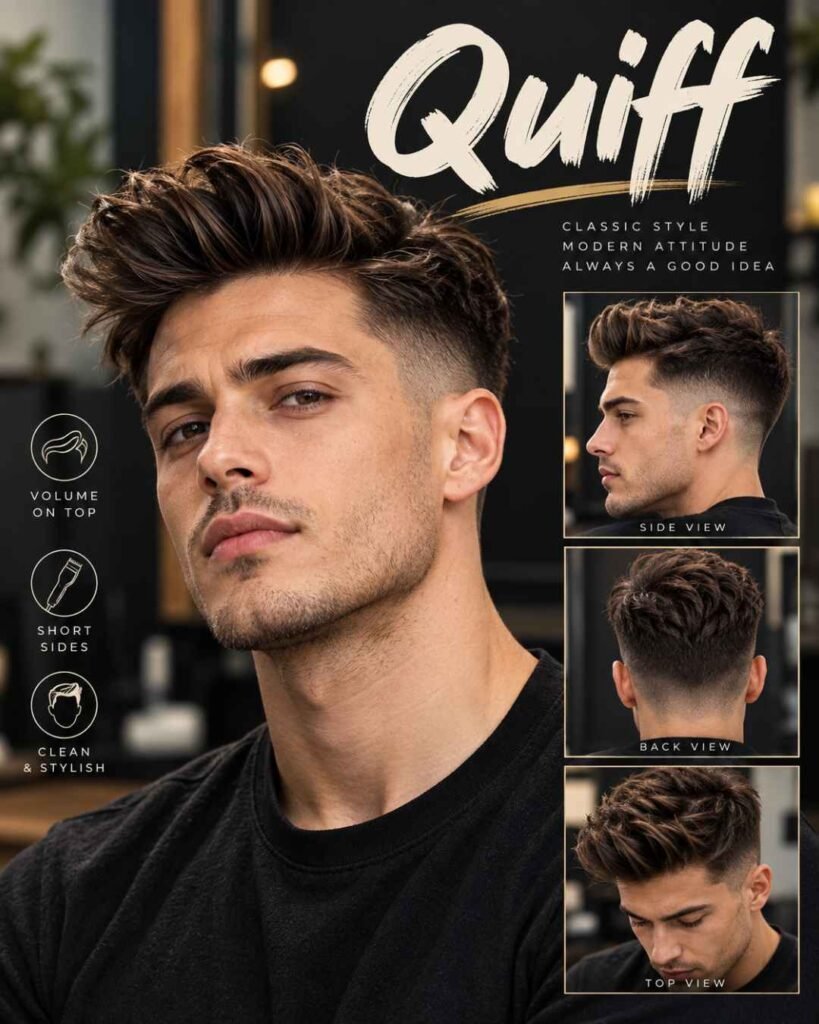
The top is swept up and back from the forehead. Height draws the eye upward, away from the temples. Blow-dry at the roots, use a light-hold product, and keep the sides tapered so the volume looks intentional.
- Best for: Early recession with good density
- Products: Volumizing spray, light clay
- Tip: Avoid shiny, heavy pomade, which flattens the lift.
8. Faux Hawk
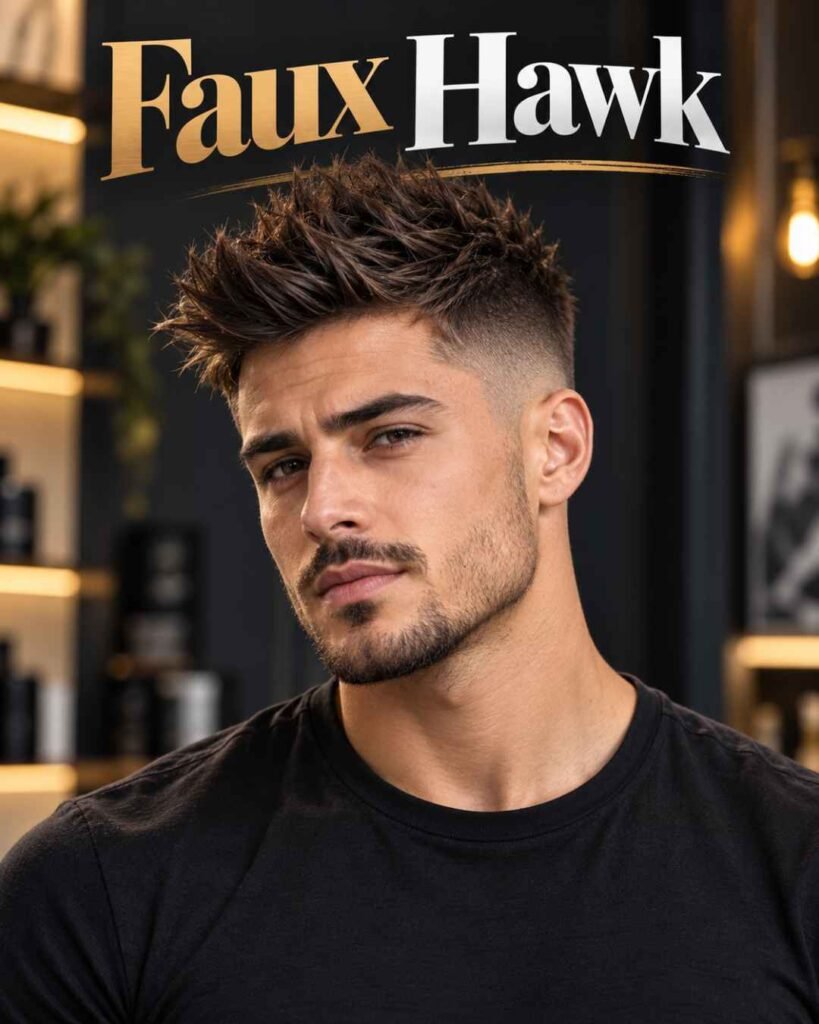
A narrower, taller cousin of the quiff, with length concentrated down the center. Faded sides pull attention off the temples. It suits moderate recession if you want a bolder look and have enough hair along the middle.
- Best for: Moderate recession, dense center
- Maintenance: Every 3 weeks to keep the sides crisp
- Tip: Keep the sides short enough that the hairline doesn’t read as part of the shape.
9. Short Pompadour
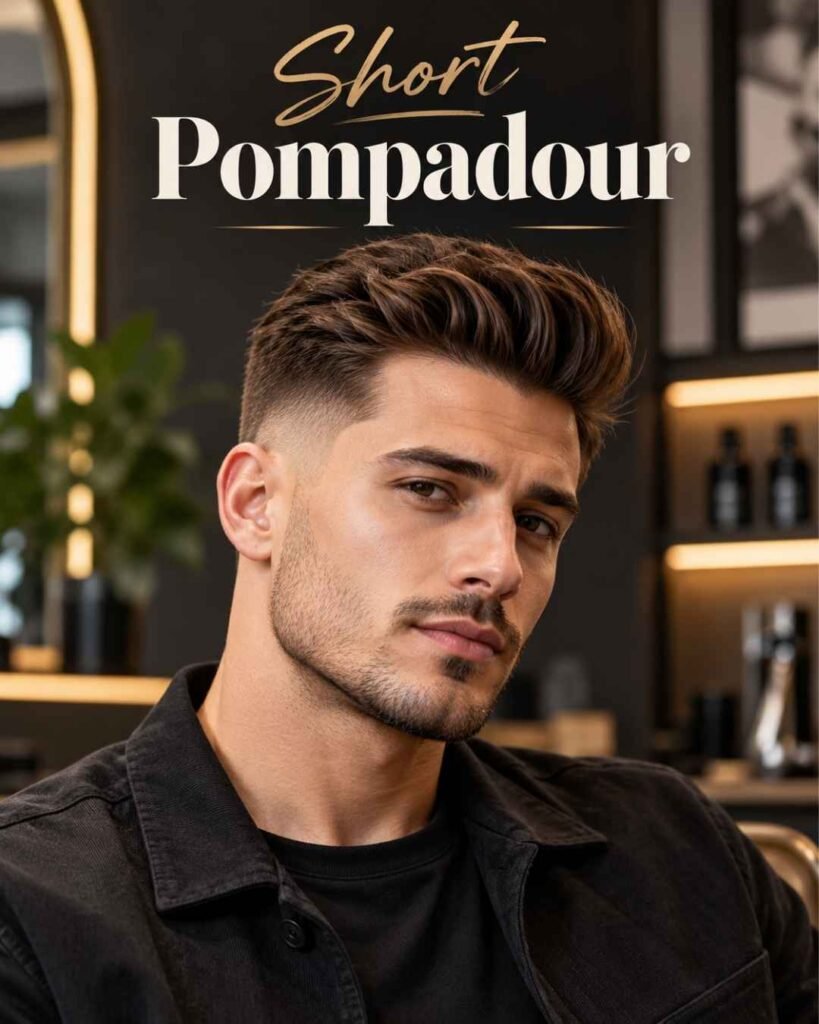
Keep two to three inches on top with faded sides. The shape is dramatic, but it only works when the middle of the head is dense. If the crown is thin, the lift can look patchy, so choose a quiff instead.
- Best for: Early recession with thick hair
- Tip: Use a blow dryer and round brush for lift, then a light-hold product.
Structured Styles
10. Side Part with Taper
Part where your hair already falls naturally. The taper keeps the sides neat, and the part guides hair across the front edge. Keep the top short to medium so it never drifts into comb-over territory.
- Best for: Early recession, professional settings
- Tip: A soft, natural part works better than a razor-cut hard part.
11. Ivy League
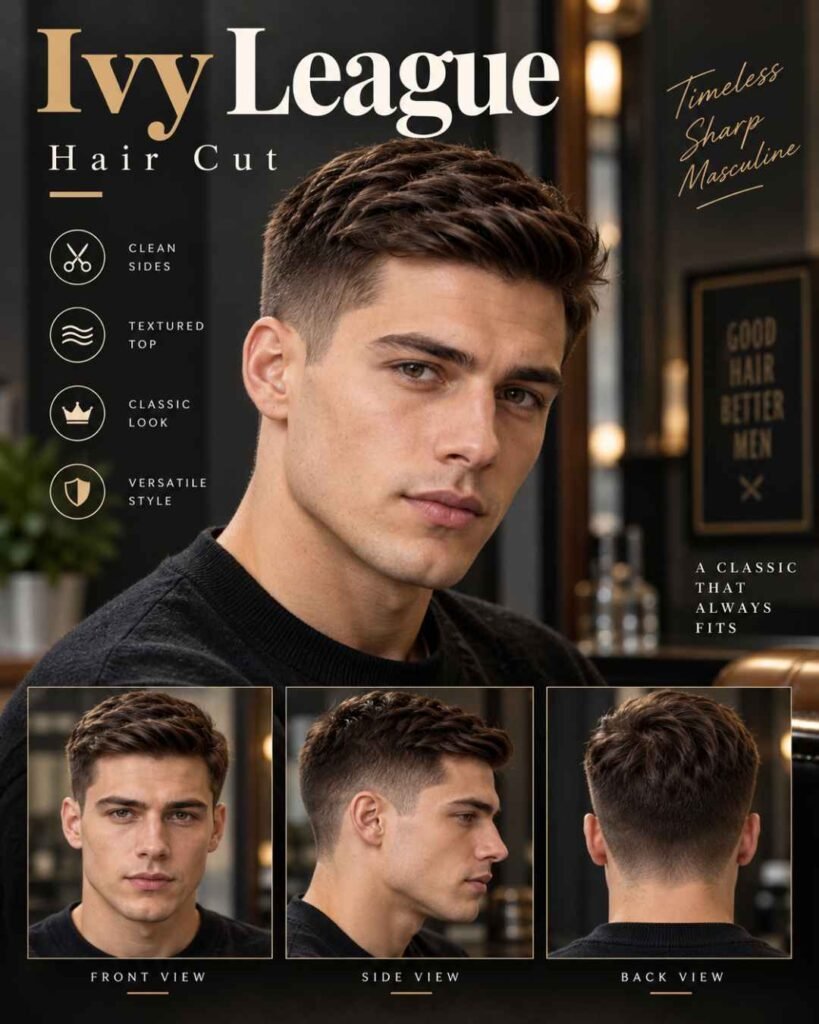
A slightly longer crew cut with enough length to brush to one side. It looks polished and formal. It works best when recession is early and the hair at the front is still fairly thick.
- Best for: Mild recession
- Tip: Keep the front length shorter than the side-part length so it doesn’t separate.
12. High and Tight
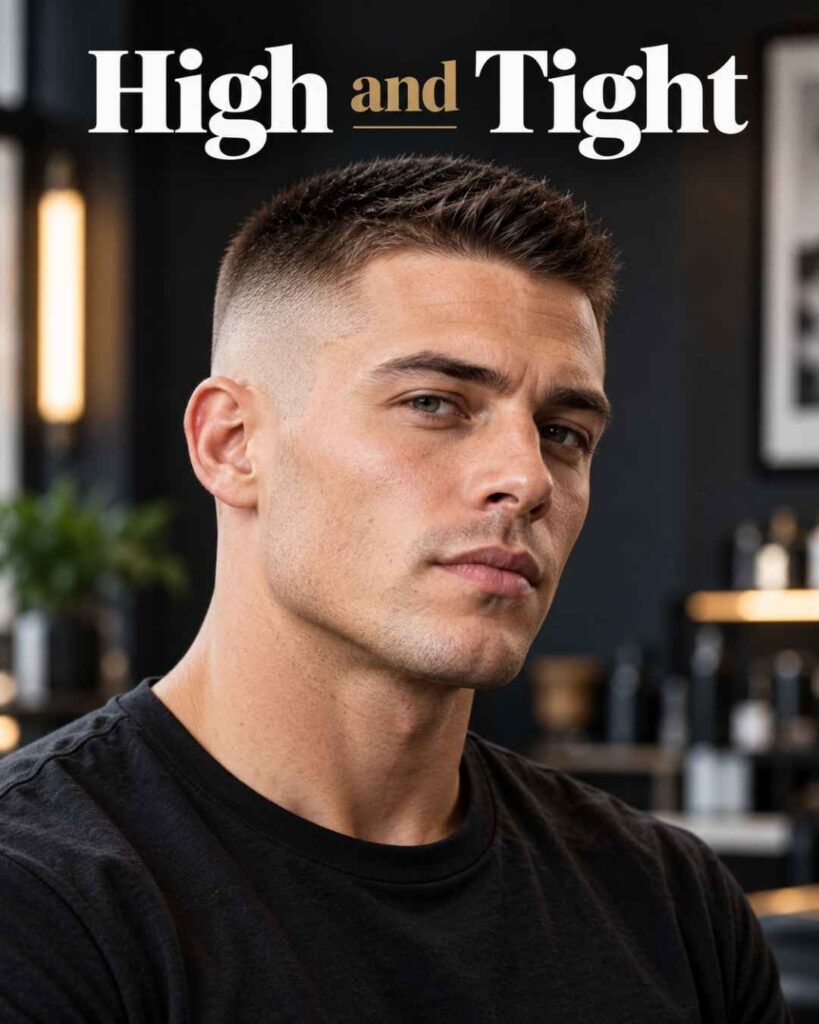
Very short sides with one to two inches on top. The top stays uniform, so there is no long hair next to a bare temple. It is a good pick for deeper recession and needs almost no upkeep.
- Best for: Moderate to advanced recession
- Maintenance: Every 2 to 3 weeks
Best Fades for a Receding Hairline
13. Low Taper
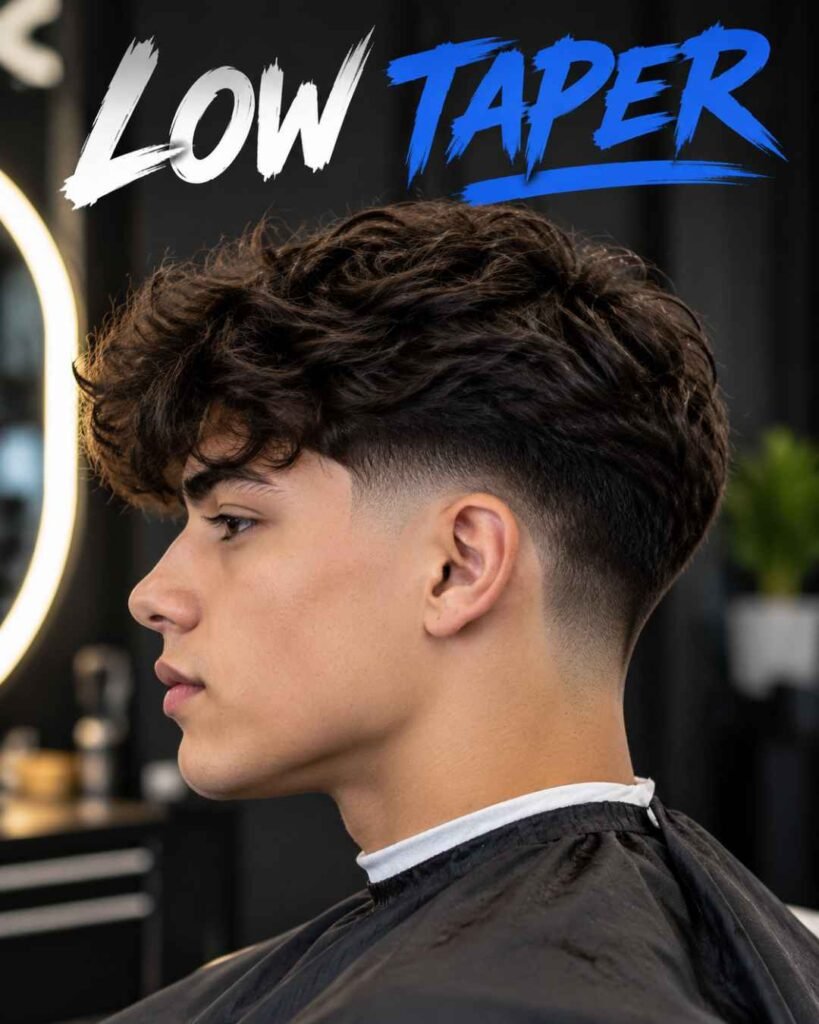
The gentlest option. Sides and neckline shorten gradually and stay close to your natural line. It pairs with almost any top and suits early recession and office settings.
14. Mid Fade with a Textured Top
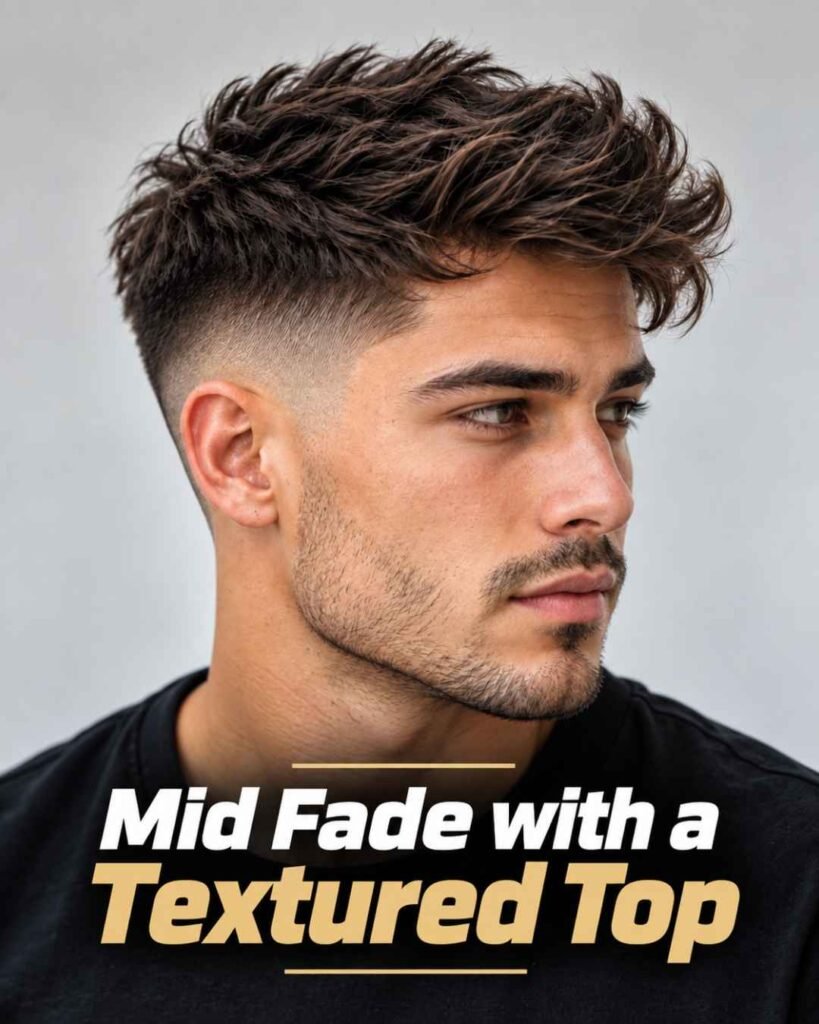
The fade starts around the temple level and moves the eye to the shape of the top. Pair it with a crop or short quiff. It is a balanced choice for moderate recession.
15. High Skin Fade
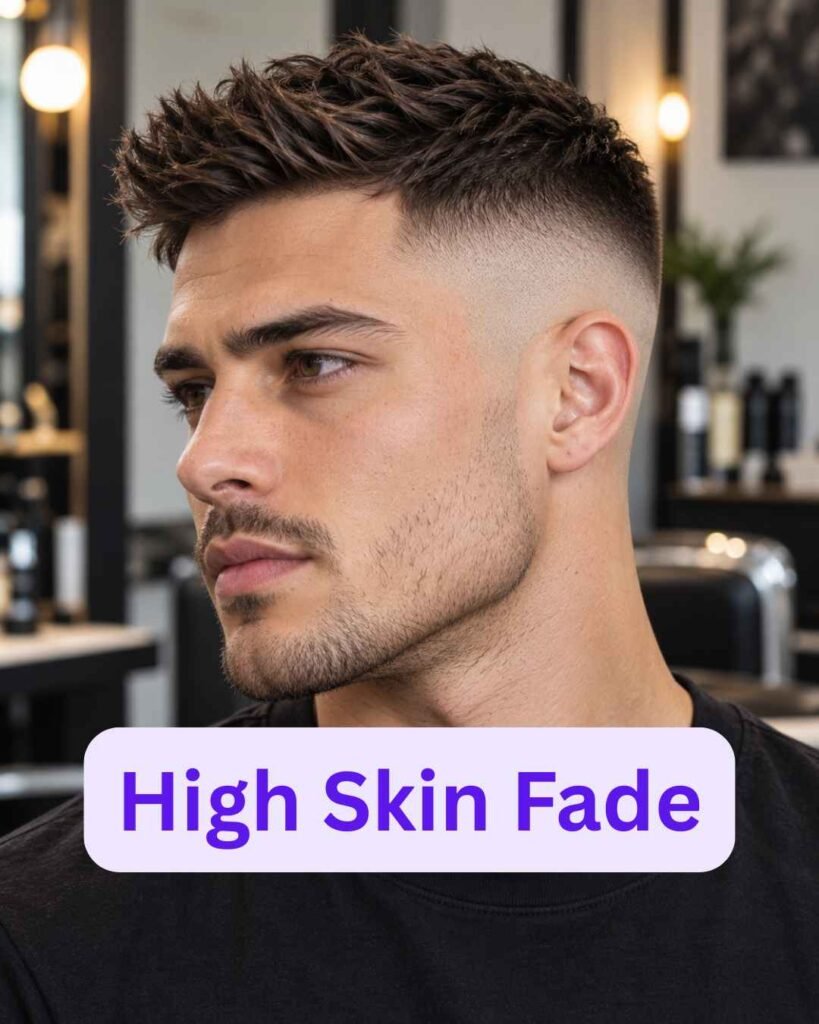
Sides go to bare skin high on the head. The strong contrast between skin and top makes the whole cut the focus rather than the hairline. Keep the top short and textured, because a long top beside skin-short sides can exaggerate recession.
16. Drop Fade with a Short Top
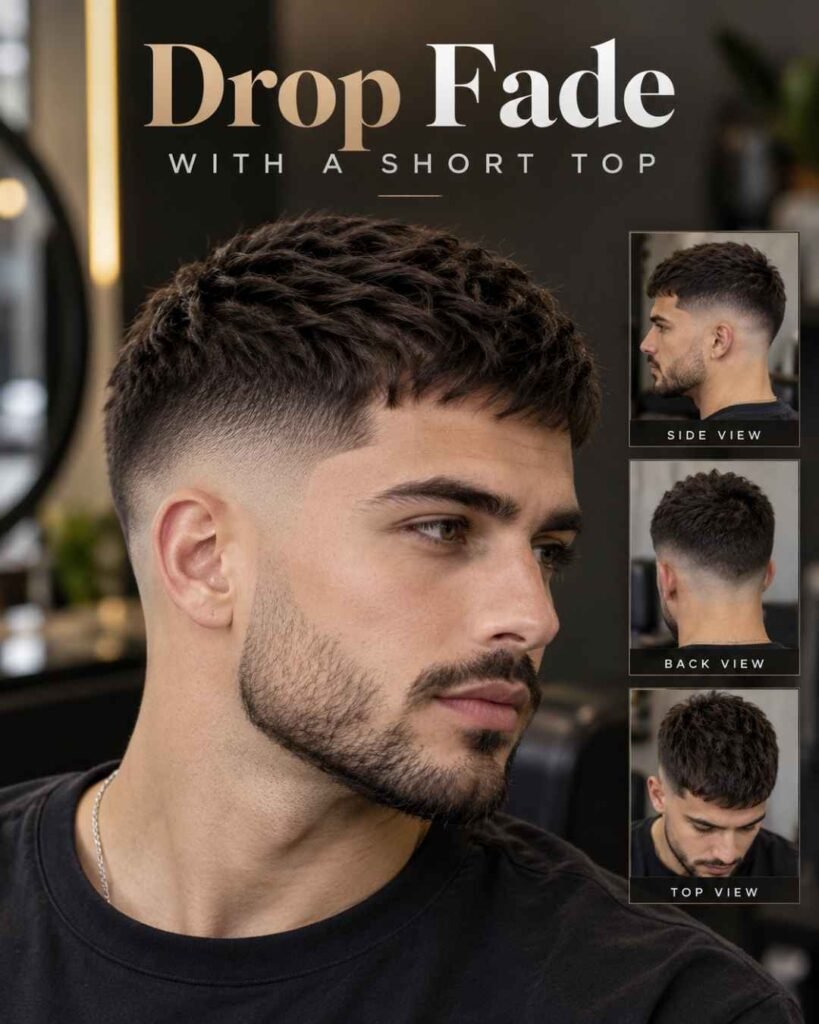
The fade curves down behind the ear, framing the head. Combined with a short, forward-textured top, it gives a modern shape without needing much length. It works well when the sides are naturally full.
Fade maintenance: Fades look sharpest for about two weeks and start to grow out noticeably after three to four. Ask your barber what schedule suits the cut you choose.
Do Longer Styles Work with a Receding Hairline?
Sometimes. Length works only when the hair is dense and you control the direction. Long hair combed back exposes the hairline, while hair worn forward or with curl can soften it.
17. Medium Layered Flow

Ear-length hair with layers, worn forward and slightly to the side. The layers add movement around the temples. This needs thick hair and regular trims, because heavy, unlayered length drags hair flat.
18. Swept-Back Top with a Side Fade
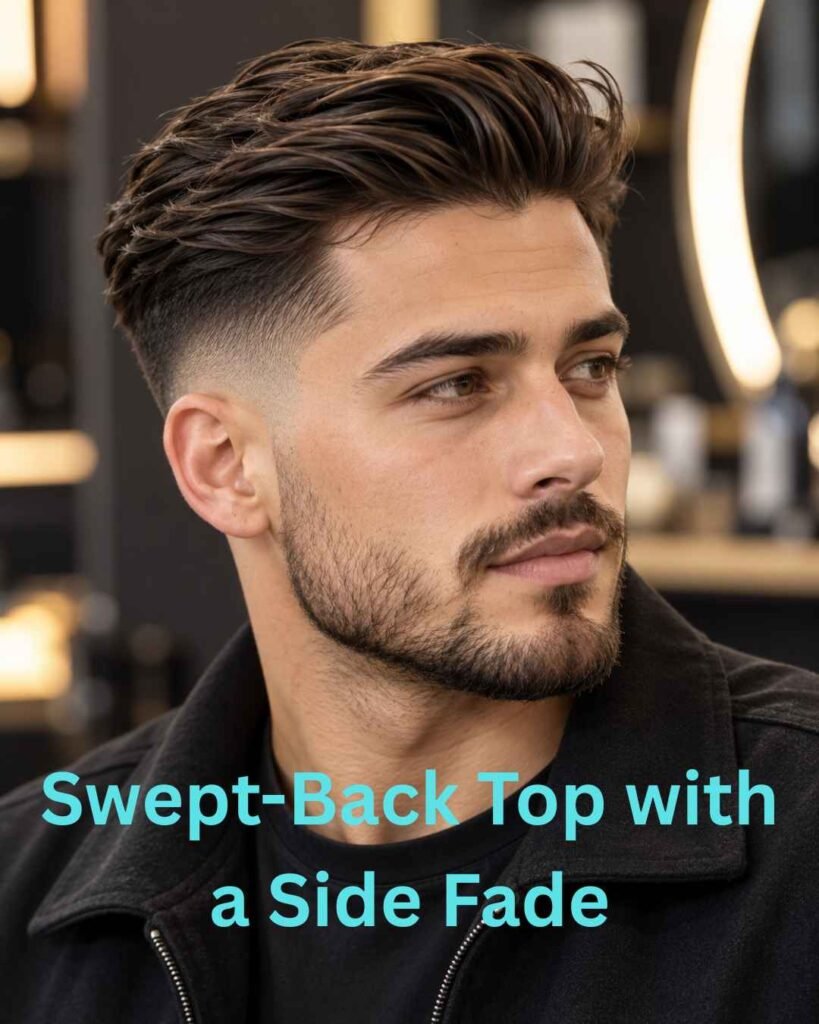
This suits men whose recession is mostly at the temples while the center stays dense. Style it with volume rather than a wet, flat finish. If the hairline is very uneven, a swept-back look will highlight it.
19. Curly Top with a Taper
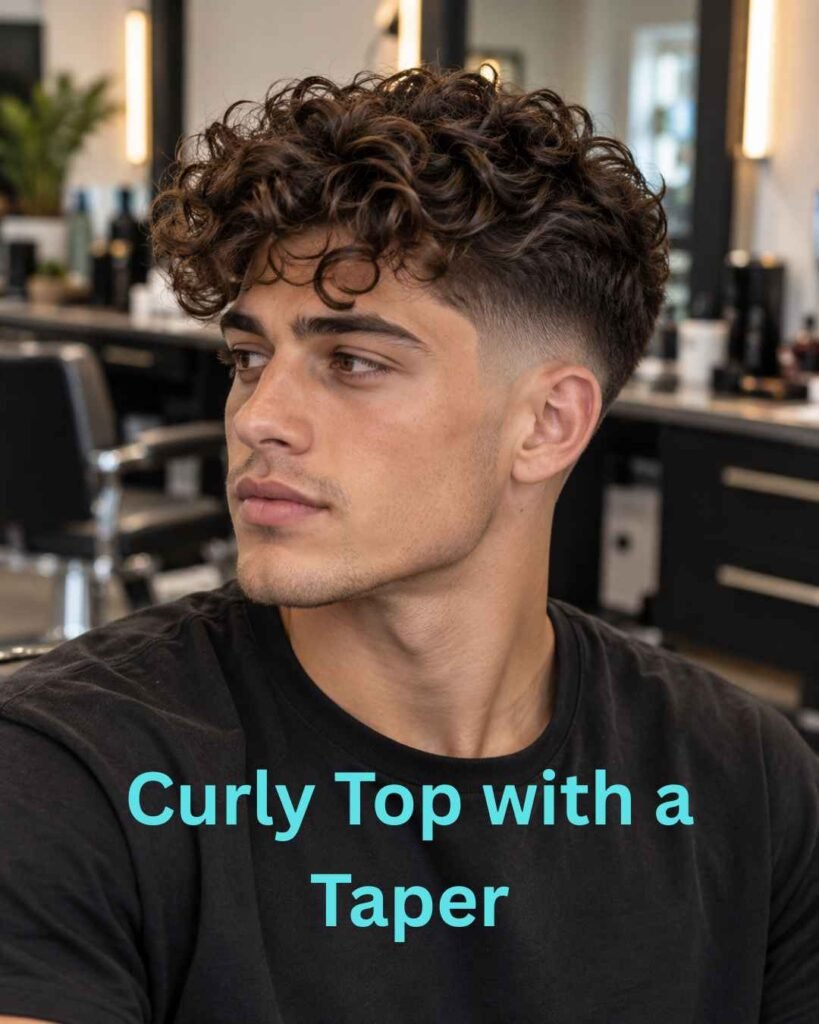
Curls add natural volume, and their spring hides the exact hairline. Keep the sides tapered and the curls medium length. Use a curl cream rather than a firm gel that flattens the pattern.
20. Shaped Coily Top with a Fade
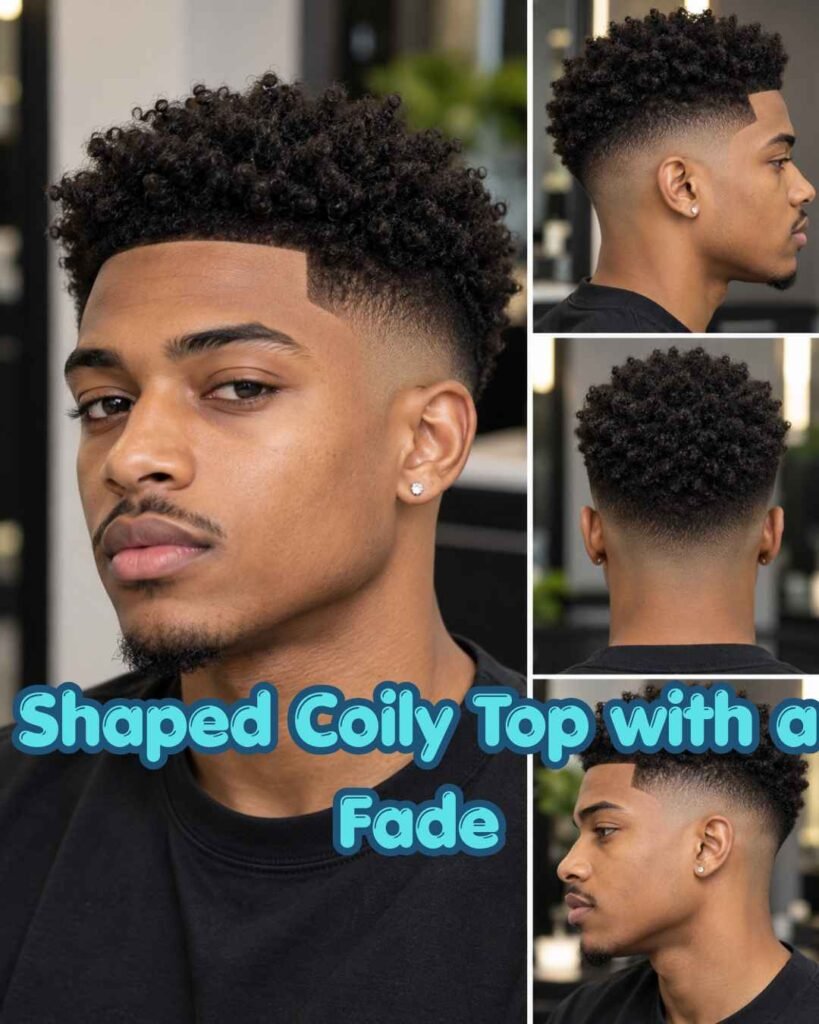
Coily hair holds height well, which balances recession. Ask for a clean shape on top and a fade on the sides. Then ask the barber to keep the front line-up soft and natural instead of chasing where your hairline used to be
Best Haircuts by Hair Type
| Hair type | Strengths | Best cuts | Watch out for |
|---|---|---|---|
| Straight | Easy to direct forward | Caesar, French crop, crew cut | Thin hair can look flat or separate |
| Wavy | Natural movement hides the hairline | Messy fringe, textured crop, quiff | Frizz if cut too short and dry |
| Curly | Natural volume and spring | Curly top with taper | Too-heavy product flattening curls |
| Coily | Holds height and shape well | Shaped top with fade | Over-sharp line-ups at the front |
| Fine or thin | Lightweight, easy to texture | Crew cut, buzz cut, short crop | Long lengths and heavy product |
| Thick | Good density for volume | Pompadour, quiff, medium flow | Needs regular thinning and shaping |
Which Haircut Matches Your Face Shape?
Face shape guidance is styling convention rather than science, but it helps you choose between similar cuts.
| Face shape | Good choices | Why it works |
|---|---|---|
| Oval | Textured crop, quiff, side part | Balanced proportions suit most cuts |
| Round | Quiff, faux hawk, mid fade | Height adds length to the face |
| Square | Crew cut, Ivy League, buzz cut | Short lines echo a strong jaw |
| Long | French crop, forward fringe | A fringe shortens the forehead |
| Heart | Side part with taper, textured fringe | Fringe softens a wide forehead |
| Diamond | Textured fringe, low taper | Fringe adds width at the front |
When Should You Shave It Off?
Consider a full shave when:
- Hair thins across the top as well as at the temples
- The front looks patchy after styling
- You spend more effort hiding recession than the result is worth
- You feel your current style is a constant compromise
A clean head often looks more deliberate than a half-hidden hairline.
How to Test It Before Committing
Wear a number 2 or 3 buzz cut for a few weeks and see how you feel. If you like it, go shorter with clippers or a razor. Shaving does not change how your hair grows back, so it won’t make a difference to thickness or speed.
Caring for a Shaved Head
- Sunscreen: Apply SPF 30 or higher daily to the scalp.
- Moisturizer: A light, non-greasy moisturizer helps prevent dryness and flaking.
- Shaving technique: Use a fresh blade, shaving cream, and shave with the grain first to limit irritation and razor bumps.
- Balance: A well-groomed beard adds definition to the jaw. Glasses frames can play a similar role.
What Haircuts Should You Avoid?
| Style | Why it backfires |
|---|---|
| Comb-over | Reveals the thin areas the moment wind or movement shifts the hair |
| Long, flat slick-back | Outlines the temples, especially with shine and no volume |
| Man bun or ponytail | Pulls hair back and exposes the whole front edge; constant tension can also contribute to traction hair loss |
| Long, heavy fringe | A dense fringe next to sparse temples makes the recession the main feature |
| Razor-sharp line-up at the old hairline | Draws a hard edge where hair used to grow, making the change obvious |
| Heavy pomade or wax | Clumps thin hair into strands and shows scalp between them |
What Should You Tell Your Barber?
Barbers do best with specific instructions. Vague requests such as “make it look fuller” leave too much to guesswork.
- Say plainly that you have a receding hairline and want to reduce contrast at the temples.
- Give lengths in numbers, either guard sizes or inches, for both sides and top.
- Ask for a textured, forward-leaning top, and ask the barber to point-cut it.
- Request a soft, natural front line-up rather than a sharp edge.
- Bring photos of men with hairlines similar to yours, not models with full fronts.
- Ask how to style it and which product to use.
Sample script: “I’m receding at the temples. I’d like a mid fade, about an inch on top, textured and brushed forward, with a soft front edge.”
How to Style a Receding Hairline at Home
Step-by-Step
- Start with damp hair. Towel-dry until it’s no longer dripping.
- Blow-dry upward at the roots. Lifting the roots adds volume where it matters.
- Apply a small amount of product. Use roughly a dime-sized dab of matte clay or light paste, warmed between your palms.
- Work it through with your fingers. Push the front forward or slightly to the side rather than straight back.
- Finish lightly. A light-hold spray or sea salt spray adds grip without stiffness.
Product Guide
| Product | Best for | Notes |
|---|---|---|
| Matte clay | Texture and hold | Good all-rounder for most cuts |
| Light paste or fiber | Messy, flexible styles | Easy to restyle during the day |
| Sea salt spray | Wavy or fine hair | Adds grit and volume |
| Volumizing spray or mousse | Quiffs and pompadours | Apply to roots before blow-drying |
| Curl cream | Curly and coily hair | Defines curls without crunch |
| Heavy pomade or shiny wax | Generally avoid | Clumps hair and shows scalp |
Concealment Options
Some men use hair fibers or scalp sprays to add the look of density. These can help for short periods, but they can look obvious up close and can wash out or transfer in rain or sweat. Apply sparingly and avoid heavy layers.
Do Haircuts Change Hair Loss? What Actually Helps
A haircut is cosmetic. If your recession is caused by pattern hair loss, it will usually continue unless treated. Treatment works best when started early, because it’s easier to keep hair than to regrow it.
Medical Treatments
| Treatment | How it works | Things to know |
|---|---|---|
| Topical minoxidil | Applied to the scalp to help prolong the growth phase of hair | Over the counter. Results can take several months. Benefits fade if you stop. It tends to work better at the crown than at the front hairline. |
| Oral finasteride | Reduces DHT, the hormone linked to pattern hair loss | Prescription only. Possible side effects include sexual side effects and mood changes in some men, so discuss them with your doctor. |
| Low-level light therapy | Laser caps and combs designed to stimulate follicles | Some devices are FDA-cleared. Evidence is modest, and results vary. |
| Hair transplant | Moves hair from denser areas to thinning ones | Surgical, costly, and best planned with an experienced surgeon, since donor hair is limited. |
| Scalp micropigmentation | Tattoo-like dots that mimic short hair or add density | Cosmetic, not regrowth. It works well with buzz cuts. |
Treatment results typically take months to appear, and it’s common to see temporary shedding at the start with some treatments. Talk to a board-certified dermatologist about which option fits you, especially before starting a prescription medication.
Frequently Asked Questions
What is the best haircut or a receding hairline?
A textured crop or crew cut suits most men. Move to a buzz cut or skin fade if recession is more advanced.
Should I grow my hair long or keep it short?
Short to medium styles with texture usually look better. Long hair combed back tends to expose the temples.
Does a buzz cut make a receding hairline look worse?
Usually not. One even length reduces the contrast between thin and fuller areas, so recession looks less obvious.
Can a haircut stop my hairline from receding?
No. Haircuts are cosmetic, and only medical or surgical treatment affects the underlying hair loss.
Is a fade good for a receding hairline?
Yes, mainly a low or mid taper with a short, textured top. Very high skin fades work best when the top stays short.
Should I comb my hair forward with a receding hairline?
Forward or slightly sideways is better than straight back. Keep the fringe short and textured so it does not look like a comb-over.
What products are best for a receding hairline?
Lightweight matte clay, paste, or fiber gives texture without weight. Avoid heavy, shiny pomades that clump thin hair.
Is a receding hairline normal?
A stable mature hairline is normal. Recession that keeps moving is usually male pattern hair loss and is worth checking with a dermatologist.
Does shaving your head make hair grow back thicker?
No. Shaving affects only the hair above the skin and doesn’t change the follicle, thickness, or growth rate.
At what age do hairlines start receding?
Pattern hair loss can start in the late teens or twenties, though it more commonly becomes noticeable later. Genetics play a large role.
Conclusion
The best haircut for a receding hairline is one that reduces contrast and adds texture or height where you have hair. For mild recession, try a textured crop, quiff, or side part with a taper. For deeper recession, move to a crew cut, mid fade, or buzz cut.
Avoid comb-overs and long slick-backs. Give your barber exact lengths, style with a light matte product, and consider seeing a dermatologist if your hairline is still moving. A confident, well-chosen cut will always look better than hiding your hairline.
