

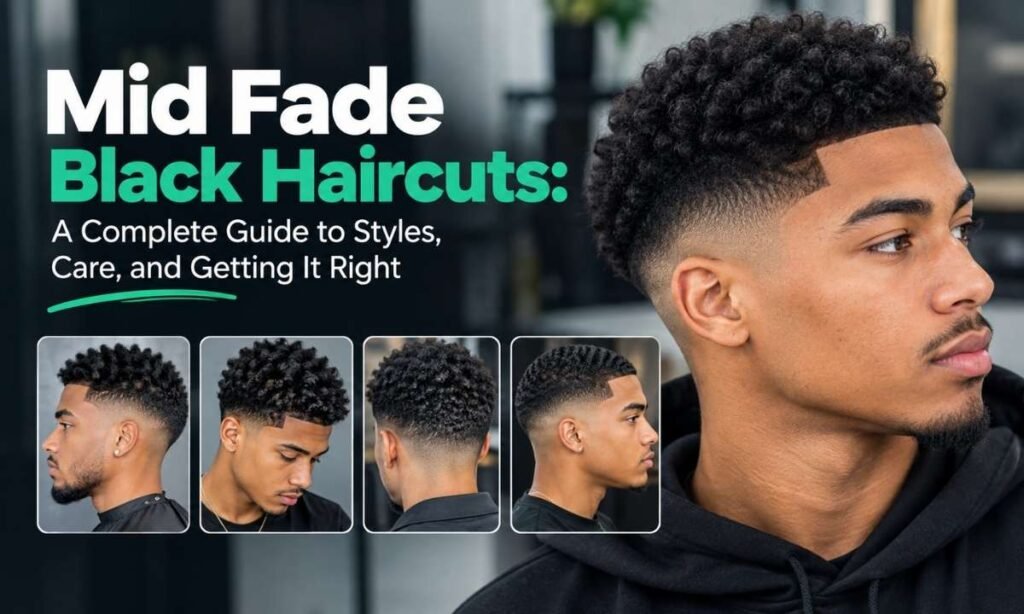
A mid fade sits in that sweet spot between a subtle low fade and a bold high fade, and it’s become one of the most requested cuts for Black men in barbershops across the country. The blend starts at the temple, holds enough length on top for versatility, and adapts to nearly every hair texture, from tight coils to loose waves.
This guide breaks down what a mid fade actually is, how it compares to other fade heights, which variations work best with different hair types and face shapes, and how to keep it looking sharp between barber visits. Whether you’re walking into a barbershop for the first time or trying to describe what you want more precisely, you’ll find the specifics here.
What Is a Mid Fade?
A mid fade is a haircut where the hair on the sides and back gradually shortens toward the skin, with the fade line beginning around the temple area. It sits between the low fade, which starts just above the ear, and the high fade, which starts well above the temple line.
The result is a balanced look. There’s enough contrast to read as a deliberate, styled cut, but it doesn’t demand the same level of upkeep or make as bold a statement as a high fade. That balance is exactly why barbers describe it as the most requested fade height in many shops.
For Black hair specifically, the mid fade does something practical: it creates a clean edge that shows off the natural texture on top, whether that’s an afro, waves, coils, or braids, without shaving away so much length that the style loses its shape. The temple becomes the anchor point, and everything above it is where the personality of the cut lives.
Mid Fade vs Low Fade vs High Fade
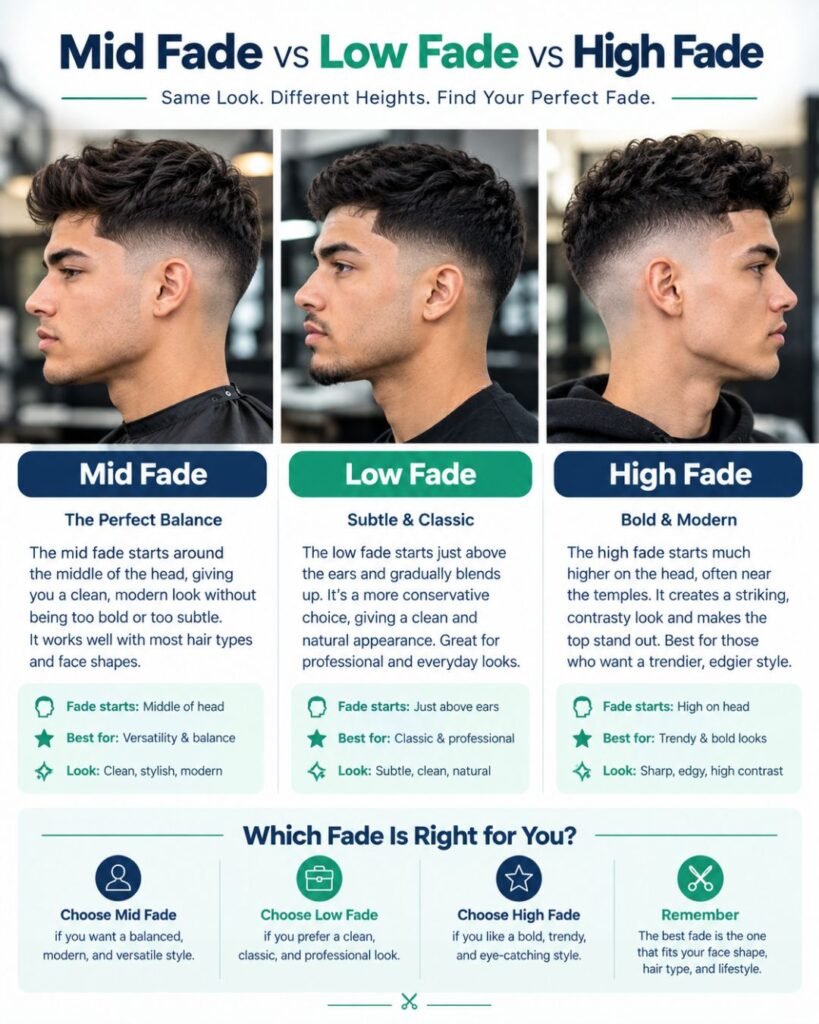
The only real difference between these three cuts is where the fade begins on the side of the head. That single measurement changes how much skin shows, how sharp the contrast looks, and how often you’ll need a touch-up.
| Fade Type | Starting Point | Contrast Level | Typical Upkeep | Best For |
|---|---|---|---|---|
| Low Fade | Just above the ear | Subtle | Every 3-4 weeks | Professional settings, low-maintenance routines |
| Mid Fade | At the temple | Balanced | Every 2-3 weeks | Most face shapes, versatile styling |
| High Fade | Above the temple | Bold, high contrast | Every 1-2 weeks | Statement looks, shorter hair on top |
A low fade is the easiest style to grow out cleanly and the most forgiving if you can’t get to the barbershop on schedule. A high fade puts almost all the visual weight on the top of the head, which works well if you’re wearing a fuller afro, waves, or a design-heavy cut but requires more frequent trims to keep the line crisp.
The mid fade splits the difference. It shows enough skin at the temple to look intentional and sharp, but it doesn’t grow out as fast or as visibly as a high fade does. That’s part of why it works for so many different hair types and lifestyles.
Why the Mid Fade Works So Well With Black Hair Textures
Black hair covers a wide range of curl patterns, from loose waves to tightly coiled 4C hair, and the mid fade adapts to nearly all of them because the fade itself is separate from what happens on top.
Coily and 4C hair. Tightly coiled hair shrinks upward as it dries, which means the visible length is often shorter than the actual strand length. A skilled barber accounts for this by setting the fade line slightly lower than it would sit on straighter hair, so the blend still reads correctly once the curls settle into their natural pattern.
Wavy hair and 360 waves. A mid fade with a hard part or a clean temple line frames a wave pattern without cutting into it. Because waves lie closer to the scalp than a full afro does, shrinkage isn’t as much of a factor, and the fade tends to hold its shape a little longer between cuts.
Locs, braids, and twists. A mid fade pairs naturally with protective styles. The sides stay tapered and clean while the length on top, whether it’s starter locs, box braids, or twists, does the visual work. This combination has become common because it keeps a low-maintenance protective style looking polished on the sides.
Straight and relaxed hair. A mid fade on straight or chemically relaxed hair produces the sharpest, most defined line, since there’s no curl pattern to account for. It’s often the easiest texture for a barber to work with when creating intricate line designs alongside the fade.
Popular Mid Fade Styles for Black Men
The mid fade is a template, not a single look. Here are the variations that come up most often in barbershops and clipper work today.
Classic Mid Fade with Short Top
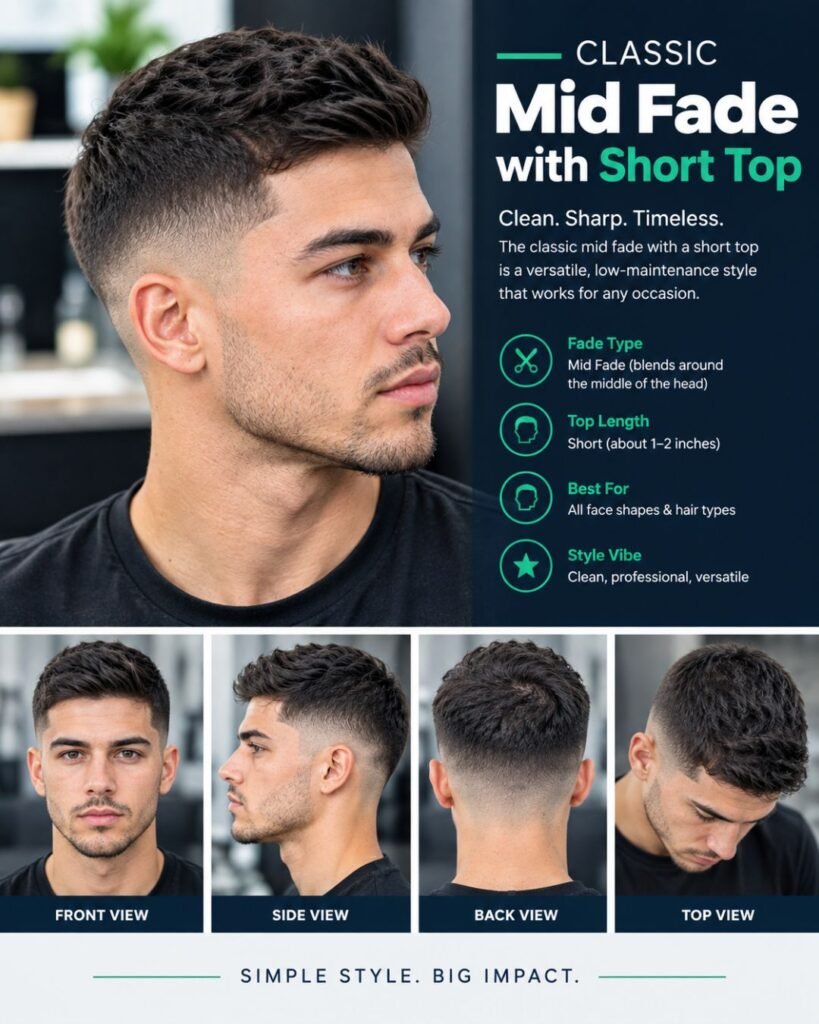
The most straightforward version: short, evenly shaped hair on top that tapers gradually into the mid fade at the sides. A sharp line-up along the forehead adds definition. This is the lowest-maintenance option and works for nearly any face shape or setting, from job interviews to everyday wear.
Mid Fade with Afro
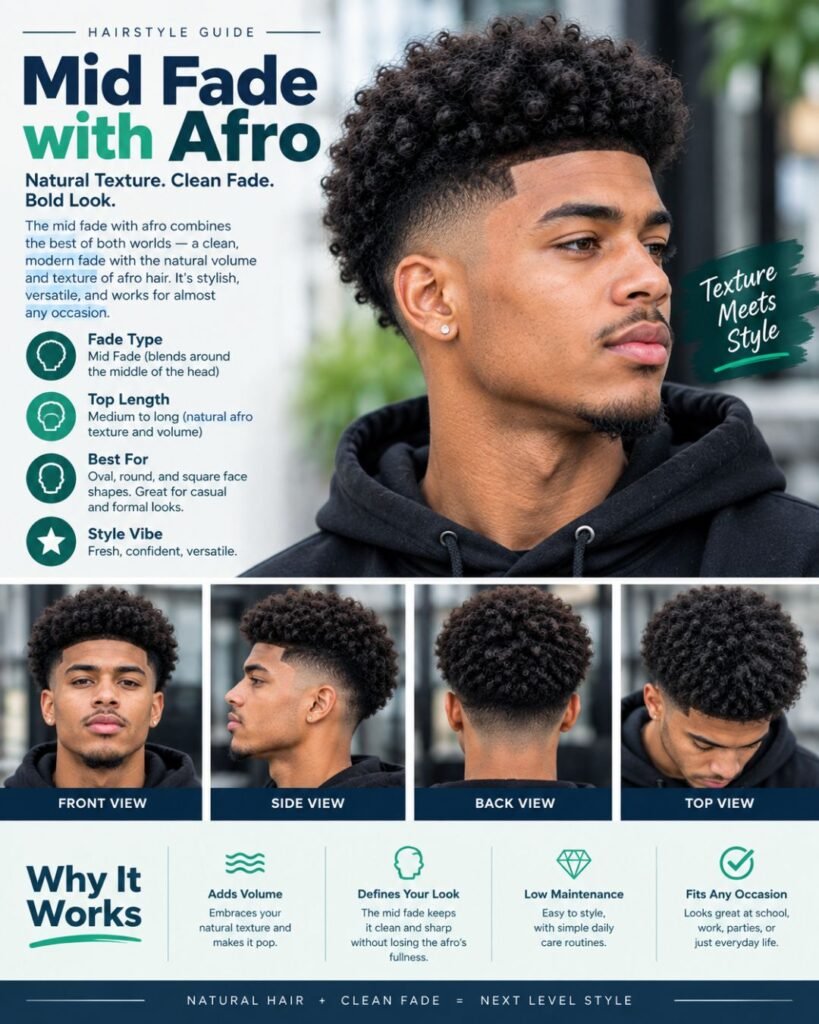
Sides taper cleanly into the temple while the top is left long enough to showcase a natural afro. This combination highlights curl texture and volume while keeping the perimeter sharp. It’s a popular choice for men who want to wear their natural hair without sacrificing a clean, structured silhouette.
Skin Mid Fade
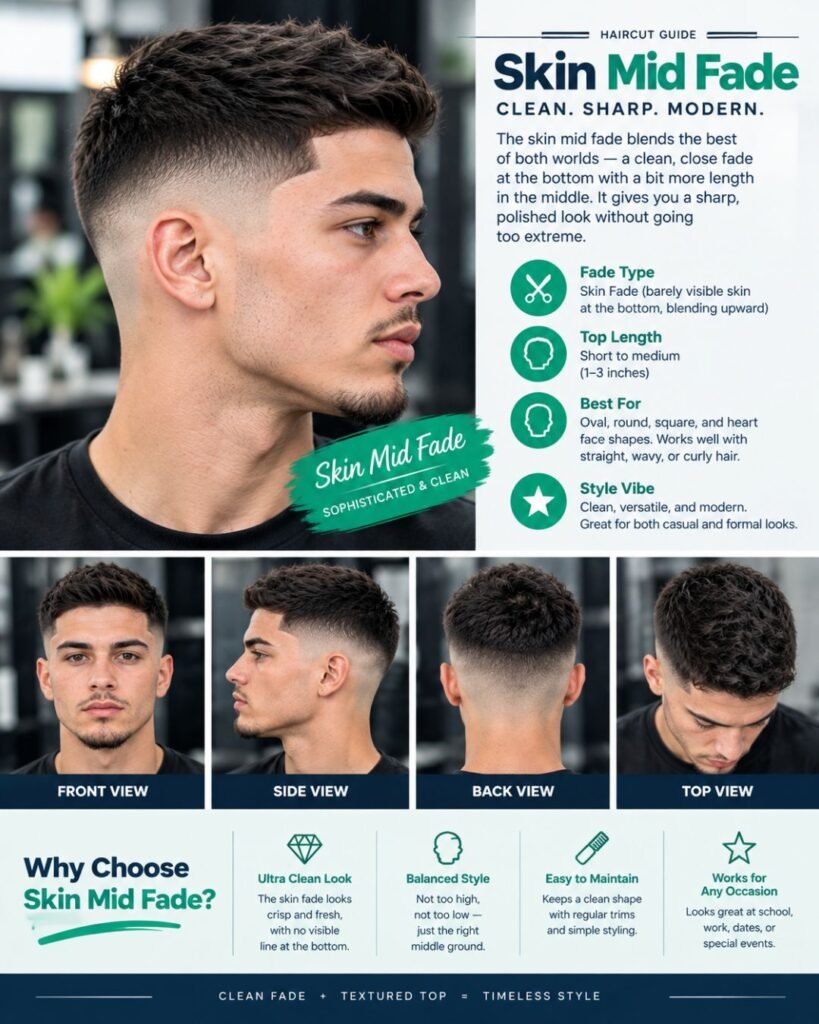
The sides fade all the way down to bare skin before blending into the longer top. This creates the strongest possible contrast at the mid-fade height and tends to make dense, tightly coiled hair pop visually. It requires more frequent touch-ups, typically every two weeks, since any regrowth shows quickly against bare skin.
Mid Taper Fade
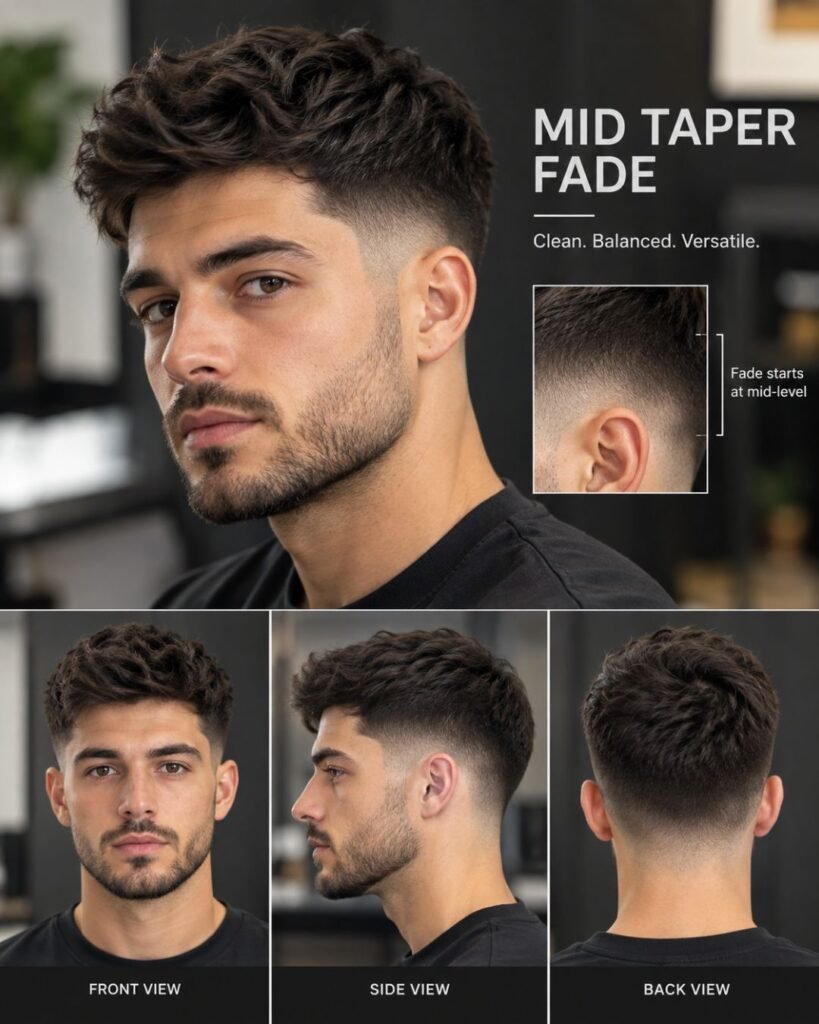
A softer version of the mid fade where the transition is more gradual and less skin is exposed at any single point. This works well with buzz cuts, crew cuts, and cropped styles, and it’s often the easiest style to describe to a new barber because the contrast is more forgiving if the blend isn’t perfectly even.
Mid Drop Fade
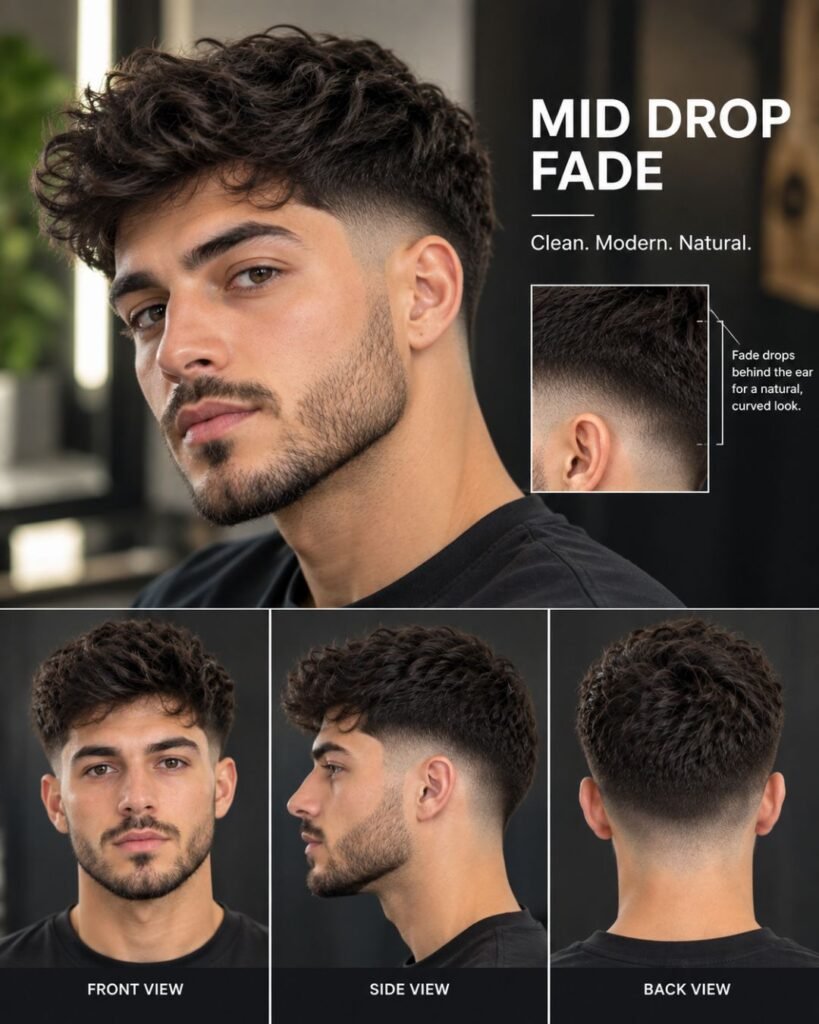
Instead of following a straight line around the head, the fade curves downward behind the ear before leveling out at the nape. This shape follows the natural curve of the skull rather than cutting across it, and it tends to complement fuller styles on top, like curls or a longer afro, by keeping the back of the cut from looking top-heavy.
Mid Fade with Line-Up and Design
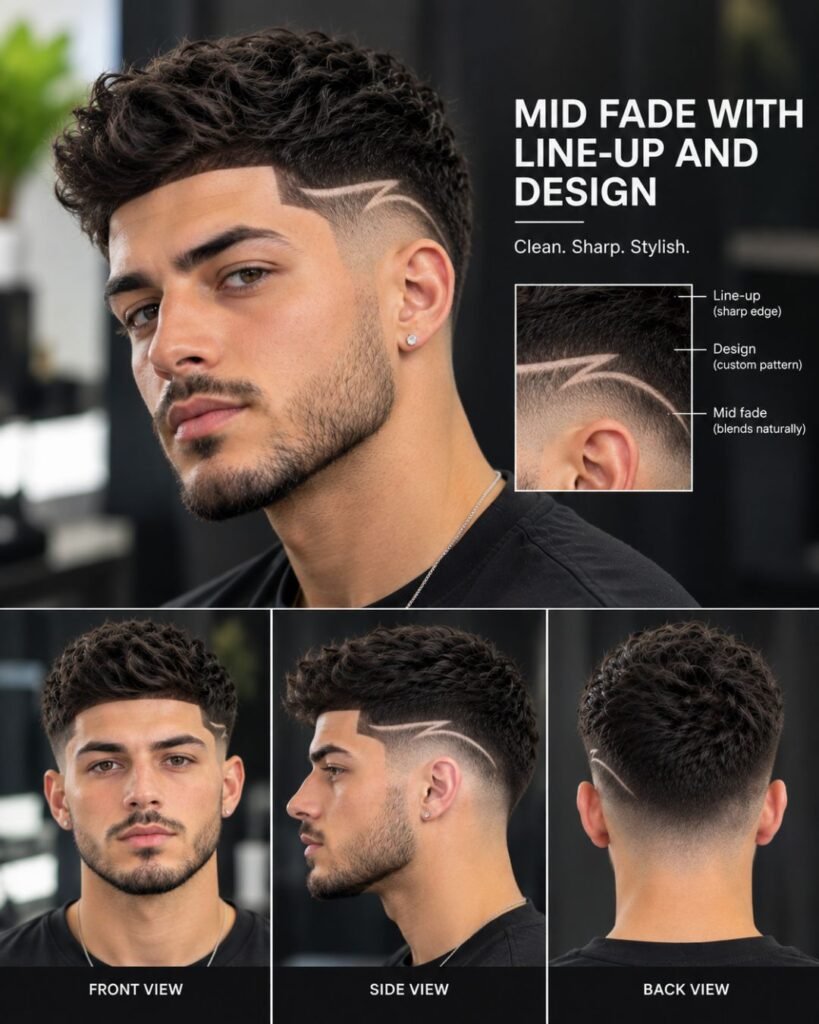
A precise line-up along the hairline, temple, and sideburns adds a crisp finish to any mid fade. Some men add shaved line designs into the fade itself, ranging from a single simple part to more detailed patterns. This is entirely a matter of personal style and works with almost every top-length option.
Mid Fade with Braids or Twists
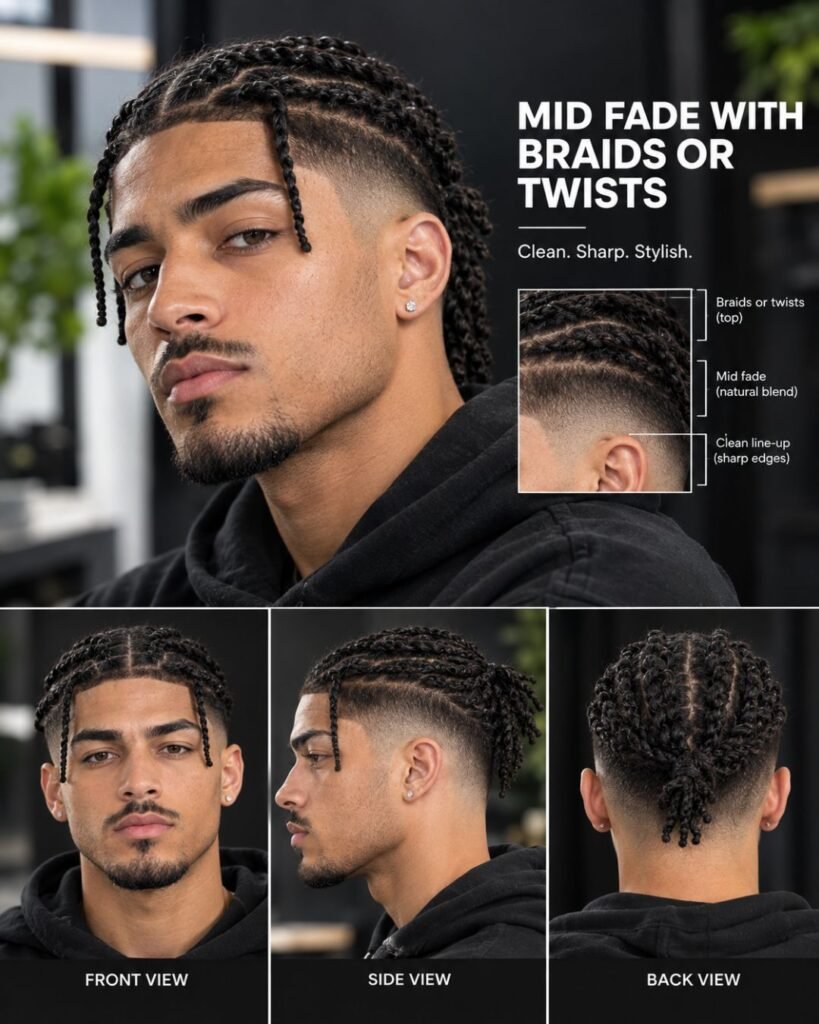
Box braids, twists, or a braided top paired with a tapered mid fade combine a protective style with a clean, barbershop-fresh finish on the sides. The braided or twisted section adds texture and length while the fade keeps the perimeter sharp, and this pairing has become one of the more requested combinations for men growing out length while keeping a groomed look.
High Top with Mid Fade
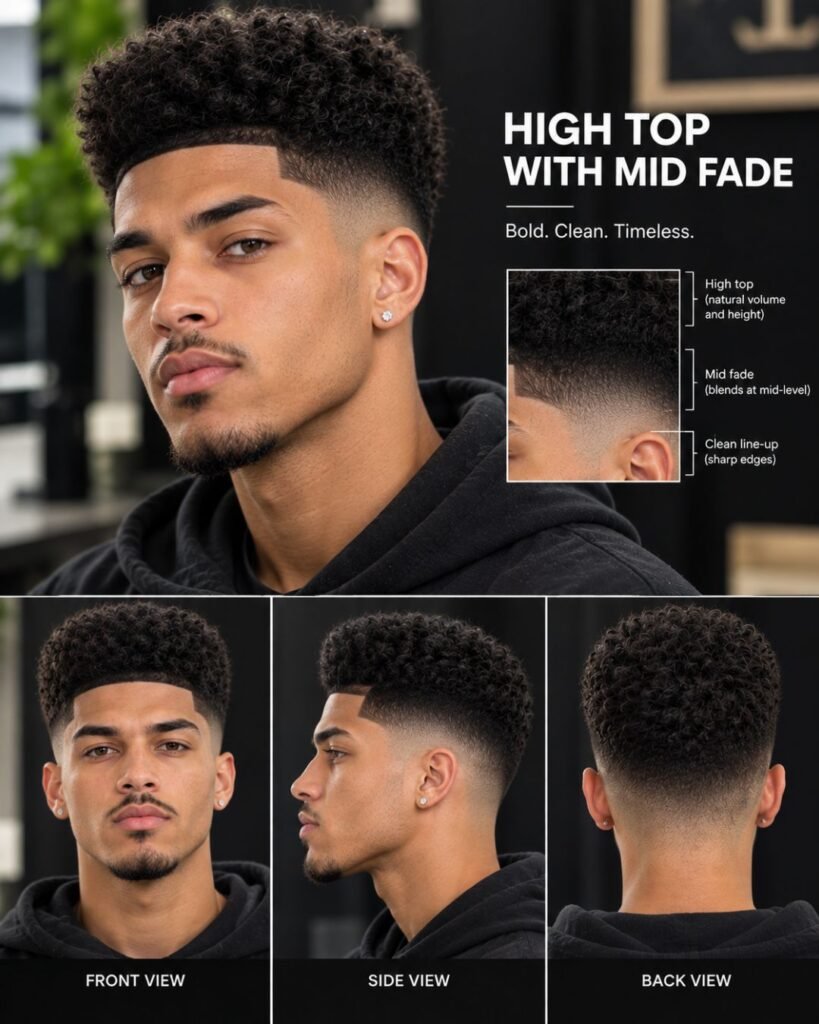
A nod to a longer barbering tradition, the high top pairs a boxy, voluminous top with a tapered mid fade at the sides. It’s a bolder look that takes more daily styling to maintain than a shorter cut, but it remains a recognizable, distinctive choice for men who want their haircut to stand out.
Choosing the Right Mid Fade for Your Face Shape
A mid fade is genuinely one of the most flexible fade heights when it comes to face shape, but a few adjustments make it work even better.
- Round faces: Ask for slightly more height on top and a defined part to create visual length. A mid fade with volume on top helps balance the roundness.
- Square faces: A mid fade with a softer taper, rather than a hard skin fade, works well against strong jaw angles without adding extra sharpness to an already angular face.
- Oval faces: This shape is naturally balanced, so nearly every mid fade variation, from classic to skin fade to drop fade, will work without adjustment.
- Long faces: Keep more width on the sides and avoid pushing the fade too high. A true mid fade, rather than a high fade, helps keep proportions even.
- Rectangular faces: A mid fade with texture on top, like curls or waves, softens straight lines and prevents the face from reading as too elongated.
Head shape matters too. If you have a flatter area at the back of the head, a barber can use the fade height and the shape on top to balance the silhouette, which is one reason it helps to work with a barber who has experience cutting Black hair textures specifically.
How to Ask Your Barber for a Mid Fade
Miscommunication at the chair is the most common reason a haircut doesn’t turn out the way you pictured it. A few specifics go a long way.
- Name the fade height clearly. Say “mid fade” and point to your temple to show exactly where you want the fade to start. Barbers use guard numbers differently, so a visual reference removes ambiguity.
- Bring a reference photo. A photo of a similar hair texture and face shape to your own gives the barber a clearer target than a photo of a different hair type.
- Specify the top length. Whether you want a short buzzed top, a fuller afro, waves, or length for braids changes how the fade is blended into it.
- Mention any line-up or design work. If you want a sharp hairline, temple design, or part, say so before the clippers start.
- Ask about the finish. Tell your barber whether you prefer a skin fade at the shortest point or a softer taper that leaves a bit more hair.
If it’s your first time at a new shop, arriving fifteen minutes early to talk through the cut before you’re in the chair gives both of you time to align on expectations without the pressure of clippers already running.
Maintenance: Keeping a Mid Fade Sharp
A mid fade typically holds its shape for two to three weeks before the contrast starts to soften, though this varies based on how fast your hair grows and how tight the original fade was cut.
Barbershop touch-ups. Most men return every two to three weeks for a full fade refresh. Waiting past four weeks usually means the fade line has blurred enough that the barber needs to essentially recut the whole blend rather than touch it up.
At-home edge maintenance. Between full visits, a detail trimmer can clean up the neckline and hairline every five to seven days. This won’t restore the fade itself, but it keeps the perimeter looking intentional, which matters more than people expect for how “fresh” a cut reads day to day.
Washing frequency. Curly and coily hair textures generally do better washed every three to five days rather than daily, since frequent washing can strip natural oils and lead to dryness. A sulfate-free shampoo helps prevent the scalp and hair from drying out between washes.
Moisture matters more with a fade. Because a fade exposes more scalp and shorter hair, dryness and flaking show more visibly than with longer styles. A light daily moisturizer or natural oil, like jojoba or argan oil, applied to the scalp and hairline helps keep the skin and hair healthy-looking between cuts.
Products Worth Having on Hand
- Pomade or light gel: Gives hold and definition to the top without weighing down curls or waves.
- Curl cream or curl-defining custard: Helps enhance natural curl pattern and control frizz on coily or wavy hair.
- Edge control: Keeps the hairline and temple area crisp between barber visits.
- Leave-in conditioner: Adds moisture to textured hair without the heaviness of a full conditioning treatment.
- Scalp oil: Coconut, argan, or jojoba oil helps prevent dryness at the fade line, where skin is more exposed.
- A quality detail trimmer: Useful for touch-ups at the neckline and sideburns between full cuts.
Layering too many products at once can leave hair looking greasy or stiff rather than defined, so most barbers recommend picking one or two products suited to your hair type rather than combining several heavy formulas.
Common Mistakes to Avoid
Waiting too long between cuts. A mid fade that grows out past four weeks doesn’t gradually fade back to a regular haircut, it just looks unkempt, since the sharp line at the temple is what makes the style work in the first place.
Choosing the wrong fade height for your routine. If you know you can only get to the barbershop once a month, a mid fade or low fade will hold up better than a skin fade or high fade, which need attention every one to two weeks.
Skipping the consultation. Sitting down and immediately saying “just fade it” leads to inconsistent results. Barbers work from specifics, not general requests, especially with textured hair where shrinkage and curl pattern change how a fade needs to be measured.
Overwashing. Washing coily or curly hair daily strips natural oils faster than the hair can replace them, which leads to dryness, breakage, and a fade that looks dull rather than sharp.
Ignoring the hairline. A clean fade with a neglected, uneven hairline looks unfinished. The line-up is as much a part of the style as the fade itself.
Frequently Asked Questions
What is the difference between a mid fade and a mid taper fade?
A mid fade blends closer to the skin at its shortest point, while a mid taper fade leaves slightly more length throughout, creating a softer, less skin-exposed transition.
How often should I get a mid fade touched up?
Most barbers recommend every two to three weeks to keep the temple line sharp before regrowth blurs the contrast.
Does a mid fade work with 4C hair?
Yes. Barbers typically set the fade line slightly lower to account for shrinkage, so the blend still reads correctly once the curls settle into their natural pattern.
Can I get a mid fade with braids or locs?
Yes, a tapered mid fade pairs well with braids, twists, and locs, keeping the sides clean while the length on top carries the style.
Is a mid fade good for a round face?
Yes, especially when paired with added height or volume on top, which helps balance rounder facial proportions.
Will a mid fade suit a professional workplace?
A classic mid fade with a shorter top and clean line-up reads as polished and works well in most professional settings.
Final Thoughts
The mid fade earns its popularity because it doesn’t force a trade-off between low maintenance and a sharp, defined look. It works across nearly every hair texture common among Black men, from tight coils to waves to braided styles, and it adapts to different face shapes with small adjustments rather than a completely different cut.
The details make the difference: naming the fade height clearly, choosing a top length that fits your texture and routine, and staying consistent with touch-ups every few weeks. Get those right, and a mid fade stays sharp, versatile, and worth the chair time.

1 thought on “Mid Fade Black Hair: A Complete Guide to Styles, Care, and Getting It Right”