

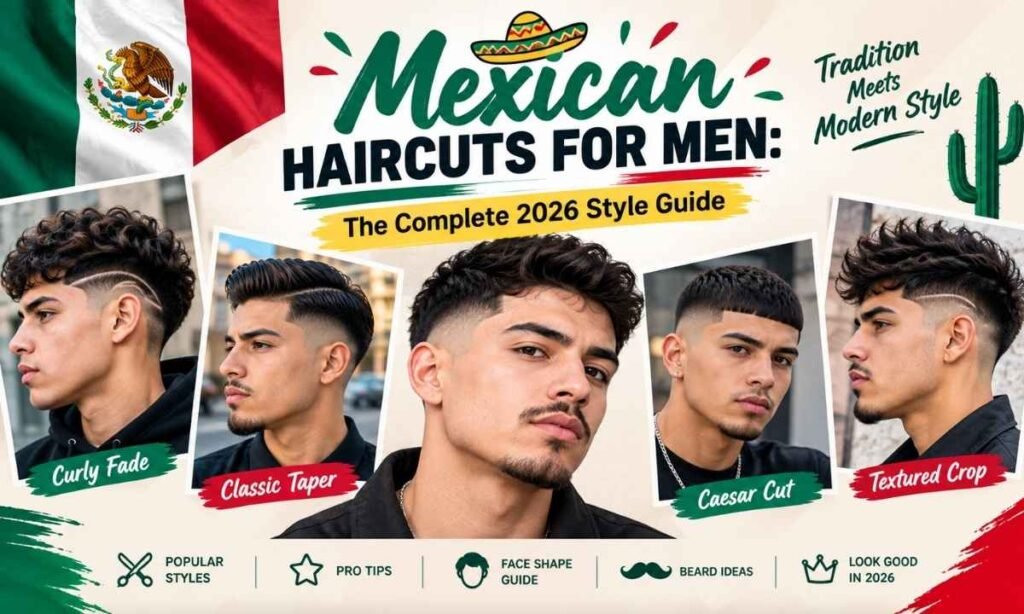
Walk into almost any barbershop in Texas, California, or Chicago and ask for a “Mexican haircut,” and the barber will know exactly what you mean before you finish the sentence. It’s not one specific style. It’s a family of cuts, sharp fades, textured tops, hard part lines, and confident shapes. That grew out of Latino barbershop culture and now shows up on runways, TikTok, and neighborhood corners alike.
This guide breaks down the most requested Mexican haircuts for men. Explains where the styles come from, and gives you the exact language to use with your barber so you walk out with the cut you actually pictured. You’ll also find guidance on matching a style to your face shape and hair texture. Plus upkeep advice so the cut still looks sharp three weeks after your appointment.
What Actually Makes a Haircut “Mexican” Style
There’s no single haircut that defines Mexican or Latino style. Instead, it’s a set of recurring elements that barbers in Mexican and Mexican-American communities have refined over decades: precise fades, defined edges, and tops that keep some length and texture instead of going flat and uniform.
A few threads run through nearly every cut on this list. Sides are almost always faded or tapered tight, which creates contrast against a fuller top. Barbers use a straight razor or clipper-over-comb technique to carve crisp lines around the hairline, temples, and neck. And texture matters more than symmetry, curls, waves, and thick straight hair are all worked with rather than flattened out.
Culturally, a lot of this traceable to two overlapping influences. Traditional Mexican barbering, brought over and refined in barrio barbershops across the Southwest, favored clean tapers and slicked styles for generations. Layered on top of that is the Takuache aesthetic, a younger, flashier subculture associated with cowboy boots, gold jewelry, and bold hair, which pushed cuts like the Edgar into the mainstream over the past several years.
You May Like: Buzz Cut Curly Hair Style Guide for a Clean Look
The Most Popular Mexican Haircuts for Men
The Edgar Cut (Takuache Cut)
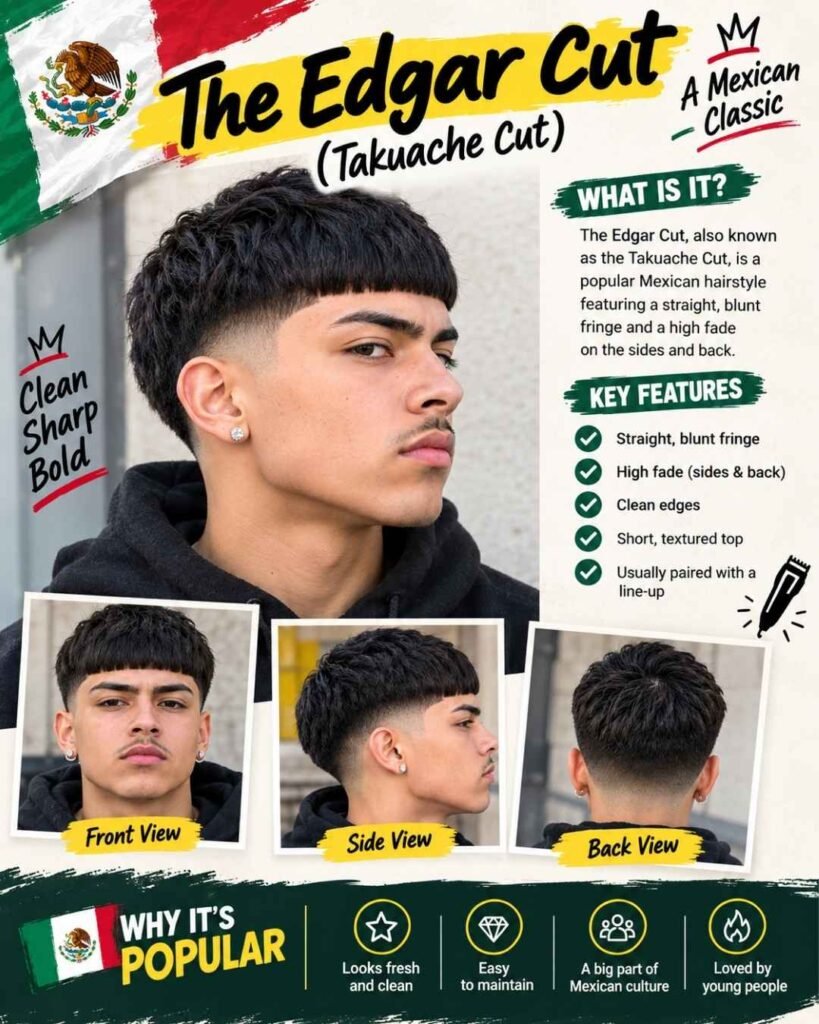
The Edgar is the cut most people picture first. It combines a high or mid skin fade on the sides with a straight, blunt fringe across the front, similar to a bowl cut but far more precise and intentional. The top is usually left thick enough to hold its shape without gel.
The name has a debated origin. Some barbers trace it to a video of a stylist etching former MLB player Edgar Martinez’s face into a client’s fade, while others say a version of the cut existed in Latin American communities long before it had that name. Either way, Takuache culture now strongly embraces this style, making it one of the most searched men’s haircuts among young Latino men in the United States.
It works best on thick, straight or slightly wavy hair, since the blunt fringe needs enough density to lie flat and even. Ask your barber for a “skin fade with a straight fringe” if you want the cleanest version of this look.
The Mexican Fade
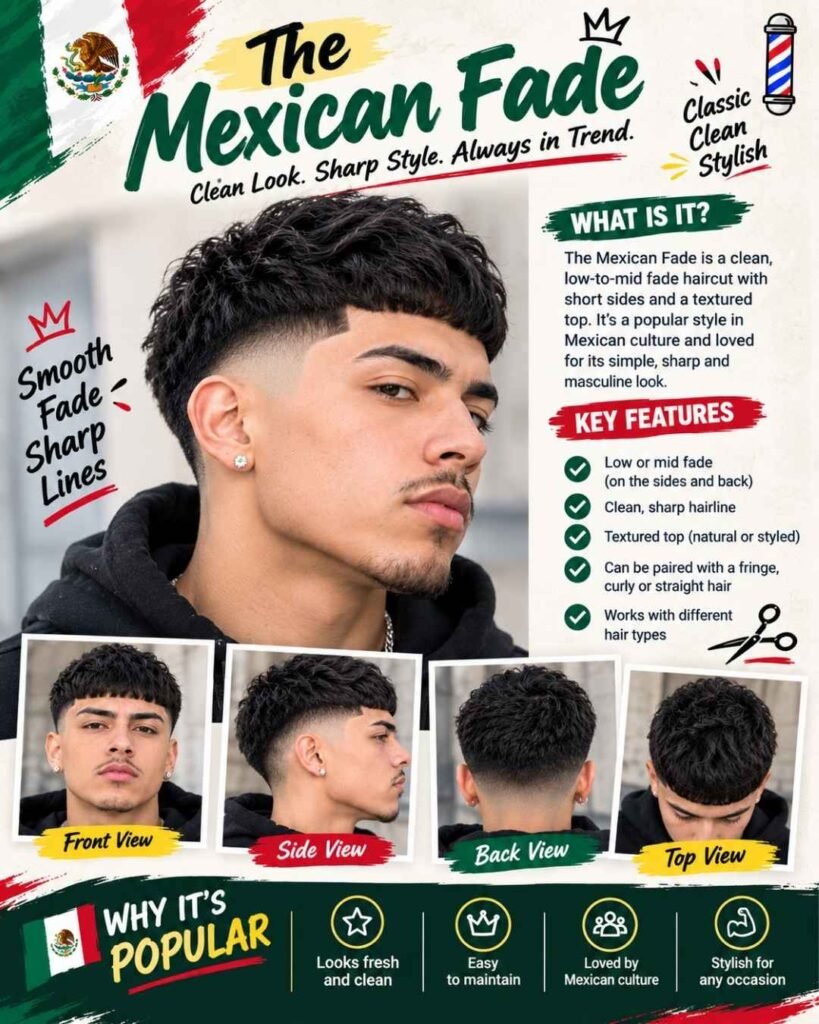
“Mexican fade” usually refers to a taper or skin fade paired with a textured, slightly longer top, rather than one exact haircut. The defining feature is contrast: sides shaved close to the skin or very short, top left with enough length to style with a comb, wax, or your fingers.
There are three common variations worth knowing:
- Low fade — the fade starts just above the ear, keeping more length overall. Good for a first fade or a workplace-friendly look.
- Mid fade — starts around the temple, offering more visible contrast without being extreme.
- High/skin fade — starts high on the head and often goes down to bare skin, giving the sharpest, most dramatic look.
Any of these pairs well with a hard part, a shaved line cut just above the temple that separates the fade from the top section. It’s a small detail, but it’s one barbers use constantly on this style family.
You May Like: Crew Cut No Fade: The Complete Guide to Getting It Right
Slick Back
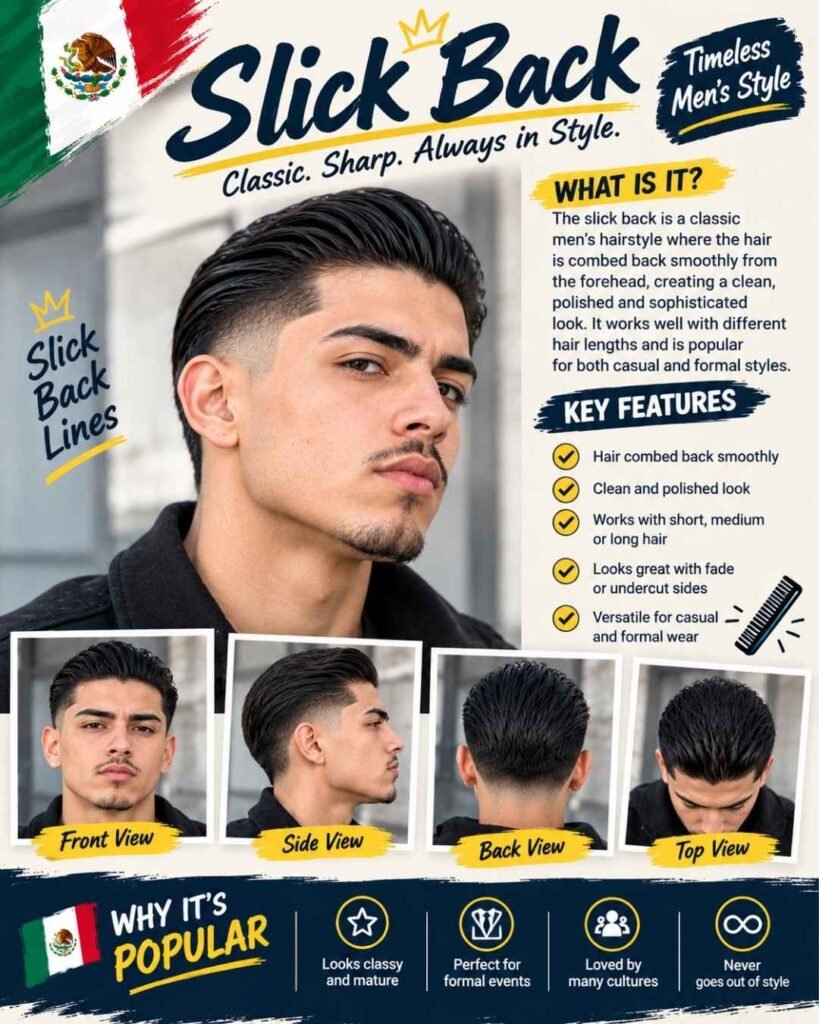
The slick back has been a staple in Mexican and Latino barbershops for decades and hasn’t lost popularity. Hair on top is grown out to two or three inches, combed straight back with a strong-hold pomade or gel, and paired with tapered or faded sides for a sharp, wet-look finish.
It reads as more formal than the Edgar or a mohawk, which is why you’ll see it at weddings, quinceañeras, and job interviews as often as you see it on a Saturday night out. Thick, straight hair holds the slickback shape longest; wavy hair works too but needs a firmer product to stay flat.
The Pompadour
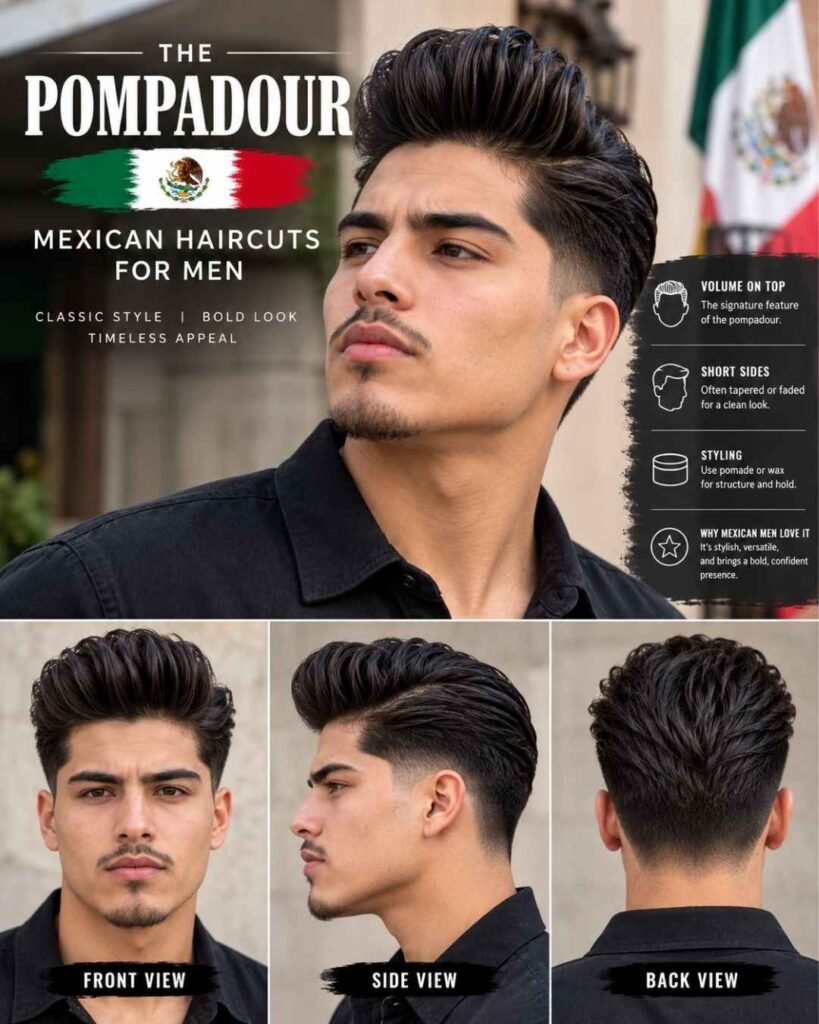
Where the slick back lies flat, the pompadour builds height and volume at the front, then sweeps it back or to the side. Sides are typically tapered or faded to keep the visual weight concentrated on top. It’s a look with roots in classic barbering that Latino stylists have kept alive and updated with cleaner fade work.
A modern pompadour with a mid fade works in both casual and professional settings, and it’s forgiving of most hair types as long as there’s enough length on top, generally three to four inches, to build the shape.
The Mullet
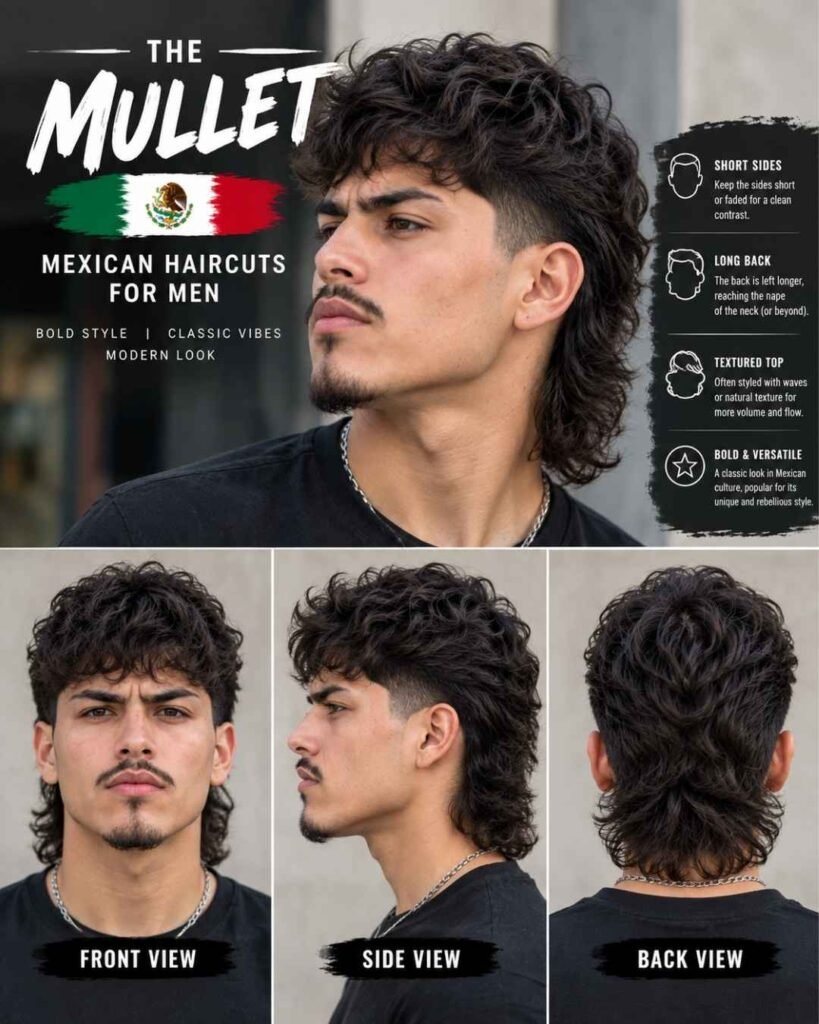
The mullet’s Mexican and Latino revival has been building for a few years, particularly paired with a low taper fade on the sides and back instead of the shaggier, unfaded mullets of past decades. Length stays longer at the nape while the sides stay tight and clean, creating a modern, more wearable version of the style.
This cut suits straight to wavy hair best, since curls at the back can make the “tail” look bulky rather than defined. Ask for a “taper fade mullet” to get the contemporary version rather than an old-school shag mullet.
Curly Top with Faded Sides
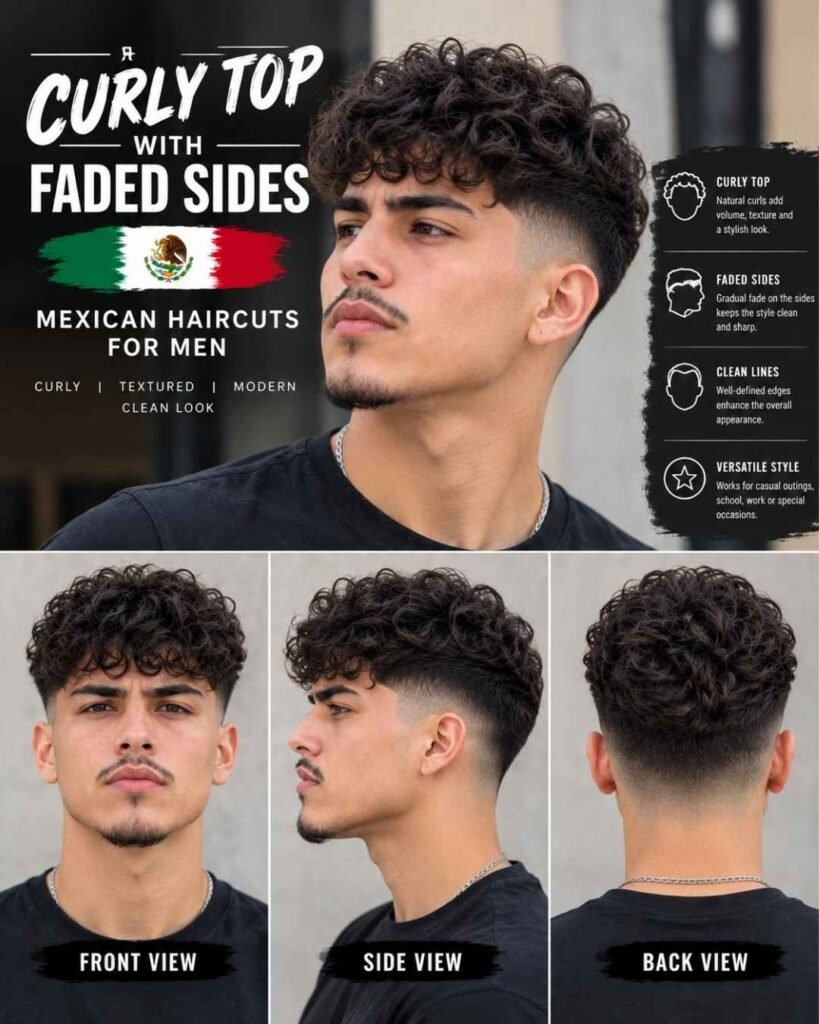
For naturally curly or coily hair, a faded or tapered side paired with longer curls on top is one of the most flattering options available. The fade keeps the hair around the ears and neck neat and low-maintenance, while barbers leave the top long enough usually three inches or more to let the curls show their natural pattern.
Barbers typically recommend scissor-cutting the top rather than using clippers, since clippers can cut across curl clusters unevenly. A curl-defining cream applied to damp hair, followed by air-drying or diffusing on low heat, keeps the curls defined without frizz.
The Buzz Cut
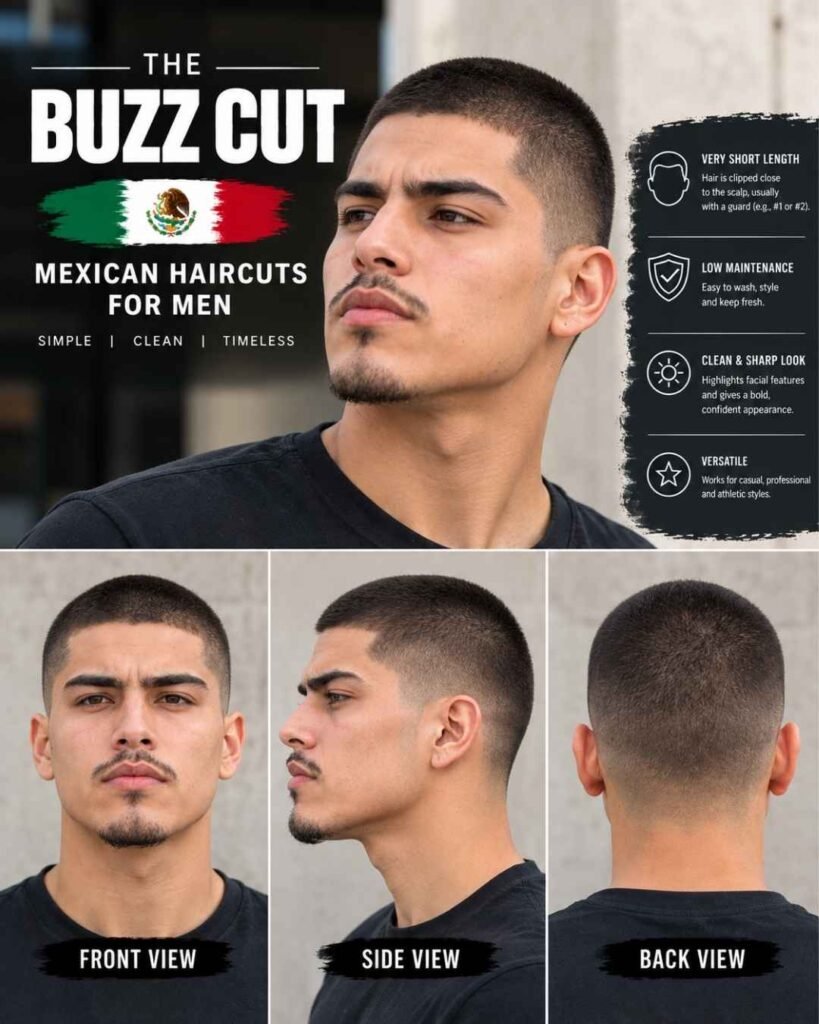
Simple, low-maintenance, and a longtime favorite for Latino men who want a clean look without regular styling. Hair is clipped to a uniform short length all over, sometimes with a slight fade at the sides for extra polish. It suits nearly every face shape and hair texture and pairs naturally with a beard or light stubble.
The Rat Tail
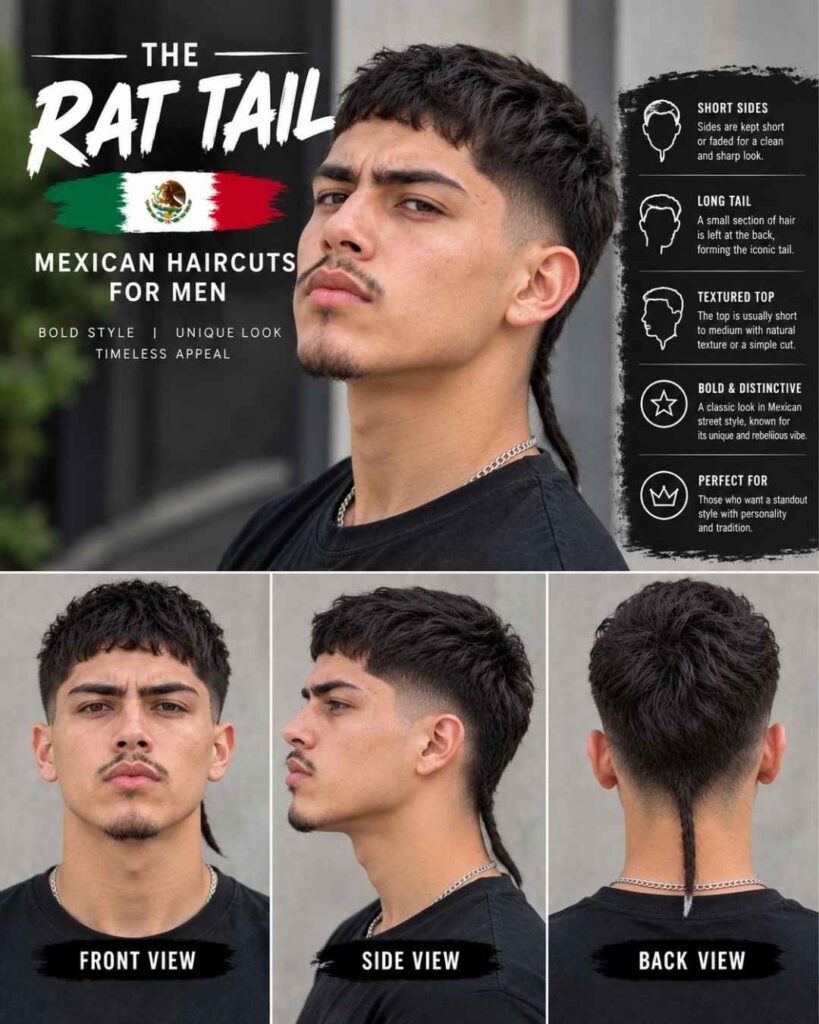
A thin strip of hair left long at the nape while the rest is cropped short is a bolder, more rebellious pick within this style family. It’s less common in professional settings but has a strong presence in youth and streetwear culture, sometimes styled with braids or a subtle color.
The Shag
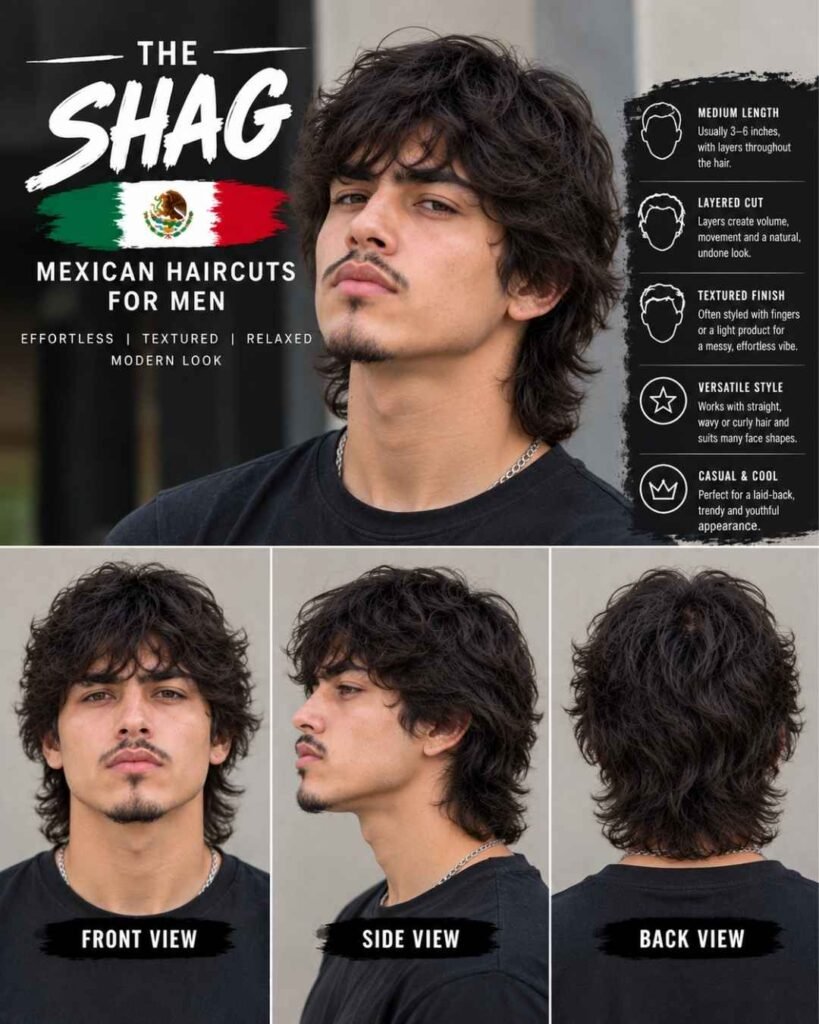
A layered, choppy cut with textured, feathered ends, the shag brings a looser, more artistic energy than the sharper fades above. It works on straight and wavy hair and doesn’t rely on a hard fade line, making it a lower-maintenance option for guys who want texture without frequent barbershop visits.
The Mohawk
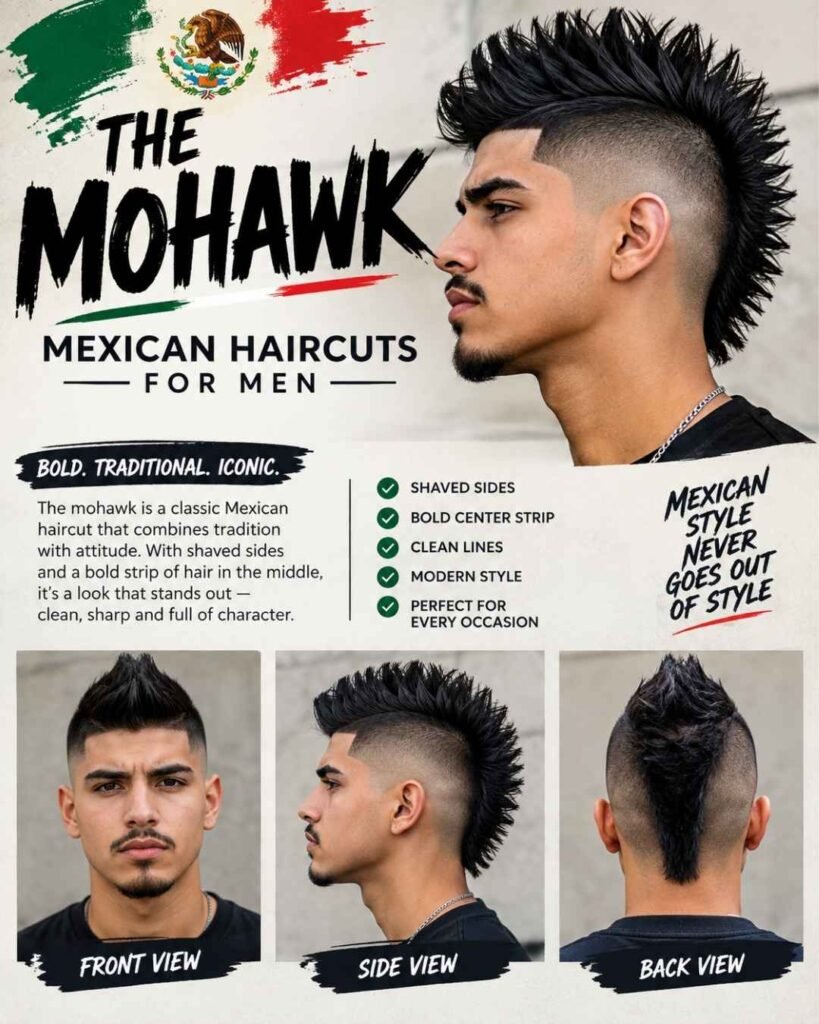
Sides shaved or faded down to almost nothing with a strip of longer hair running from front to back. Latino barbers often pair this with a skin fade rather than a fully shaved side, giving the mohawk a cleaner, more modern silhouette than its punk-era predecessor.
You May Like: Channing Tatum Buzz Cut: The Complete Guide to Getting the Look
Pairing the Cut with Facial Hair and Design Lines
Most of these haircuts are finished, not started, at the beard. A skin-fade Edgar or Mexican fade looks incomplete without a clean beard line connecting the sideburns to the jaw, so barbers usually blend the fade directly into light stubble or a full beard rather than leaving a gap between hair and facial hair.
Design lines are another common add-on, especially with buzz cuts and skin fades. A single shaved part, a zigzag above the ear, or a small etched initial gives an otherwise simple cut extra personality without changing the overall shape. These work best on shorter styles where the design has clean skin to stand out against; they tend to get lost in longer, textured tops like a shag or curly fade.
If you want a design, ask specifically for a “razor line design” rather than just “something extra,” since barbers price and plan these differently depending on complexity. A single straight line takes a few minutes; detailed etching can add real time to your appointment.
Regional and Generational Differences
Mexican haircuts for men don’t look identical from one region to the next. In South Texas and the Rio Grande Valley, the Edgar and Takuache-associated cuts dominate, often paired with cowboy boots and Western wear as part of the broader Takuache identity. In California and the Southwest more broadly, slicked styles, hard parts, and lowrider-era pompadours carry more weight, cuts with roots going back to Chicano style from the 1940s through the 1970s.
Older generations often lean toward the slick back, pompadour, or a clean taper fade with a side part, styles associated with barbershop tradition and formalwear. Younger men, particularly Gen Z, have driven the popularity of the Edgar cut, mullets with faded sides, and bolder design work. Neither generation’s preference is more “authentic” than the other; they reflect different decades of the same barbering lineage.
Choosing a Cut Based on Face Shape and Hair Type
| Face Shape | Works Well | Best Avoided |
|---|---|---|
| Round | Pompadour, high fade with height on top | Buzz cut with no length up top |
| Square | Edgar cut, textured crop, slick back | Styles that add width at the jaw |
| Oval | Almost everything, mullet, mohawk, curly fade | Few restrictions |
| Long/Rectangular | Fringe styles, Edgar cut with straight bangs | Very tall pompadours |
| Diamond | Textured top with mid fade, side part | Styles that emphasize cheekbone width |
Hair type matters just as much as face shape:
- Thick, straight hair holds sharp shapes well: Edgar cuts, slick backs, and hard-part fades all look crisp.
- Wavy hair suits textured crops, fringe cuts, and pompadours, since natural movement adds dimension without extra product.
- Curly or coily hair looks best with longer tops and scissor-cut layers rather than clipper-heavy designs, paired with a fade for contrast.
How to Talk to Your Barber: Key Terms to Know
Walking in with the right vocabulary saves you from a haircut that misses what you pictured. These are the terms Mexican and Latino barbers use most often:
- Skin fade — sides cut down to bare skin, the sharpest fade option.
- Taper fade — a gentler blend from short to longer, less contrast than a skin fade.
- Hard part — a shaved line separating the fade from the top section.
- Edgar / Takuache cut — skin fade with a blunt, straight fringe.
- Line-up — the shaved outline defining the hairline, temples, and neckline.
- Low, mid, or high fade — refers to where on the head the fade begins.
- Clipper-over-comb — a technique for blending length without a razor.
Bringing a reference photo still helps, since the same term can be interpreted slightly differently between barbers.
You May Like: Mid Fade Black Hair: A Complete Guide to Styles, Care, and Getting It Right
Maintenance and Styling Tips
Fades don’t stay sharp forever. A skin fade typically needs a touch-up every two to three weeks to keep the contrast clean, while a low taper fade or buzz cut can usually stretch to four weeks. Slick backs, pompadours, and mullets grow out more gracefully since the length on top absorbs regrowth better than a hard fade line does.
For styling products, match the finish to the cut. A matte clay or paste gives texture and hold for Edgar cuts and textured crops without shine. A strong-hold gel or pomade is what creates the wet, reflective finish on a slick back or pompadour. Curl cream or a lightweight leave-in works best on curly tops, applied to damp hair before air-drying or diffusing.
Washing frequency matters too. Faded sides show buildup and flat spots quickly, so a light rinse every couple of days keeps the cut looking fresh, while curly tops generally do better with less frequent washing to avoid stripping natural oils.
Frequently Asked Questions
What is the most popular Mexican haircut for men right now?
The Edgar cut, a skin fade paired with a blunt straight fringe, remains the most requested style, especially among younger men in Latino communities across the American Southwest.
Is the Edgar haircut only for straight hair?
No. While it’s cleanest on thick, straight hair, barbers regularly adapt the Edgar for wavy and curly hair by adjusting how the fringe is cut and textured.
How often should I get a fade touched up?
A skin fade needs a refresh every two to three weeks to stay sharp. Lower-contrast tapers and buzz cuts can typically go three to four weeks between visits.
What’s the difference between a Mexican fade and a regular fade?
There’s no technical difference in the clipper work. “Mexican fade” usually describes the overall look, a close fade paired with a fuller, textured top, rather than a distinct cutting technique.
Can I get these haircuts with curly hair?
Yes. Curly and coily hair pairs especially well with a faded or tapered side left short, combined with a longer, scissor-cut top that lets the natural curl pattern show.
What should I say to my barber to get a Takuache cut?
Ask for a “skin fade with a straight, blunt fringe” and mention the Edgar or Takuache cut by name. Bringing a photo reference helps avoid any mismatch in how much fringe length you want.
Are Mexican haircuts appropriate for the workplace?
Many are. A taper or mid fade paired with a slick back, pompadour, or neatly styled top reads as polished and professional. Higher-contrast skin fades, design lines, or a rat tail may be better suited to casual settings depending on your workplace’s dress standards.
How much does a Mexican fade haircut typically cost?
Pricing varies widely by barbershop, city, and whether you add a design or beard line, so it’s worth calling ahead or checking a shop’s posted rates rather than assuming a fixed price nationally.
Do I need special products for a curly top with faded sides?
A lightweight curl cream or leave-in conditioner applied to damp hair, followed by air-drying or low-heat diffusing, is usually enough to keep curls defined without weighing them down or causing frizz.
Final Thoughts
Mexican haircuts for men aren’t a single trend; they’re a living style tradition shaped by decades of barbershop craft and a newer wave of youth culture that pushed cuts like the Edgar into the mainstream. Whether you want the sharp statement of a skin-fade Edgar, the timeless polish of a slick back, or a low maintenance curly fade, the common thread is precision: clean lines, confident shapes, and a top that actually gets styled rather than left flat.
