

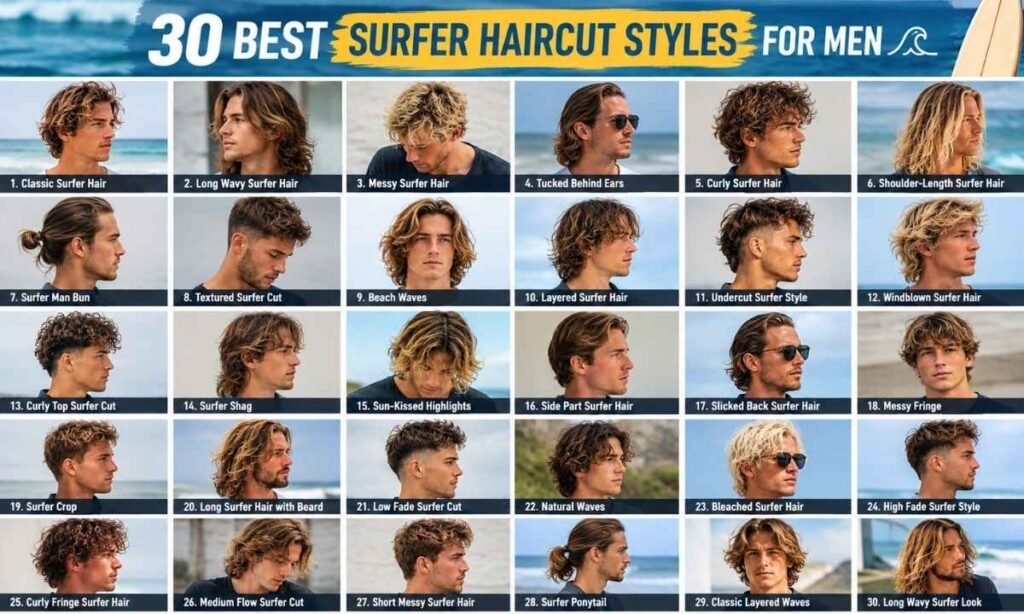
A surfer haircut is a loose, textured, naturally wavy cut that looks like it dried in sea air. It works on short, medium, and long hair, and it suits most guys willing to spend a few minutes shaping it. Below are 30 styles, plus how to choose, style, and grow one out.
What Is a Surfer Haircut?
A surfer haircut is a relaxed, lived-in style built on movement and texture rather than sharp lines. Think of hair that looks windblown, slightly sun-lightened, and effortless. The look comes from layering, a soft finish, and a bit of styling product, not from a rigid shape.
The Core Features
Most surfer cuts share a few traits. The hair has visible texture, usually waves or loose bends. The ends are choppy or feathered instead of blunt. The front falls forward or sweeps to the side. Finally, the finish is matte or low-shine, never slick or stiff.
The best versions also look unplanned. If every strand sits in a precise place, it has drifted away from surfer territory and into a more formal style.
Short, Medium, or Long
Surfer hair is not one length. Short versions sit above the ears and rely on a textured crop or fringe. Medium versions fall between the ears and the collar, and they are the most common. Long versions reach the shoulders or beyond and lean on layers for shape.
Pick your length first, because it decides your daily effort. A short crop takes two minutes. A long, layered cut takes more care and more patience while it grows.
What Separates It From Plain Long Hair
Long hair left alone often hangs flat and heavy. A surfer cut is shaped with layers that remove weight, so waves can form and the ends stay light. Barbers often cut into the ends with a razor or thinning shears to create that broken-up edge.
Styling matters as well. Surfer hair is usually scrunched or air-dried with a texturizing product, which gives it body that plain long hair lacks.
How to Choose a Surfer Haircut That Fits You
The right surfer cut depends on four things: your hair type, your density, your face shape, and how much time you actually spend on your hair. Choosing with these in mind prevents the most common disappointment, which is a photo-perfect cut that falls flat at home.
Step 1: Match the Cut to Your Hair Type
Wavy hair is the easiest match. It already bends the way surfer styles need, so most cuts here work with little help. Curly hair suits rounder, fuller shapes such as the curly surfer, since cutting it too short can make it expand sideways.
Straight hair can still pull off the look, but it needs layering and texture products to create bend. Fine straight hair does best at short or medium length. Very coarse straight hair may need regular thinning to avoid a heavy, triangular outline.
Step 2: Check Your Density and Strand Thickness
Density is how many hairs cover your scalp. Strand thickness is how wide each hair is. They are different, and both matter. You can have thin strands in high density, or thick strands in low density.
Low density hair tends to look sparse when cut long and thin at the ends, so a shorter or blunter edge often looks fuller. High density hair handles heavy layering well. If your hair feels bulky, ask for internal layers to take out weight without losing length.
Step 3: Consider Your Face Shape
Surfer hair frames the face, so shape matters. Use this table as a starting point, not a rule.
| Face shape | Styles that tend to work | What to avoid |
|---|---|---|
| Oval | Almost any length or layer | Nothing major |
| Round | Volume on top, tapered sides | Wide, heavy sides |
| Square | Soft fringe, textured layers | Sharp, boxy cuts |
| Oblong | Side-swept fringe, medium length | Very long, flat hair |
| Heart | Chin-length layers, side part | Heavy top volume |
If you are unsure, take a front-facing photo, pull your hair back, and look at your jaw and forehead width. Then show your barber.
Step 4: Be Honest About Your Lifestyle
A style you cannot maintain will not look good for long. If you swim often, chlorine and salt will dry out long hair quickly. If you work in an office with a dress code, a tidy medium cut may suit you better than a long, wild one.
Ask yourself how many minutes you will give your hair each morning. Under five minutes points to short or medium. More than ten opens up long layered styles.
The 30 Best Surfer Haircuts for Men
Short Surfer Styles
1. Short Textured Crop with Beach Finish
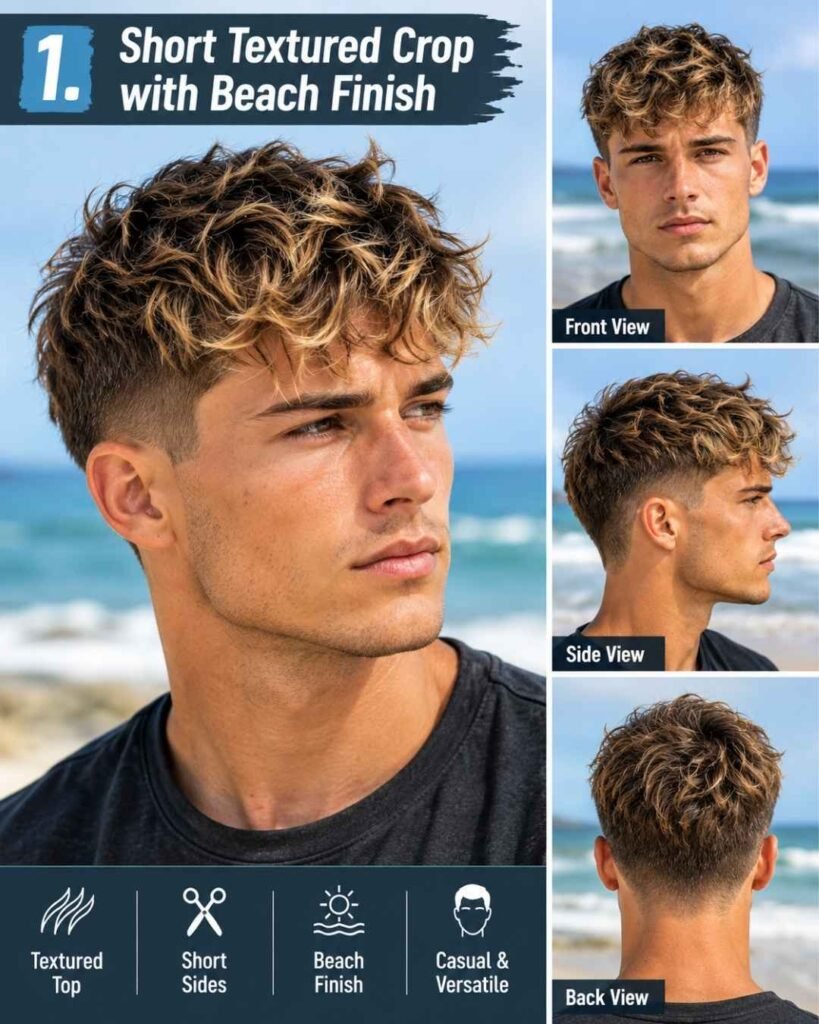
This is a cropped cut with choppy texture on top and a soft, matte finish. It keeps the surfer feel without the length. A small amount of sea salt spray, worked through with the fingers, gives it that just-out-of-the-water look.
Best for: Guys who want low effort and a clean outline.
2. Tousled Curtain Bangs (Surfer Curtains)
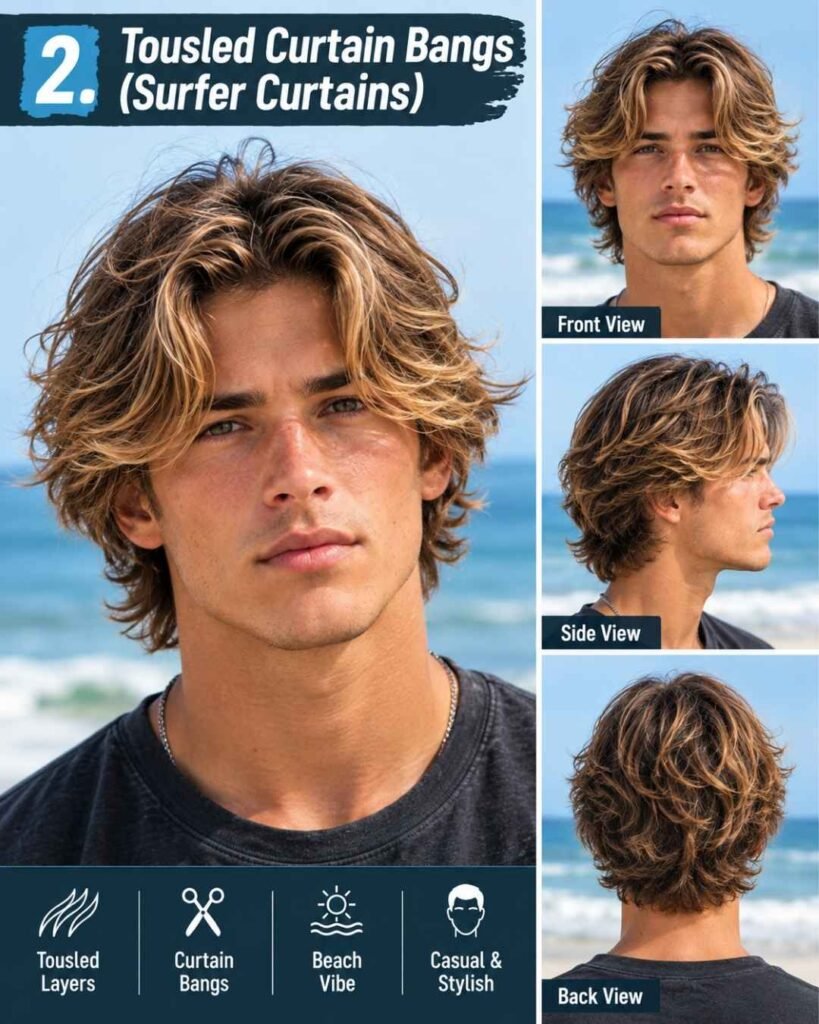
The hair parts in the middle and falls to each side of the forehead. On a short cut, the bangs reach about eye level and the sides stay neat. It reads as a modern take on 1990s hair, and it works best on wavy or slightly bent strands.
Best for: Oval and oblong faces with medium density.
3. Surfer Fringe with Tapered Sides
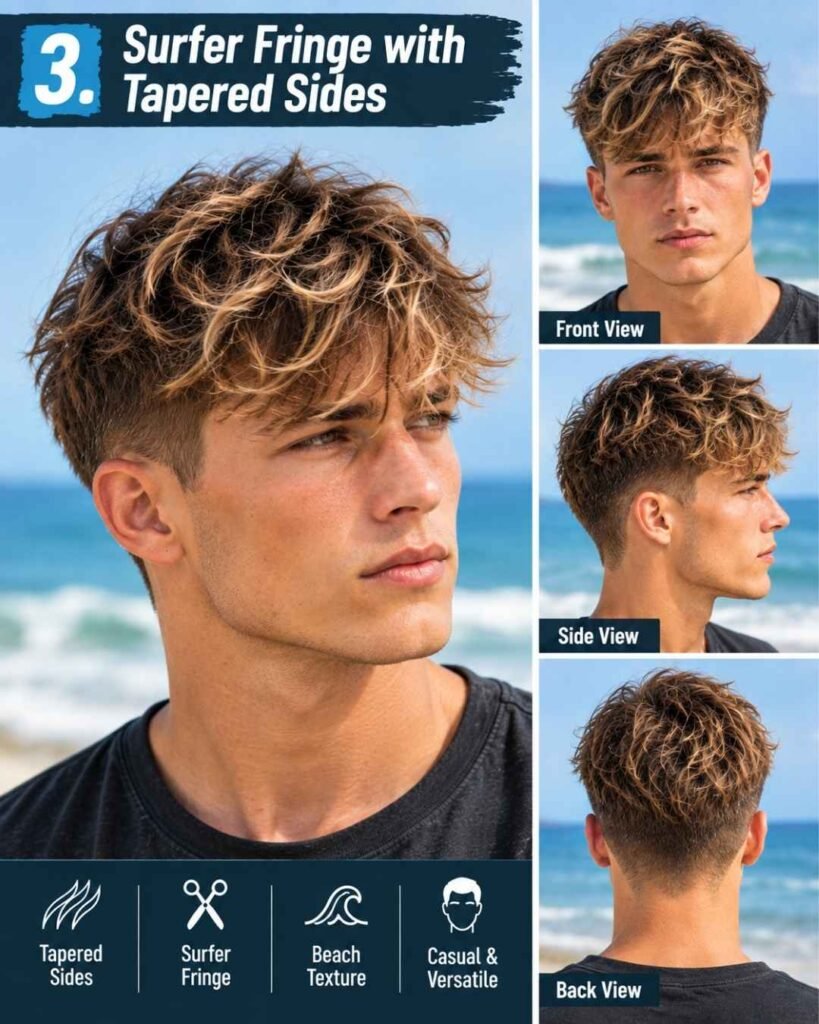
A longer, forward-falling fringe sits over a gradual taper at the sides and back. The contrast keeps the style neat while the top stays loose. Ask for the taper to blend smoothly so it does not look like a hard line.
Best for: Guys who want tidy sides and a messy top.
4. Short Surfer with Low Fade
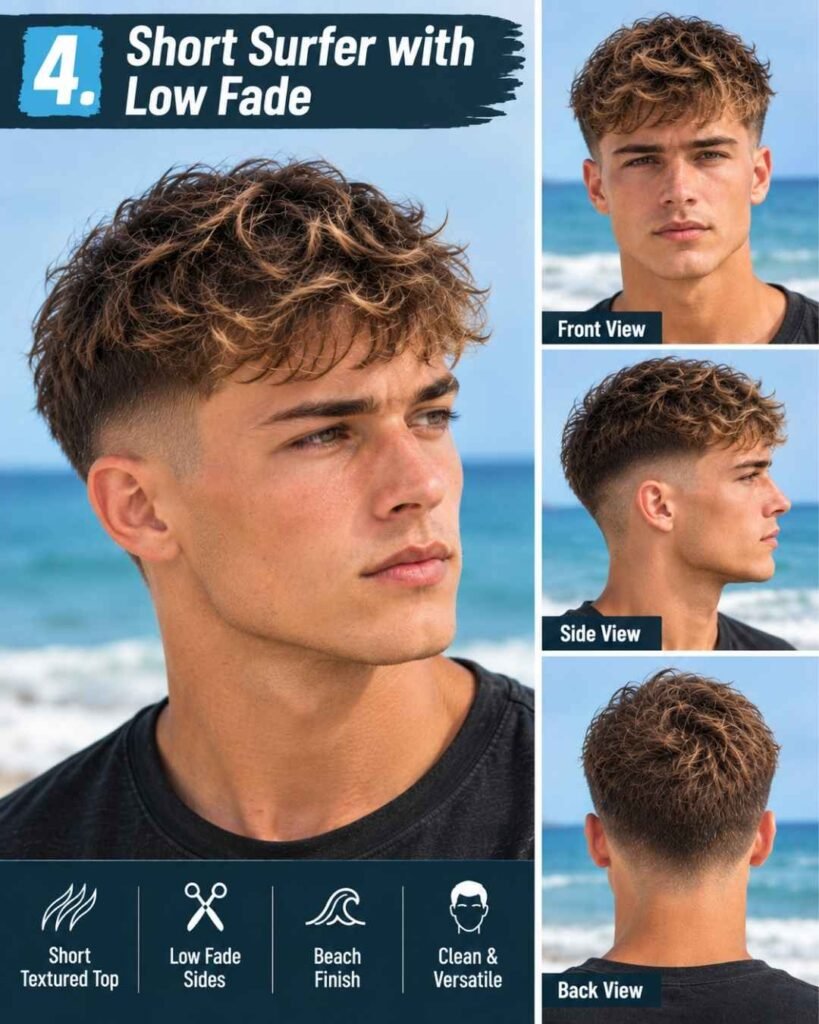
A low fade starts just above the ear and neckline, leaving most of the sides intact. The top stays textured and a bit longer. It is a good entry point if you have never worn a surfer style before.
Best for: Professional settings that still allow some texture.
5. Short Wavy with Temple Fade
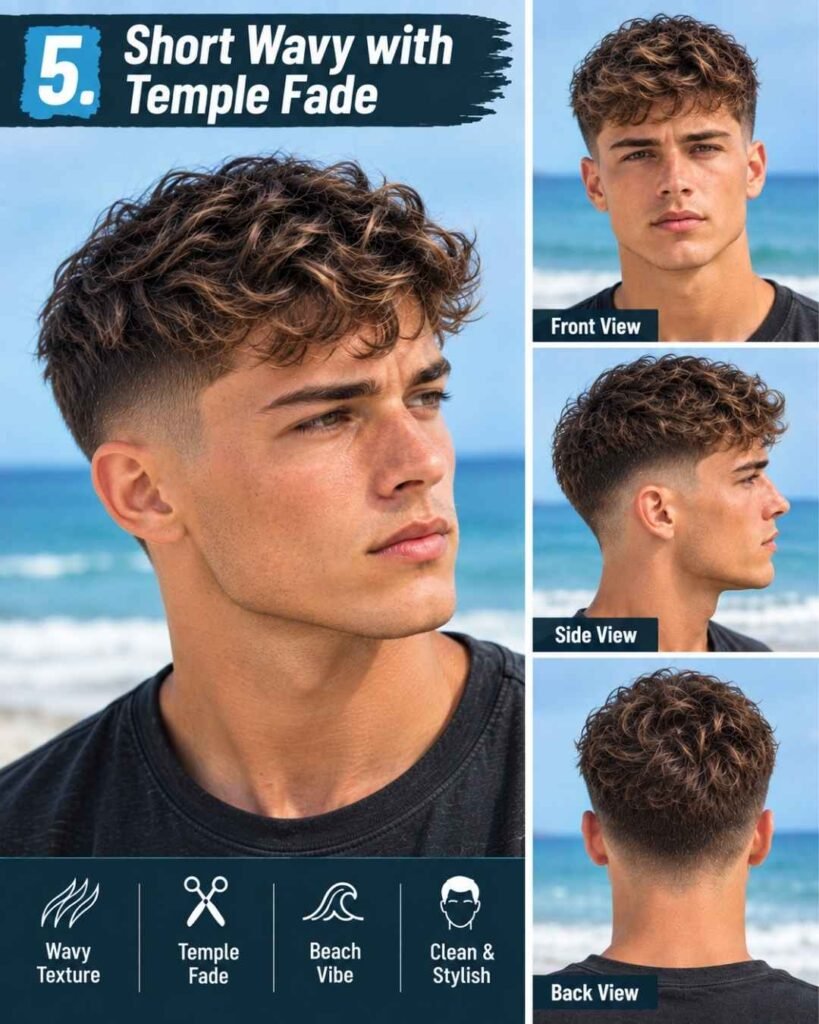
Here the fade sits mainly around the temples, which sharpens the frame of the face. The top waves are left natural. This cut suits naturally wavy hair, since the fade highlights the texture above it.
Best for: Wavy hair that needs a cleaner outline.
6. Short Messy Crop with Highlights
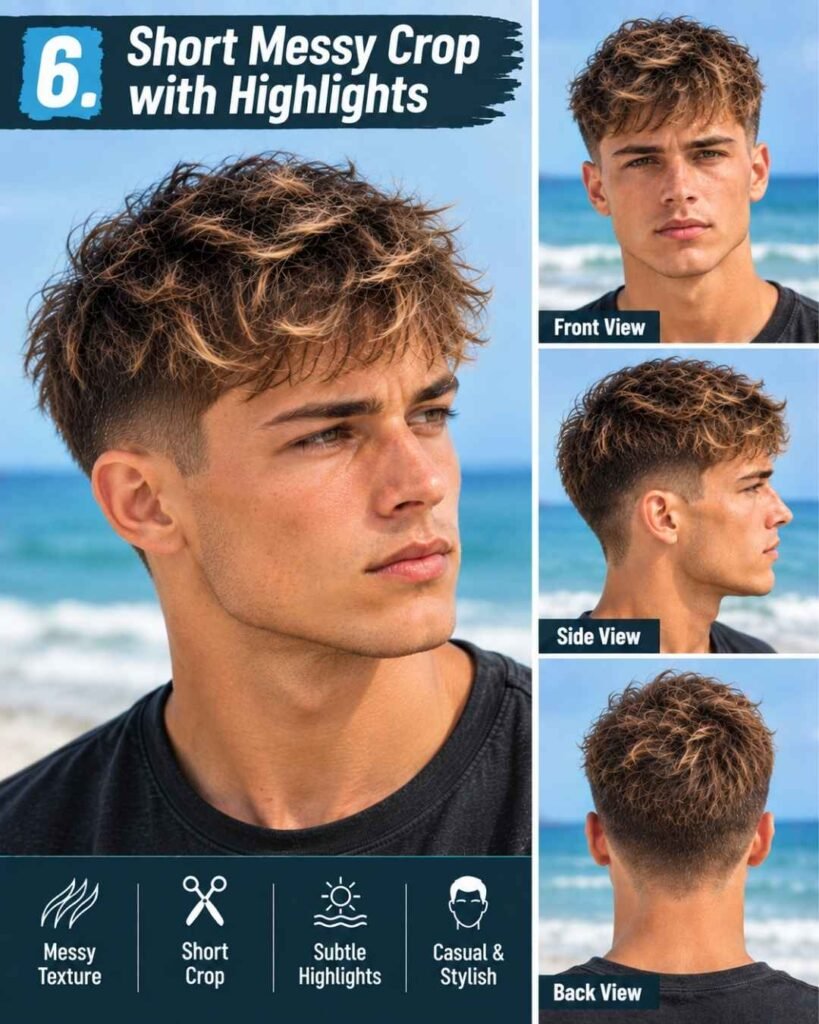
Light, sun-style highlights add dimension to a short textured crop. They draw attention to the choppy layers and make the cut look like it has seen a summer outdoors. Ask a colorist for soft, uneven placement rather than uniform stripes.
Best for: Darker hair that needs visual depth.
7. Textured French Crop with Beach Finish
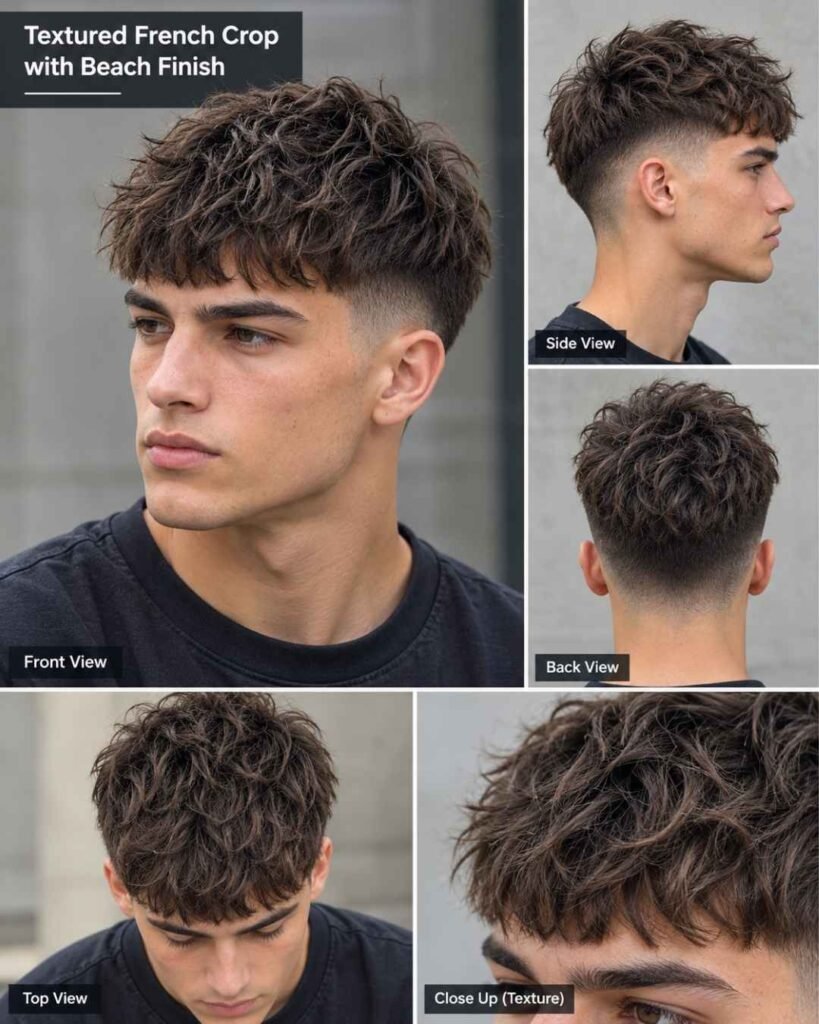
The French crop has a short, blunt fringe and a textured top. The beach finish loosens it up so it looks less structured. It is a strong choice for straight or thin hair because the short length hides density gaps.
Best for: Fine or thinning hair that needs a fuller look.
Medium Surfer Styles
8. Medium Beach Waves
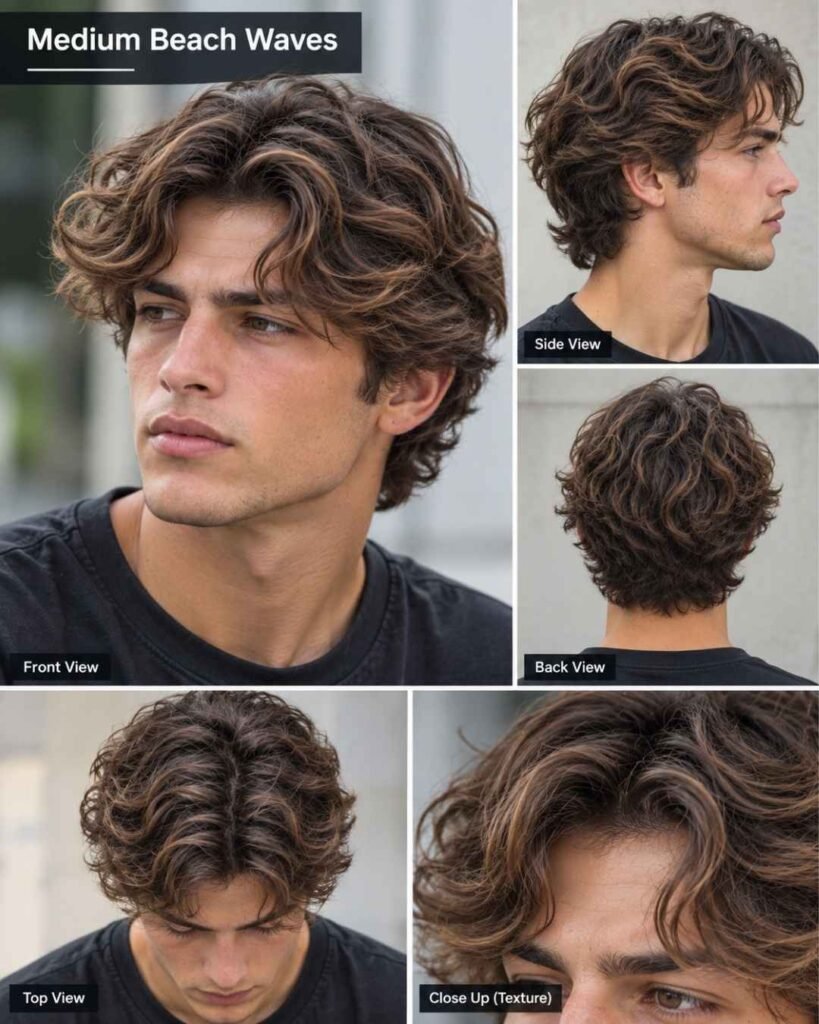
This is the classic surfer cut. The hair falls between the ears and collar, with loose waves and layered ends. Air-drying with a bit of texture cream usually does most of the work. It is the style most people picture first.
Best for: Wavy hair and anyone who wants the standard look.
9. Wavy Quiff with Sea Salt Texture
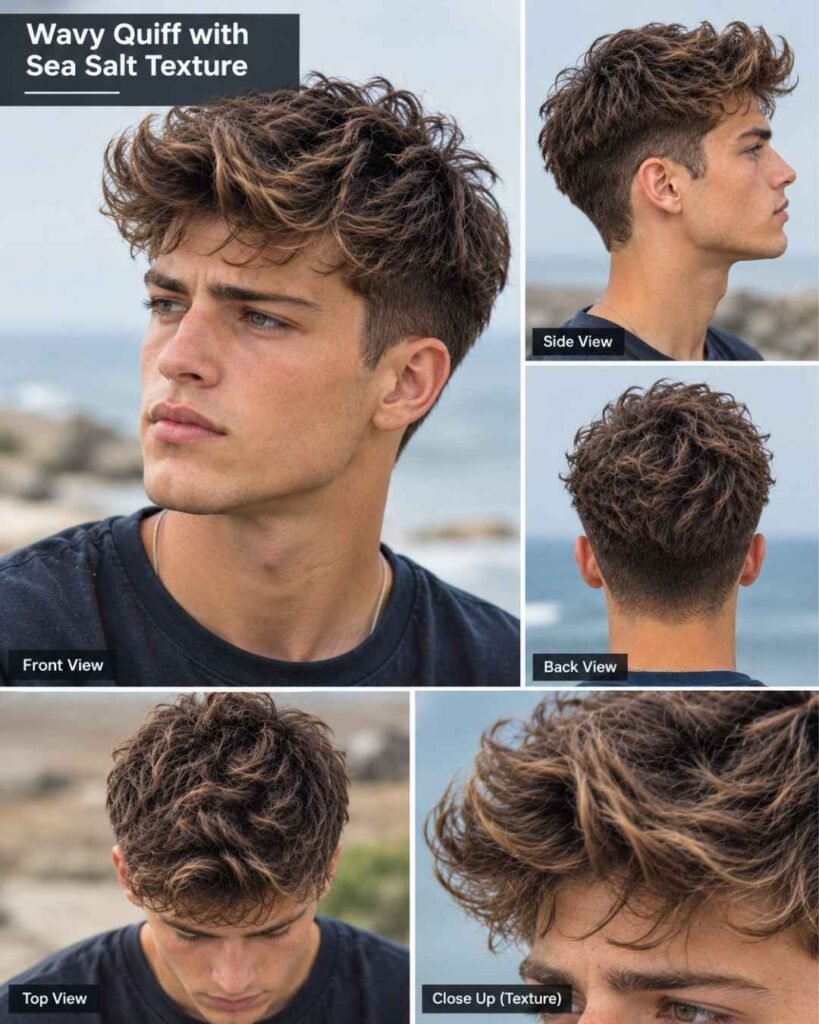
A quiff lifts the front upward and back, while sea salt spray keeps the finish rough and flexible. It adds height without stiffness. Blow-dry the front upward for a minute, then scrunch in the product.
Best for: Guys wanting volume and a bit more polish.
10. Medium Curly Surfer
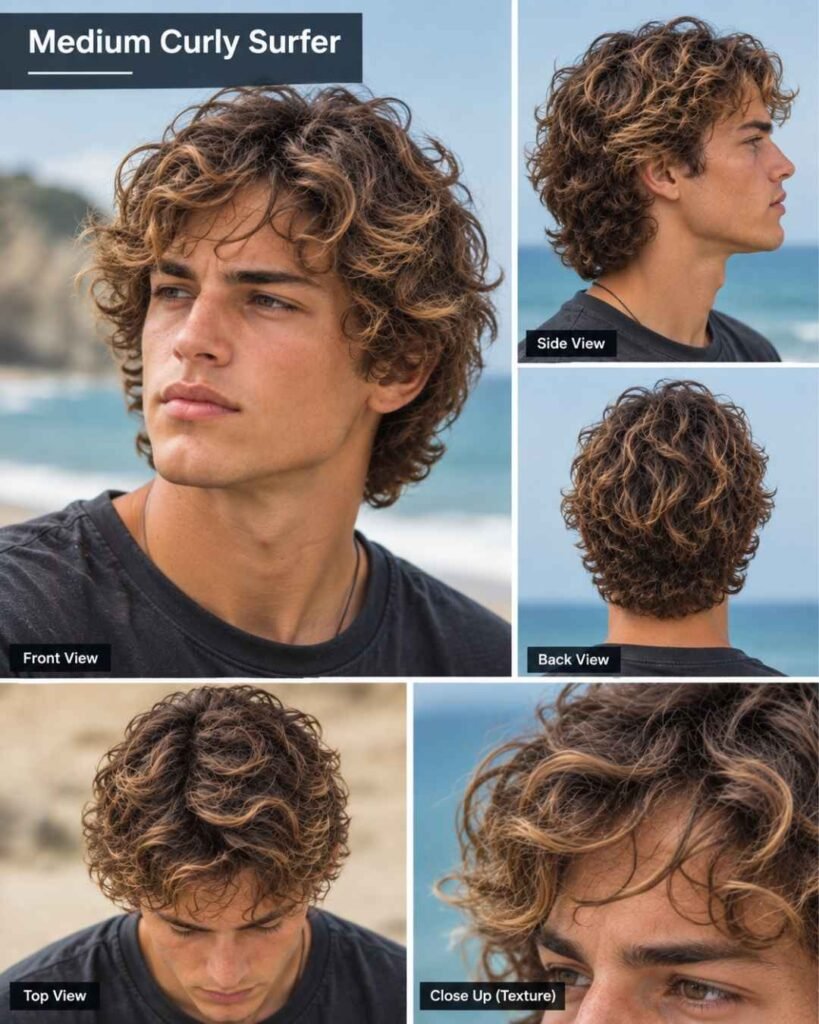
Curls at medium length form a rounded, springy shape. The cut removes bulk at the sides so the hair does not spread outward. Use a curl cream on damp hair, then let it dry without brushing, since brushing causes frizz.
Best for: Natural curls and coils.
11. Side-Swept Surfer with Volume
The front sweeps across the forehead to one side, and the top holds some lift. It is a flattering style for square and oblong faces, since the diagonal line softens the jaw. A light-hold paste keeps the sweep in place.
Best for: Guys with a strong jaw or a long forehead.
12. Surfer Shag Hybrid
This borrows from the shag haircut with heavy layering around the crown and a rougher, uneven length. It creates a lot of movement and suits thick hair. It does need regular trims to keep the layers from growing into a shapeless mass.
Best for: Thick hair and people who like a rock-and-roll edge.
13. Textured Mullet with Beach Finish
A modern mullet keeps the top and sides shorter while the back grows longer, then roughs everything up with texture. The beach finish keeps it from looking retro or costume-like. It takes some confidence, but it is an increasingly common option.
Best for: Confident dressers who want something distinct.
14. Neck-Length Choppy Layers
The hair ends at the nape of the neck with visible, uneven layers. It sits between medium and long and is easy to tie back on hot days. The choppy ends stop it from looking blunt or heavy.
Best for: Straight hair that needs more movement.
15. Brushed-Back Beach Waves
Waves are swept back from the forehead instead of falling forward. This opens up the face and works well for guys with a high hairline or a strong brow. Use a bit of pomade on the front to hold the direction.
Best for: Guys who dislike hair in their eyes.
16. Surfer Fringe with Mid Fade
This pairs a longer fringe with a mid fade that starts around the middle of the sides. The contrast is stronger than with a taper or low fade. It looks sharp and modern, though it needs a barber visit about once a month.
Best for: Guys who like a defined, contrasting shape.
17. Medium Tousled with Deep Side Part
A deep side part, cut closer to the temple, gives the hair a dramatic sweep. The tousled texture keeps it relaxed. Part it while the hair is damp, then dry it in the same direction so the part holds.
Best for: Guys who want a hint of classic style.
18. Medium Surfer with Beard
A medium cut pairs naturally with a short or medium beard, since both share the same relaxed look. Keep the beard trimmed at the cheeks and neck so the whole look appears intentional rather than unkempt.
Best for: Bearded guys with wavy or straight hair.
19. Medium Tousled with Soft Undercut
A soft undercut shortens the lower sides and back without a harsh contrast. The longer top falls over it. It reduces bulk in thick hair and keeps the shape manageable between trims.
Best for: Thick hair that feels heavy at the sides.
Long Surfer Styles
20. Long Flowing Surfer Hair
The hair falls past the shoulders with long, soft layers. Waves form naturally when the hair is air-dried. This style takes the most care, so a regular conditioning routine matters more here than anywhere else in this list.
Best for: Guys with healthy, dense hair and patience.
21. Messy Top Knot (Surfer Bun)
The hair is gathered high on the head in a loose, deliberately messy knot. It keeps long hair out of the face during sports and looks relaxed when a few strands escape. Use a soft hair tie to avoid creasing and breakage.
Best for: Active guys with medium to long hair.
22. Wet-Look Surfer Styling
This style uses gel or a wet-look cream to give long hair a damp, just-surfaced finish. It is bolder than other options here. Keep the product light, because too much leaves hair looking greasy instead of glossy.
Best for: Evenings out or photos.
23. Shoulder-Length Straight Surfer
On straight hair, shoulder length with long layers gives a clean surfer variation. Add texture spray to create some bend. It looks smooth but not stiff, and it suits those with naturally sleek hair.
Best for: Straight, medium-thick hair.
24. Long Curly Surfer Flow
Long curls form loose spirals that move freely. Keep layers modest, since too many can make curls look fuzzy and uneven. A leave-in conditioner and a diffuser help define the curl pattern without frizz.
Best for: Curly hair with good moisture levels.
25. Layered Lob (Surfer Long Bob)
A lob sits at the collarbone, with layers that angle slightly toward the face. It is easier to manage than hair past the shoulders while retaining the long surfer silhouette. Trim every couple of months to keep the shape.
Best for: Guys who want length without much weight.
26. Wind-Swept Layers on Thick Hair
Thick hair needs layers cut with care to avoid a bulky outline. Long, uneven layers add movement, and texture spray gives them a wind-blown quality. A skilled barber can thin the interior so the outside stays full.
Best for: Thick or coarse hair.
27. Surfer Curtains on Straight Hair
Center-parted curtains look sleek on straight hair, and a light wave from sea salt spray makes them feel more relaxed. This style depends on a good haircut, since straight hair shows every uneven line.
Best for: Straight hair and oval or oblong faces.
28. Sun-Bleached Blonde Layers
Lightened layers, especially around the face and crown, imitate natural sun exposure. Bleach weakens hair, so use a bond-repair treatment and book a professional. Doing it at home often leads to brassy or patchy results.
Best for: Light to medium brown hair.
29. Bleached Tips on Dark Base
Lightening only the ends of dark hair creates a gradual contrast. It looks less demanding than full blonde since regrowth is not obvious. A toner can reduce orange tones if the bleach lifts unevenly.
Best for: Dark hair and guys who want a subtle change.
30. Surfer Ponytail
A low or mid ponytail keeps long hair tidy while leaving the front strands loose. It is practical for water sports, gym sessions, and warm weather. Let a few face-framing pieces fall out for the relaxed finish.
Best for: Long hair that needs to stay out of the way.
Quick Comparison: Length, Effort, and Upkeep
This table groups the styles by length so you can compare what each demands. The trim intervals are general guidance, and your barber may suggest something different based on how fast your hair grows.
| Style group | Daily styling | Typical trim interval | Product need |
|---|---|---|---|
| Short crops and fades (1 to 7) | 2 to 3 minutes | 3 to 5 weeks | Low |
| Medium styles (8 to 19) | 3 to 8 minutes | 6 to 8 weeks | Moderate |
| Long styles (20 to 30) | 5 to 15 minutes | 8 to 12 weeks | Moderate to high |
Fades need the most frequent visits, even though the hair on top is short. Long styles need fewer trims but more daily care.
Which Style Is Easiest to Maintain?
The short textured crop and the medium beach wave are the easiest. Both rely on natural texture and need little more than a quick product application. The short crop wins on speed, while the medium wave has more flexibility.
The hardest are fades with a fringe and long flowing hair. One needs constant barber visits, and the other needs steady conditioning and detangling.
How to Style Surfer Hair Step by Step
Styling is simple, but order matters. Applying the right product at the right moment makes the difference between soft, natural waves and a stiff or greasy result.
The Routine
- Wash with a gentle shampoo, then condition the lengths and ends.
- Squeeze out water with a towel. Do not rub, since rubbing creates frizz.
- Apply a leave-in conditioner or sea salt spray to damp hair.
- Scrunch upward with your hands to encourage waves.
- Air-dry, or use a diffuser on low heat.
- Once dry, add a small amount of paste or clay to the ends for definition.
If your hair is very short, skip steps three and four and apply texture directly to dry hair.
Product Guide
| Product | What it does | Best for |
|---|---|---|
| Sea salt spray | Adds grip and rough texture | Straight to wavy hair |
| Texture cream | Defines waves, adds softness | Medium to long hair |
| Matte clay or paste | Holds shape without shine | Short to medium cuts |
| Leave-in conditioner | Reduces frizz and dryness | Curly or long hair |
| Light pomade | Controls the front or part | Brushed-back styles |
Sea salt sprays can dry out hair when used daily, so alternate with a moisturizing product.
Styling Routines by Hair Type
Straight hair: Spray sea salt on damp hair, then scrunch and let it dry. A light texture powder at the roots adds lift. Avoid heavy creams, since they weigh straight hair down.
Wavy hair: Apply a texture cream to damp hair and scrunch. Leave it alone while it dries so the waves can form.
Curly hair: Use a curl cream or gel on soaking wet hair, then diffuse or air-dry without touching. Break any gel cast gently once it is fully dry.
How to Get the Cut Right at the Barber
Many bad surfer cuts come from poor communication, not poor skill. Words like “messy” or “beachy” mean different things to different people. Bring photos and use specific language.
Useful Phrases to Use
- “Lots of texture and choppy ends”
- “Keep the length, remove weight”
- “Point cut the ends”
- “Soft, blended sides with no hard line”
- “I want it to air-dry and still look good”
These phrases tell your barber the finish you expect, not just the length.
What to Tell Your Barber
Mention how you plan to style it. If you air-dry and use almost no product, say so. A cut designed for a blow-dryer will look different when left alone.
Also mention your hair’s natural pattern, any cowlicks, and how quickly it grows. If you plan to grow it out, say that too, so the barber shapes it with the next few months in mind.
Sample Script
“I want a medium surfer cut. Keep the length around my ears and collar, add some choppy layers, and leave the front long enough to sweep to the side. Please blend the sides without a sharp line. I air-dry my hair and use sea salt spray, so I need it to hold texture without much effort.”
Show a photo along with this, and ask the barber to confirm the plan before cutting.
How to Care for Surfer Hair
Surfer hair looks effortless, but it still needs care. Salt, sun, and frequent washing all strip moisture, and dry hair loses the soft shine that makes the style look good.
Protect Against Salt and Sun
Rinse your hair with fresh water after swimming in the ocean or a pool. Salt and chlorine both dry the strands. A leave-in conditioner before getting in the water creates a small barrier.
For sun, a hat or a UV-protective hair product reduces damage. Prolonged sun exposure can fade color and weaken hair, especially if it is bleached.
Wash and Trim Wisely
Washing every day can remove natural oils, so many people with dry or curly hair wash every two to three days. Oily hair may need more frequent washing, and that is fine.
Regular trims remove split ends before they travel up the strand. Even a long style benefits from a light trim every couple of months.
Deep Conditioning Routine
Use a deep conditioner or hair mask once a week, or every two weeks if your hair is healthy. Apply it to the mid-lengths and ends, leave it for the time on the label, then rinse well.
Bleached or heat-styled hair may benefit from a bond-repair treatment. Follow the product directions, and avoid mixing several strong treatments in one week.
Look After Your Scalp
A healthy scalp supports healthy hair. Massage your scalp while shampooing to loosen buildup, and rinse thoroughly so no product remains. If you notice constant flaking, itching, or redness, a dermatologist can tell you whether it is dandruff or another condition.
Protect Your Hair From Heat and Friction
Blow-dryers and straighteners can dry out hair, so use the lowest heat that works and apply a heat protectant. Rough towels and tight hair ties cause friction and breakage.
Switch to a microfiber towel or a soft cotton T-shirt, and use a fabric-covered hair tie. A silk or satin pillowcase may also reduce tangling overnight for longer hair.
How to Grow Out Your Hair for a Surfer Cut
Growing out your hair takes time, and the middle stage can feel frustrating. A plan helps you survive it and still end up with a cut that suits your hair.
Growth Timeline
Hair generally grows about half an inch a month, though this varies from person to person. That gives a rough timeline.
| Stage | Approximate time | What to expect |
|---|---|---|
| Short crop to short surfer | 2 to 3 months | Top gets longer, sides need tidying |
| Short to medium | 6 to 10 months | Awkward length, hair flicks outward |
| Medium to long | 12 to 18 months | Layers start to form natural waves |
These are estimates, and your own growth rate may be faster or slower.
Getting Through the Awkward Stage
The awkward stage usually lands when hair is too long to look neat and too short to tuck away. A few things help.
- Get light trims every eight to ten weeks to shape the growth without losing length.
- Use a matte paste or clay to control sticking-out sections.
- Wear a beanie or headband on bad days.
- Try a side part or a half-back style to hide the shape.
Be patient and avoid cutting it all off at the first sign of frustration. A trim shaped by a barber who knows your plan is better than starting over.
Common Surfer Haircut Mistakes to Avoid
Most surfer-cut problems come from a handful of repeated errors. Avoiding them saves you time and money.
- Using too much product. Heavy pastes or gels weigh the hair down. Start with a pea-sized amount and add more only if needed.
- Skipping trims. Long hair still needs shaping. Without it, layers grow out unevenly and the style loses its form.
- Choosing a style that ignores hair type. Straight, fine hair rarely holds the same curl as thick, wavy hair. Pick a cut suited to what you have.
- Over-washing. Daily shampooing can leave hair dry and frizzy, especially for wavy and curly types.
- Brushing curly or wavy hair when dry. This breaks up the pattern and creates frizz. Use fingers or a wide-tooth comb on damp hair.
- Ignoring the neckline and sides. A messy top is fine, but untidy edges make the whole look appear neglected.
- Bleaching without aftercare. Lightened hair needs extra moisture and repair. Without it, the strands become brittle.
- Copying a photo without a plan. A picture helps, but the model may have different hair. Discuss the result honestly with your barber.
Frequently Asked Questions
What is a surfer haircut?
A surfer haircut is a textured, layered, naturally wavy style that looks relaxed and windblown. It can be short, medium, or long, with a matte finish.
Does a surfer haircut work on straight hair?
Yes. Layering and sea salt spray create bend and texture, though straight hair usually looks best with medium length and choppy ends.
How long does hair need to be for a surfer cut?
Short versions need about two inches on top, while medium styles need roughly three to five inches. Long styles need hair past the shoulders.
What product is best for surfer hair?
Sea salt spray or texture cream gives the best natural finish. Add a small amount of matte paste to define the ends.
How often should I get a trim?
Short cuts and fades need a trim every three to five weeks. Medium and long styles do well with trims every six to twelve weeks.
Can I get a surfer cut with thin hair?
Yes. Choose a shorter, textured crop or a medium cut with light layers, and avoid thinning the ends too much.
How do I stop surfer hair from getting frizzy?
Use a leave-in conditioner, avoid brushing dry hair, and limit washing. Air-drying or diffusing on low heat also reduces frizz.
Is a surfer haircut suitable for work?
Yes, in most settings. A short crop, low fade, or tidy medium cut with defined edges usually looks professional.
Conclusion
A surfer haircut works because it is flexible. You can wear it short and cropped, medium and wavy, or long and loose, and you can adjust the effort to match your life. The best choice starts with your hair type, density, and face shape, not just a photo.
Pick one of the 30 styles above, bring clear references to your barber, and match your styling and care routine to the length you choose. With a good cut and a small amount of attention, surfer hair looks relaxed because it is well planned.
