

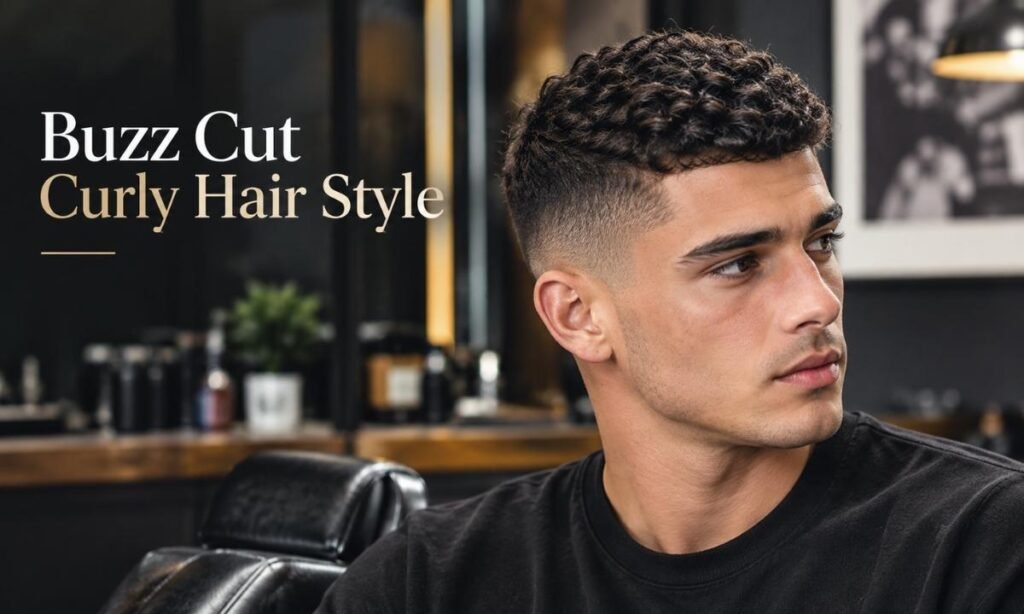
Curly hair used to get skipped over in most buzz cut guides, as if the style only worked on straight strands. That’s outdated. A buzz cut on curly hair behaves differently than it does on straight hair, and once you understand why. It’s easier to pick a length and shape that actually flatters your curl pattern instead of fighting it.
This guide covers what a curly buzz cut looks like at different clipper guard lengths, how to match the cut to your curl type and face shape. What the grow-out phase feels like, and how to keep it looking sharp between trims.
What Is Buzz Cut Curly Hair and Why It Works
A buzz cut is a haircut done almost entirely with clippers, using a guard attachment to leave a uniform length across the head. On straight hair, that length lies flat. On curly hair, each strand still tries to coil, so the same guard number leaves more visible texture and a slightly raised, fuller finish.
That difference is why curly buzz cuts read as textured rather than shaved, even at guard numbers that would look almost bare on straight hair. The curl pattern does most of the visual work, turning a plain short cut into something with actual shape and dimension.
It also changes how the cut ages between trims. Straight hair grows out in flat layers that start looking shaggy fast. Curly hair grows outward before it grows down, so for the first couple of weeks after a trim, the change is mostly in width rather than length. That gives a curly buzz cut a slightly longer window of looking clean before a touch-up is needed.
Popular Buzz Cut Curly Hair Styles
A “buzz cut” isn’t one single look. On curly hair especially, small changes in length and shape create noticeably different results.
- Classic uniform buzz: One guard length all over, usually a #2 or #3. Curl texture shows as light waviness rather than defined coils. This is the lowest-maintenance version.
- Buzz with a fade or taper: The sides and back are blended down to the skin or close to it while the top stays a guard or two longer. On curly hair, this contrast makes the curls on top stand out more instead of blending into an even length.
- Textured buzz (longer top): A guard 4 or higher on top, kept short on the sides, so the curl pattern is fully visible rather than just implied. This sits closer to a short curly crop than a true buzz.
- Skin buzz: Cut down to bare skin or a #0/#1, sometimes called a “bald buzz.” Curl texture almost disappears at this length, leaving a clean, close finish.
Curly Hair Buzz Cut, 8 Guard
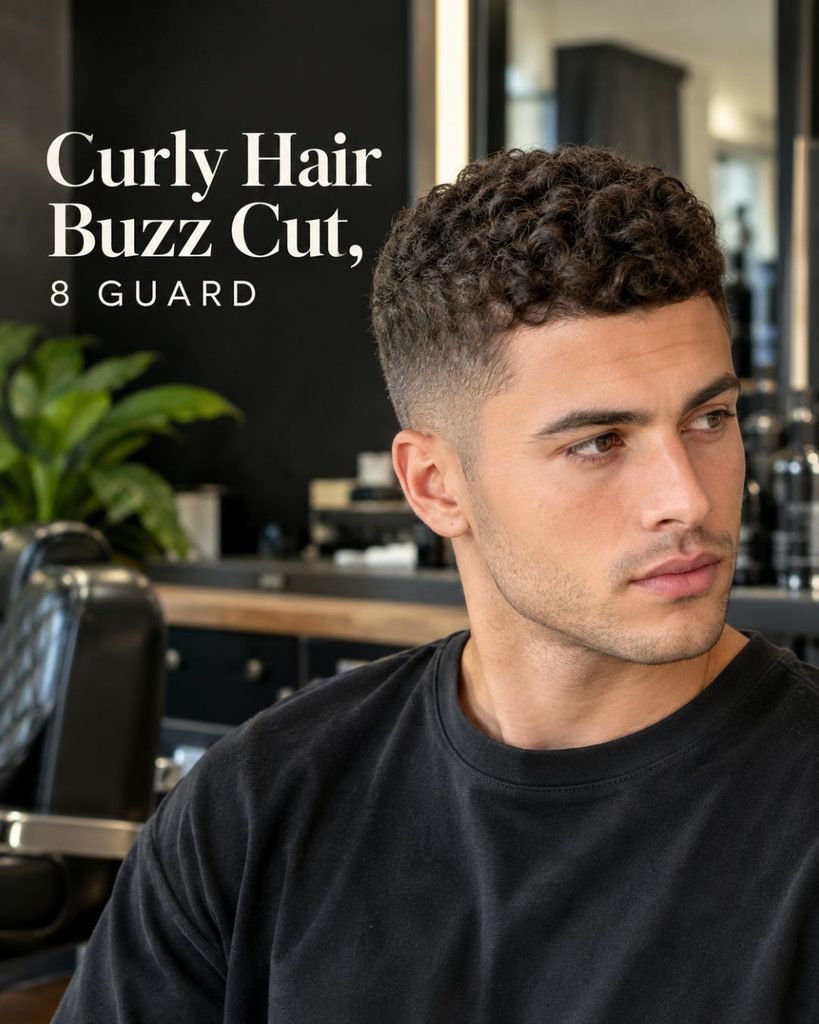
A #8 guard leaves close to an inch of hair, which is longer than most people picture when they hear “buzz cut.” On curly hair, that’s enough length for full curl definition, closer to a short curly crop or mini-afro than a classic buzz. It suits anyone who wants the low-effort structure of a buzz cut but isn’t ready to lose all their curl shape. At this length, curls need a leave-in conditioner or light cream after washing, since short hair dries out faster and can look frizzy without any moisture.
Curly Hair Buzz Cut, Woman
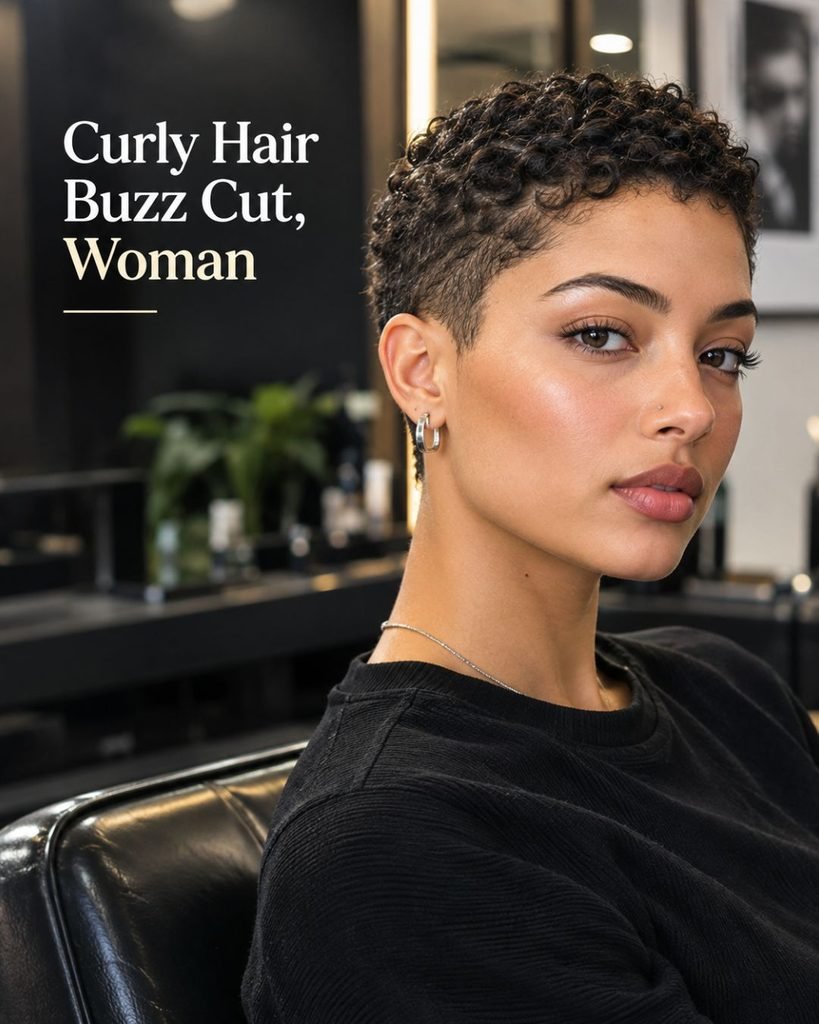
Buzzed curly styles on women aren’t a niche request anymore, and the guard length is really the main decision point. Shorter guards (#1–#2) give a close, textured crop with scalp lightly visible through the hair. Longer guards (#4 and up) keep more curl definition and volume, closer to a rounded crop shape.
A frequent approach is buzzing the sides short and leaving more length on top, which adds shape without giving up the low-maintenance side of the cut. Curly hair shrinks noticeably when wet, so many barbers who work with textured hair prefer to cut it dry, or close to dry, to judge the true finished length before making a final pass.
Buzz Cut Curly Hair With Beard
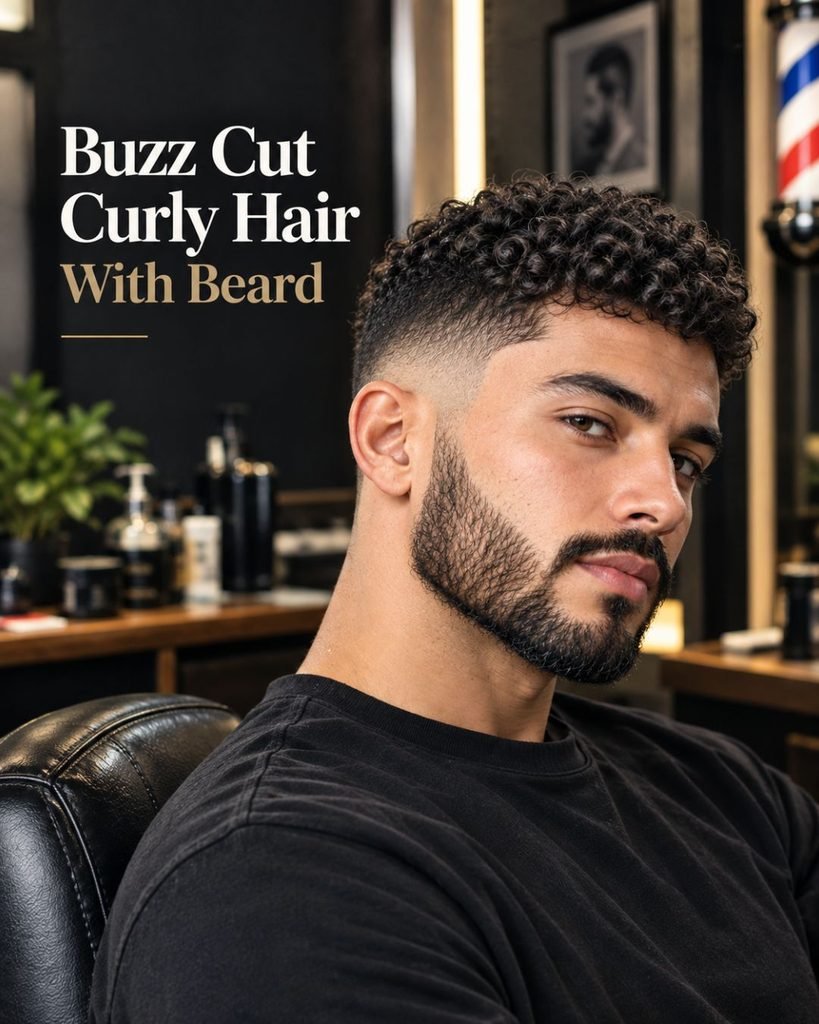
A buzzed curly top paired with a full or shaped beard is one of the more requested combinations for men with textured hair, since the short curls and the beard’s density create a deliberate contrast rather than two competing textures. Keeping a defined hairline, and often a fade at the temples, ties the two together and gives the whole look a sharper edge. Both areas respond to the same basic upkeep: regular trims, a light oil or balm, and not over-washing, since that strips the natural oils both curly hair and beard hair rely on.
Guard Lengths for Curly Hair, Explained
Clipper guard numbers correspond to fixed lengths, and that part doesn’t change with hair type. What changes is how each length looks once curl shrinkage is factored in — curly hair sits shorter than the guard number suggests once it dries and springs up.
| Guard | Length | How It Reads on Curly Hair |
|---|---|---|
| #1 | 1/8 in (3mm) | Very close, scalp visible, minimal curl showing |
| #2 | 1/4 in (6mm) | Classic close buzz, light texture, most common starting point |
| #3 | 3/8 in (9mm) | Curl pattern starts to show clearly, still low effort |
| #4 | 1/2 in (13mm) | Defined curls, soft rounded shape on top |
| #5–#6 | 5/8–3/4 in (16–19mm) | Noticeable volume, curls spring visibly |
| #8 | 1 in (25mm) | Full curl definition, closer to a short curly style than a buzz |
If you’re getting your first curly buzz cut, start with a longer guard number than you think you want. Your barber can always cut more hair off during the same visit, but no one can add the length back once they cut it.
The 3:2:1 Approach
Some barbers use a “3:2:1” structure on buzz cuts: a #3 guard on top, a #2 on the sides, and a #1 around the hairline and neckline, creating a gradual, blended taper instead of one flat length. On curly hair, this staggered approach is useful because it keeps more curl definition on top while still tapering cleanly at the edges, rather than cutting the whole head to one number and losing shape where it matters most.
Is Buzz Cut Curly Hair Good for Your Face Shape?
A buzz cut removes length as a tool for balancing proportions, so guard choice and shape do more of that work instead. None of this means certain faces “shouldn’t” get a curly buzz — it’s about which version flatters which outline.
- Oval faces: The most flexible starting point. Almost any guard length works well here, since the face is already balanced.
- Round faces: A slightly longer top (guard 4 and up) paired with a fade or shorter sides adds height and keeps the cut from emphasizing roundness.
- Square faces: A close, uniform length (guard 2–3) complements a strong jawline and works well with this face shape. Barbers commonly recommend this style for square faces.
- Rectangular or oblong faces: Avoid going very short on top. A guard 3–4 with a low taper on the sides adds width rather than stretching the face further.
- Heart-shaped faces: Slightly more length on top (guard 4–5) balances a wider forehead against a narrower chin. Tighter sides and, for men, a fuller beard shape can add weight to the lower face.
- Diamond faces: Similar logic to heart-shaped faces — a bit more length or texture on top softens prominent cheekbones.
If you’re not sure which shape describes you, comparing your forehead width, cheekbone width, and jaw width in a mirror is usually enough to place yourself in one of these categories.
Why Buzz Cut Curly Hair Is Easy to Maintain
Curly hair at longer lengths usually takes real time to style: detangling, product, and often air-drying or diffusing to control frizz. A buzz cut removes nearly all of that, since there’s very little length to detangle or dry.
It also removes a lot of the day-to-day unpredictability curly hair is known for. Humidity, sleeping position, and product buildup all affect how curls fall at longer lengths, which is why “good hair day” versus “bad hair day” is such a common complaint among curly-haired people. At a buzzed length, there’s simply not enough hair for those factors to change the look much, so it stays consistent regardless of weather or how you slept.
How to Care for Buzz Cut Curly Hair
Short hair still needs care, and curly hair in particular can dry out fast at close lengths since there’s less strand length to distribute natural scalp oils.
- Wash 2–3 times a week, not daily. Washing too often strips the natural oils curly hair depends on, even at a buzzed length.
- Moisturize the scalp directly. At very short lengths, you’re caring for scalp skin as much as hair. A lightweight, non-greasy moisturizer or a few drops of light oil prevents dryness and flaking.
- Protect your scalp from sun exposure. With minimal coverage, skin is exposed to UV far more directly than at longer lengths, so sunscreen or a hat matters more than people expect.
- Trim every 2–4 weeks. How often depends on the guard length: very short cuts (#1–#2) show regrowth fastest, while longer, textured buzzes (#4 and up) can usually stretch a bit further between visits.
- Choose a gentle, sulfate-free shampoo. Sulfates can leave short curls feeling coarse and stripped even when there’s little length to actually damage.
- Pat dry instead of rubbing with a towel. Rubbing can rough up the cuticle and create an uneven, frizzy look, even at minimal length.
Buzz Cut Curly Hair for Different Hair Types
Curl pattern affects how a buzz cut looks and how quickly it needs a touch-up, so it’s worth matching guard length to your general curl type before you sit in the chair.
| Curl Type | General Pattern | Suggested Guard Range |
|---|---|---|
| 2C–3A (loose waves to soft curls) | Looser, larger curl shape | 4–6, to keep the wave pattern visible |
| 3B–3C (springy to tight corkscrew curls) | Defined, springy curls | 3–5, balances shape with volume |
| 4A–4B (soft to defined coils) | Noticeable shrinkage when short | 2–4, since shrinkage adds apparent length |
| 4C (tightly coiled, maximum shrinkage) | Densest at the root, most shrinkage | 1–3, close lengths show the coil clearly |
These are starting points, not fixed rules — density (how much hair grows per square inch) also affects the outcome, so two people with the same curl type but different density can want different guard numbers for a similar finished look.
What to Expect During the Grow-Out Phase
Curly hair grows differently from straight hair after a buzz cut. Understanding your curl pattern helps you plan trims and avoid surprises as your hair grows out.
- First 1–3 weeks: The cut still looks clean and close to the day it was done.
- Weeks 3–6: This is usually the trickiest stretch. Curls expand outward before they show much added length, creating a wider, less defined “halo” shape rather than obviously longer hair.
- Weeks 6–10: The curl pattern re-forms more fully and the shape starts to look intentional again rather than in-between.
Scheduling a trim before the halo phase sets in, rather than waiting until it looks obviously overgrown, keeps a curly buzz cut looking sharp through more of the cycle.
Buzz Cut Curly Hair in Professional and Casual Life
Part of why buzz cuts have stayed popular across so many settings is that they read as neat without requiring any active effort to look that way. In a professional environment, a buzzed curly style sidesteps the “is this too casual” question that can come up with longer curly hair, since there’s no visible frizz or uneven shrinkage to manage before a meeting.
In casual or athletic settings, that same low-maintenance quality means no need to plan hairstyles around workouts, swimming, or humid weather. Sweat and moisture have far less visible effect on short buzzed hair because they can cause longer curls to shrink unevenly or frizz.
The style also moves between those settings without any change in routine. A longer curly style often needs re-styling to go from the gym to the office; a buzz cut looks the same in both, which is part of why it’s a common pick for people who want one haircut that works everywhere without extra thought.
Getting the Cut Right
A few practical choices separate a curly buzz cut that looks deliberate from one that looks rushed.
- Cut dry, or close to it, when possible. Curly hair shrinks noticeably when wet, so cutting dry gives a more accurate read of the finished length.
- Start longer than you think, especially the first time. It’s easy to take more off in the same visit; there’s no way to add length back.
- Ask for even coverage, not just a guard number. Curl density can vary across the scalp, so a barber experienced with textured hair will often go over uneven patches with a slightly closer guard to keep the finish consistent.
- Consider a defined hairline or light fade at the edges. Even a simple, single-length buzz looks sharper with a clean edge framing it.
Frequently Asked Questions
Are buzz cuts good for curly hair?
Yes. Curl pattern adds natural texture and shape to a buzz cut, and the cut removes most of the daily upkeep curly hair usually needs, like detangling and diffusing.
Who should avoid buzz cuts?
People who feel uncomfortable exposing an uneven scalp shape or visible scarring may prefer a longer guard or a different style. Those who want their hair to look denser may also prefer to avoid a very short buzz.
What is the 3/2:1 rule for buzz cuts?
It refers to using three different clipper guards on one head — typically a #3 on top, a #2 on the sides, and a #1 at the hairline and neckline — to create a gradual, blended taper instead of one flat length all over.
Are buzz cuts attractive to girls?
Attraction is personal and varies from person to person, so there’s no single answer. A buzz cut that’s well-suited to someone’s face shape and kept clean between trims is generally read as confident and put-together.
Final Thoughts
A buzz cut works on curly hair because the curl pattern itself supplies the texture and shape that straight hair would need styling to fake. Matching guard length to your curl type, choosing a shape that suits your face, and staying ahead of the grow-out phase are what separate a curly buzz cut that looks intentional from one that just looks unfinished.

1 thought on “Buzz Cut Curly Hair Style Guide for a Clean Look”