


A burst fade taper haircut shortens the hair in a rounded arc around the ear while keeping more length at the nape and on top. You get the clean sides of a fade plus a curved outline that a straight fade cannot copy.
This guide explains what the cut is and how it differs from a standard fade. You will see 23 variations, find wording to use with your barber, and learn how to style and maintain the result. It also covers the mistakes that make a good cut look off.
What Is a Burst Fade Taper Haircut?
A burst fade taper is a haircut where the sides gradually shorten in a semicircle around each ear. The fade line curves with the ear instead of running straight back. Behind that curve, the nape usually stays longer, which creates the “burst” outline you see from the side.
The name causes confusion. Barbers say “burst fade,” “burst taper,” and “taper burst fade” for very similar cuts, and shops do not use these terms the same way. As a rule, a fade goes very short, sometimes to skin, while a taper keeps more length. Either one can carry the burst shape.
Four things define the cut:
- A curved fade line that follows the ear
- A longer nape or back, often lightly blended
- Sides that can finish at skin, a zero guard, or a shadow
- A top that can be any length you like
The shape works well with a mohawk, a short mullet, a textured crop, or curls, because the tight sides make the top look fuller by contrast.
Who Suits a Burst Fade Taper (and Who Might Skip It)
Hair type changes how the cut reads. On straight hair the curve looks crisp and graphic. Wavy hair gives a softer edge. On curly or coily hair, the tight sides make the top pattern stand out.
Ear shape matters more than most guides admit. A skin burst puts the ear in the spotlight, so if your ears stick out, a softer taper finish is a kinder choice. A high burst also draws attention to the sides of your head.
You may want a different cut if you prefer a uniform length around the whole head, or if you dislike frequent barber visits. A strong cowlick at the nape can also fight the longer back section, so mention it in the chair.
23 Best Burst Fade Taper Haircut Ideas
Every idea below can be cut as a low, mid, or high burst. Treat fade height as a separate choice from the top style.
1. Classic Burst Fade Taper
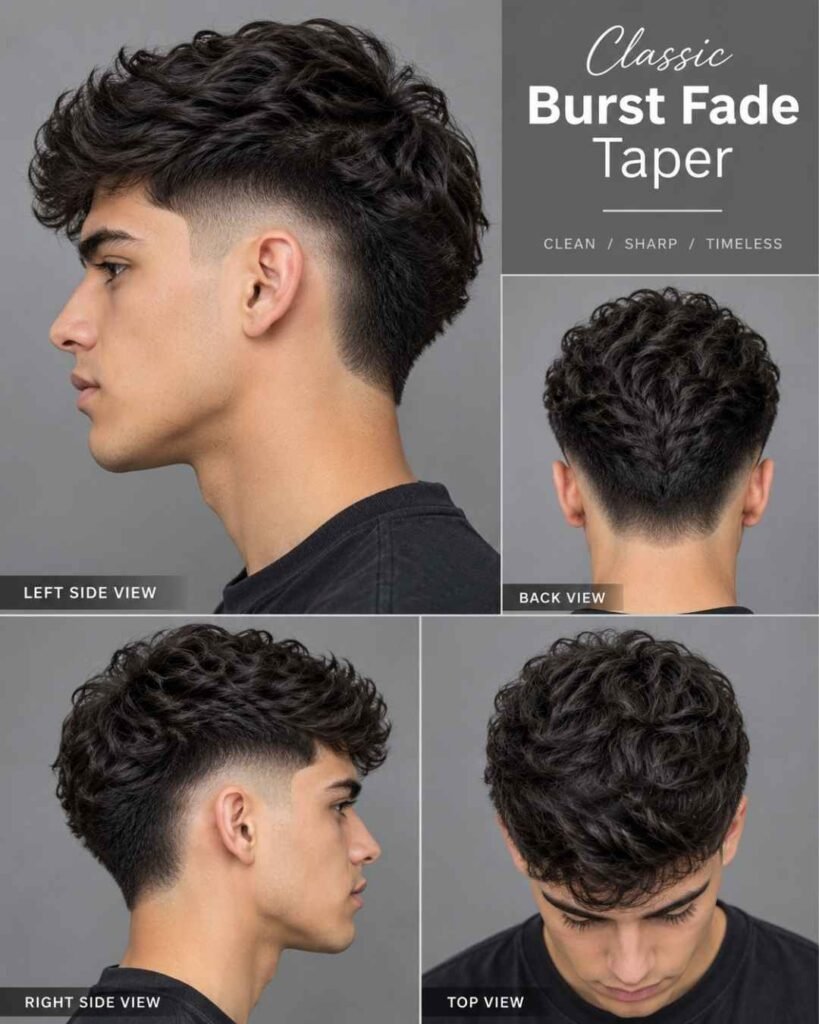
A moderate top, a rounded burst, and a soft finish at the nape make this the easiest version to wear. Ask for two to three inches on top and a taper behind the ear. It suits most workplaces and needs only a little cream to style.
2. Skin Burst Fade Taper
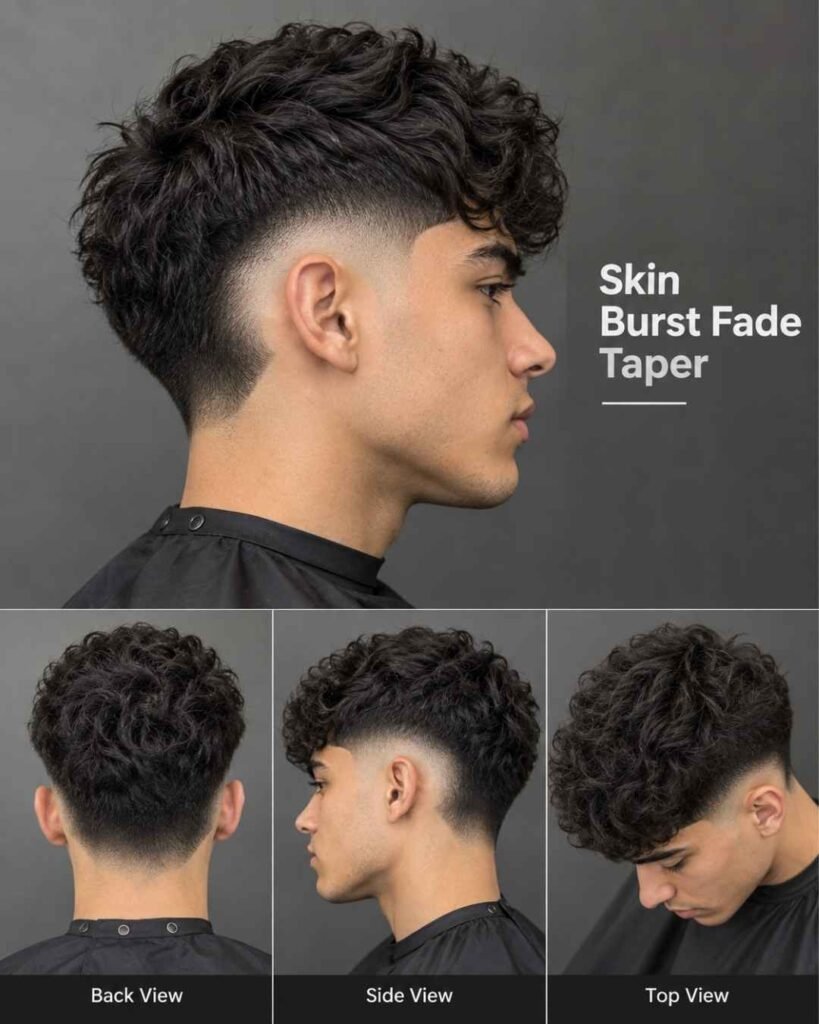
The shortest point of the arc goes to bare skin, which gives the strongest contrast with the top. It looks sharp when fresh, but stubble shows quickly. Freshly cut skin near the ear also burns easily, so wear sunscreen in summer.
3. Burst Fade Taper with Beard
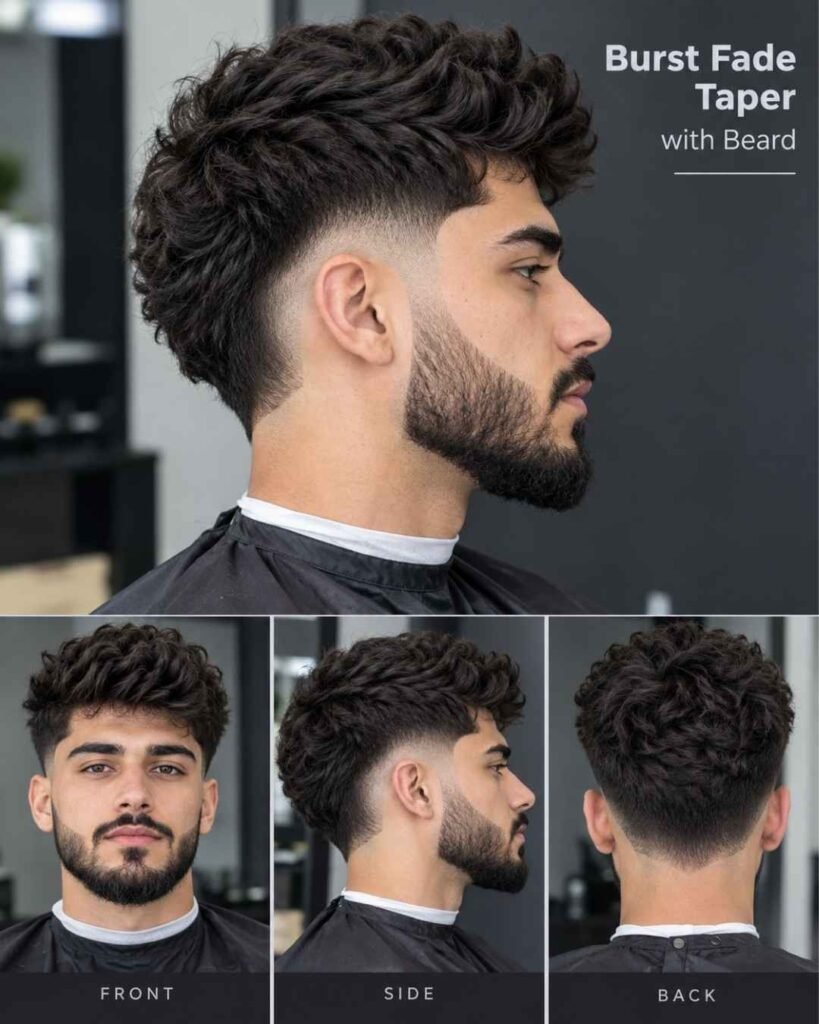
Let the fade melt into the sideburn and then into the beard so both read as one shape. A full beard pairs well with a mid burst, while a short beard suits a low one. Ask the barber to connect the two near the ear.
4. Burst Fade Taper with Design
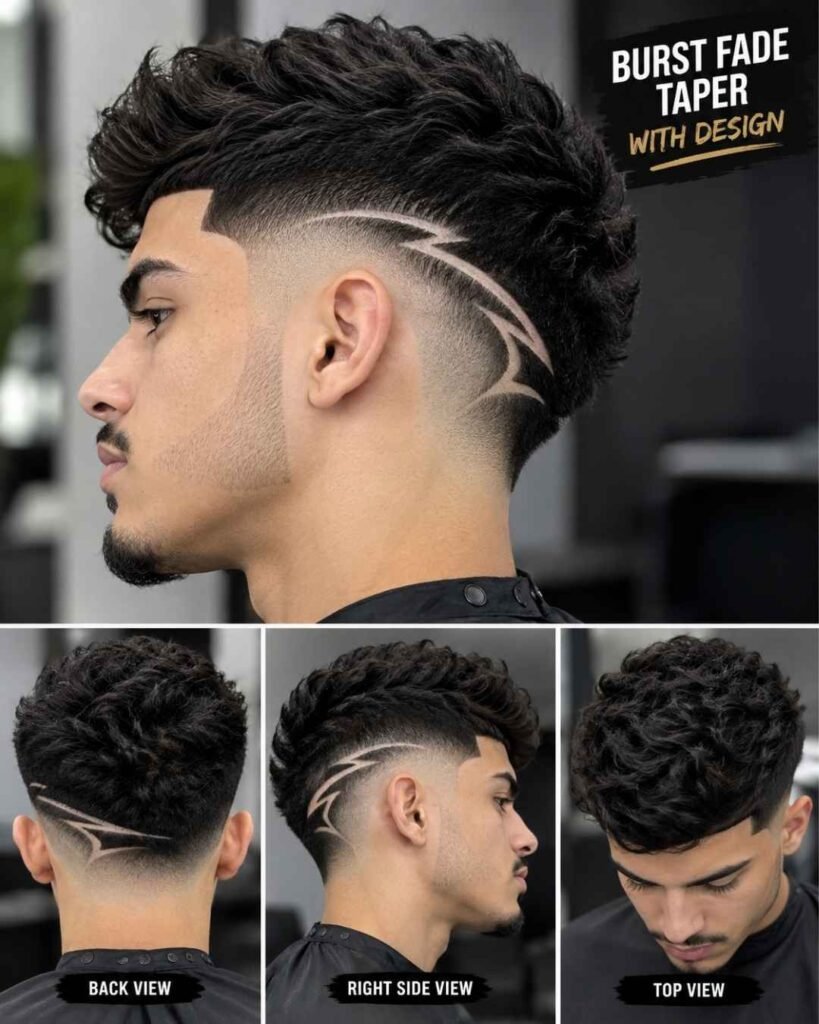
A thin part line or a few etched lines can be cut into the faded area with a trimmer. Keep it simple, since the burst already has a strong shape. Designs blur as hair grows back, so they need touch-ups sooner than the rest of the cut.
5. Burst Fade Taper with Line Up
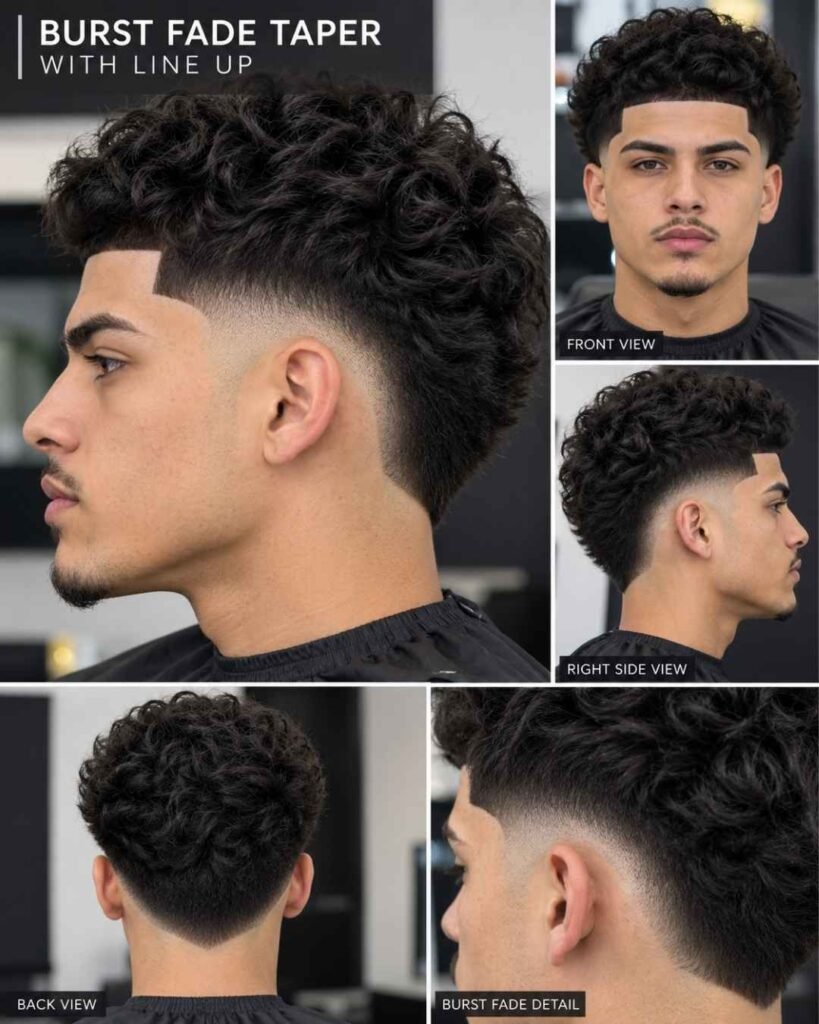
A line up sharpens the forehead, temples, and sideburns with a trimmer. Combined with a burst, it frames the face and makes the curve look deliberate. Some shops price it separately, so ask before you sit down.
6. Textured Burst Fade Taper
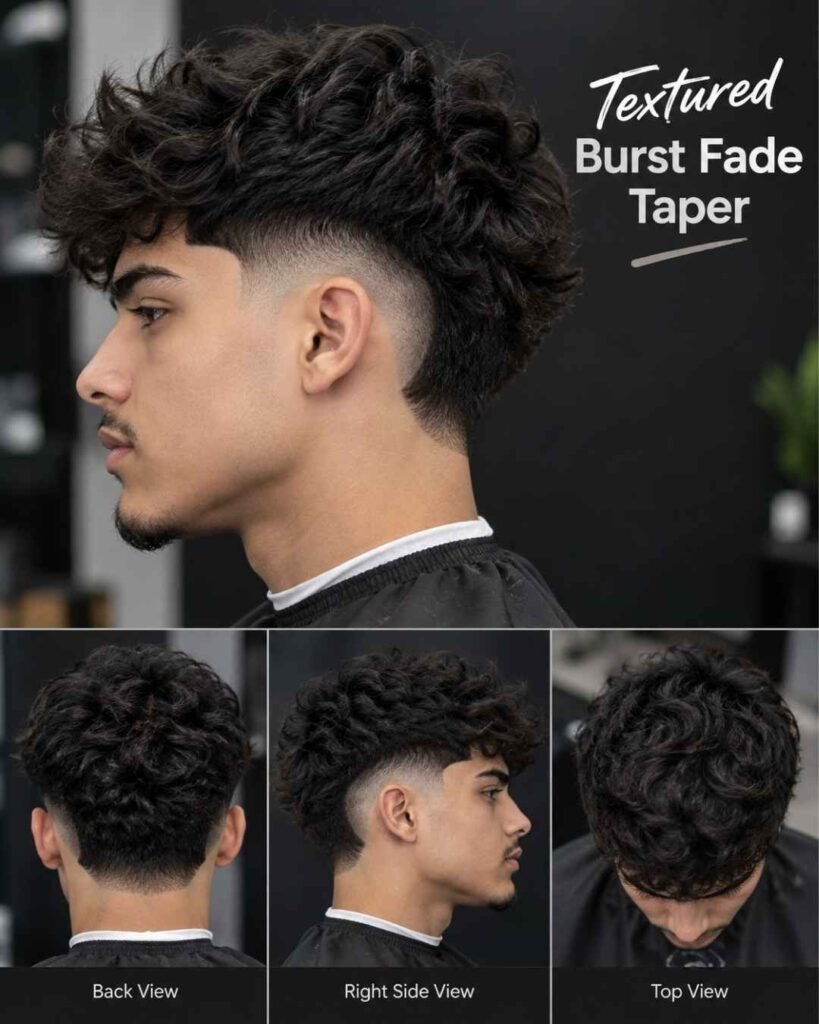
Choppy layers cut with scissors or a razor give the top movement above the smooth sides. Keep the length around two to three inches. Work in a little clay or paste. This works well on straight or wavy hair that needs body.
7. French Crop Burst Fade Taper
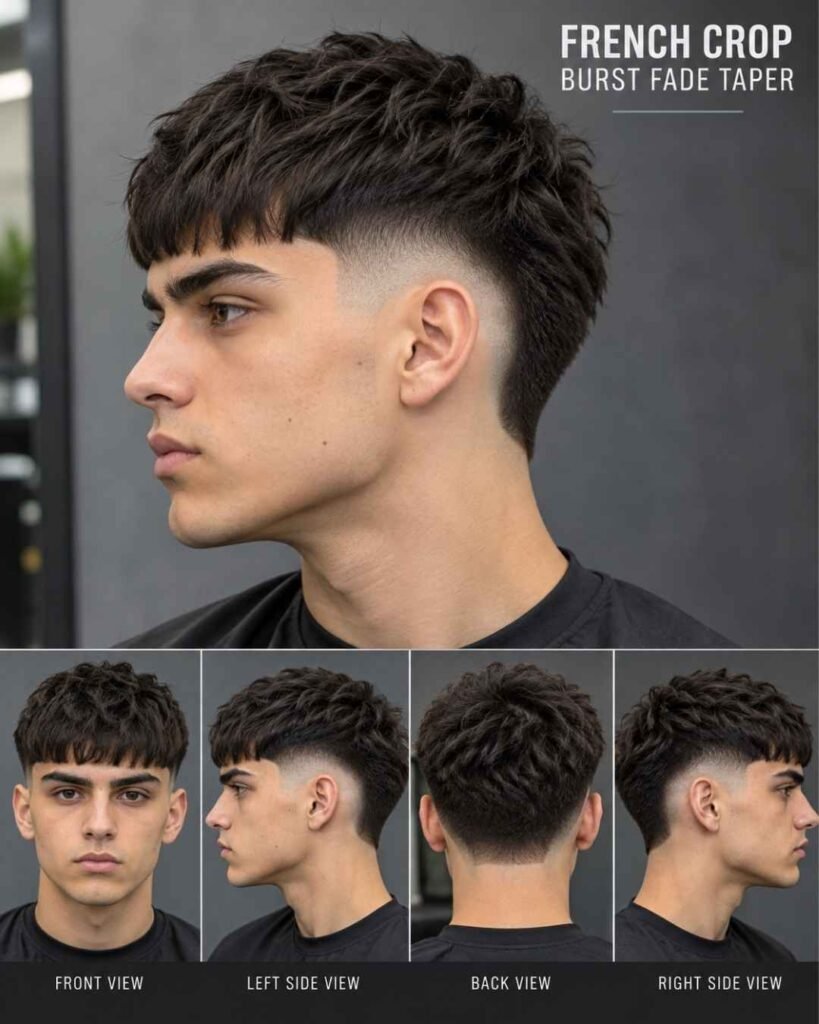
A short, blunt fringe brushed forward sits above tight sides. Because the crop stays compact, the burst carries most of the visual interest. It suits thick, straight hair or hair with a strong wave, and it grows out without looking messy.
8. Crew Cut Burst Fade Taper
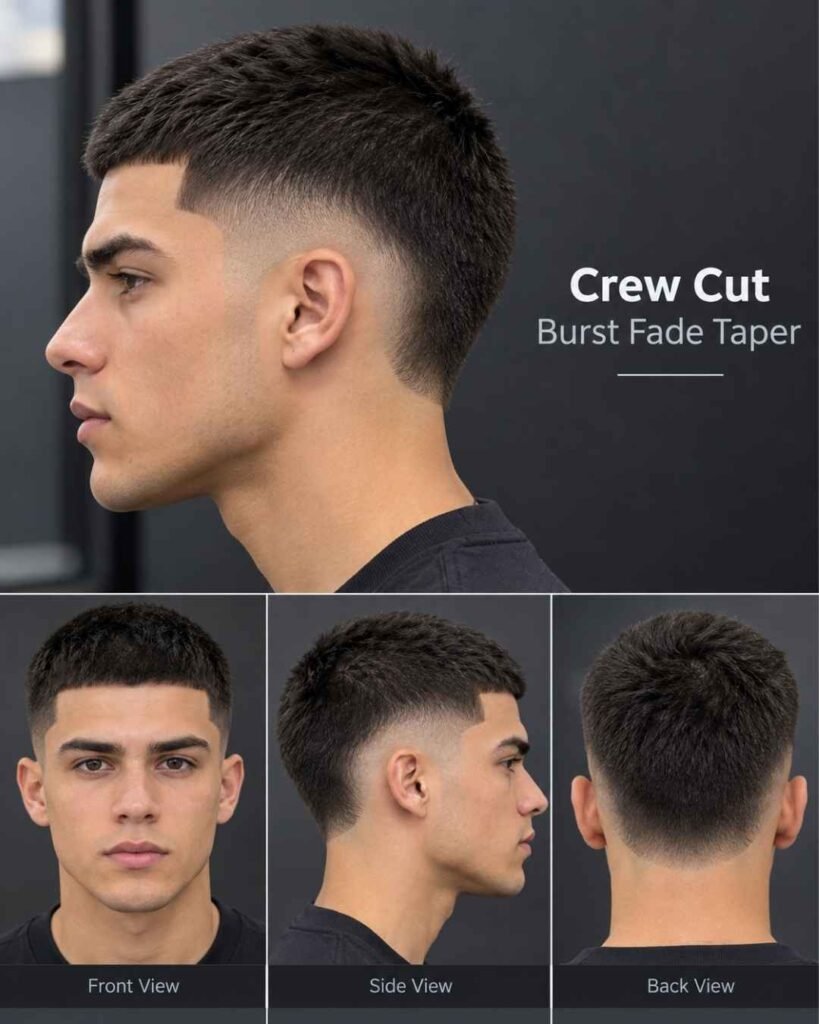
The crew cut keeps the top short and slightly longer at the front. Adding a burst turns a plain, military-style shape into something more current. Styling takes about a minute, which suits busy mornings and gym schedules.
9. Pompadour Burst Fade Taper
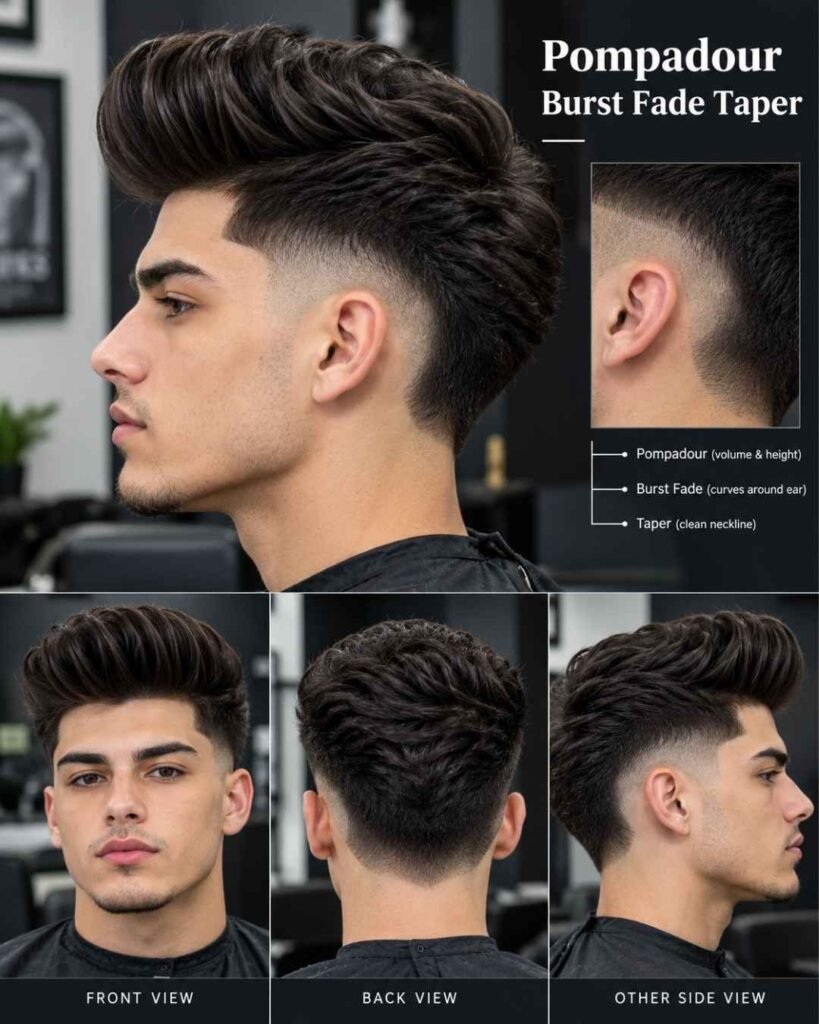
The top is lifted and swept up and back for height, with the burst framing the sides. You need at least three to four inches of length, a blow dryer, and a firm-hold product. It takes effort, but the payoff is dramatic.
10. Quiff Burst Fade Taper
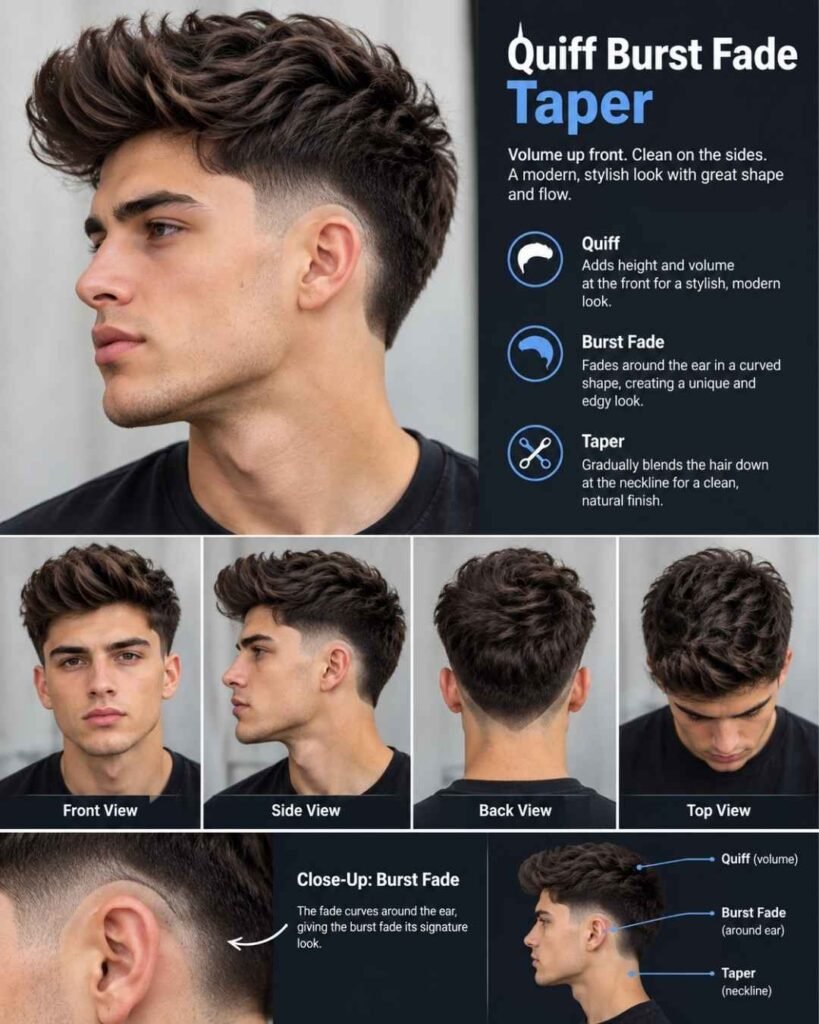
A quiff is a looser cousin of the pompadour. The front lifts and angles up instead of sweeping fully back, so styling is easier. A mid burst gives the quiff room to stand out without looking harsh.
11. Slick Back Burst Fade Taper
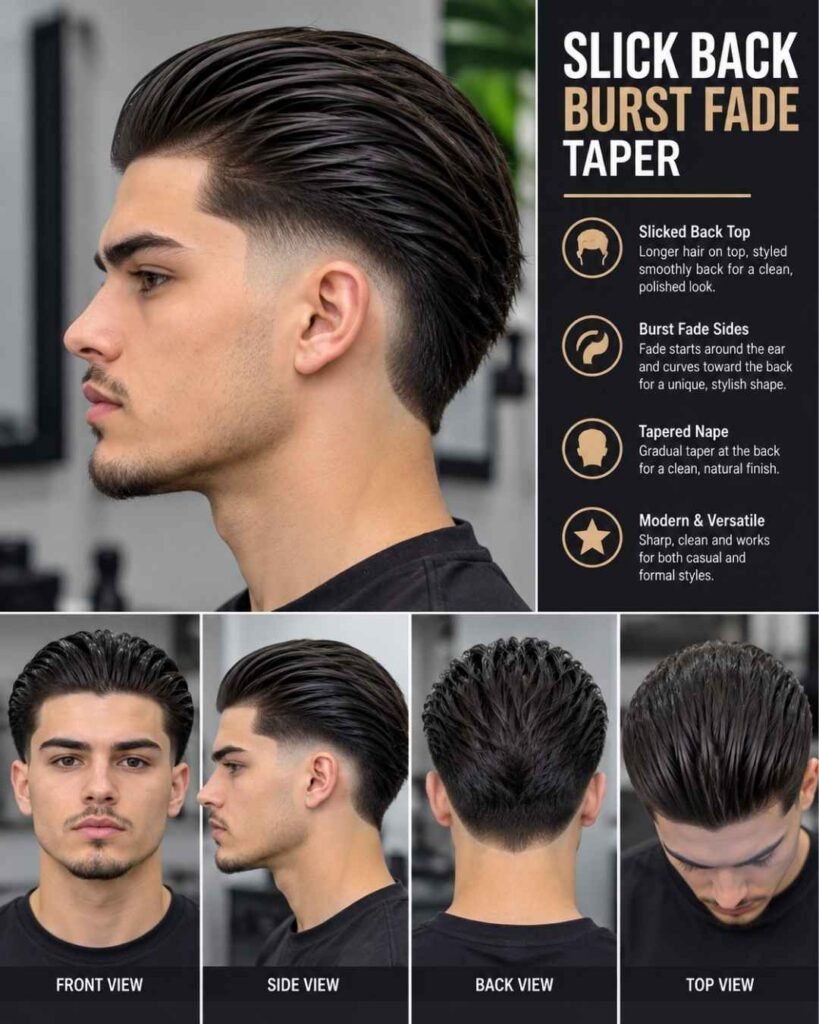
Hair is combed straight back with pomade or gel. Because the top is smooth, the curve around the ear becomes the main detail. A low burst keeps the look formal, while a mid burst adds edge. You need a few inches of length.
12. Comb Over Burst Fade Taper
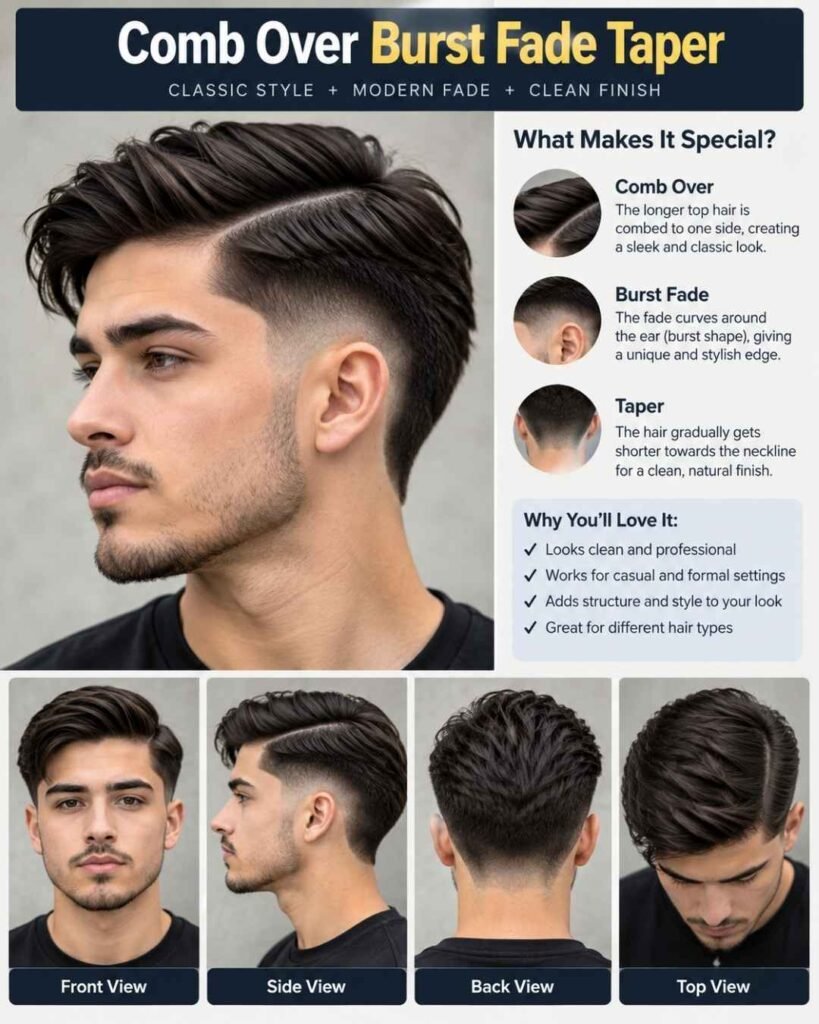
A deep side part combs the top across, with a burst fade keeping the sides tight. The contrast is stronger than a regular side part. Ask for a defined part if you want a classic look, or a soft one for something relaxed.
13. Side Part Burst Fade Taper
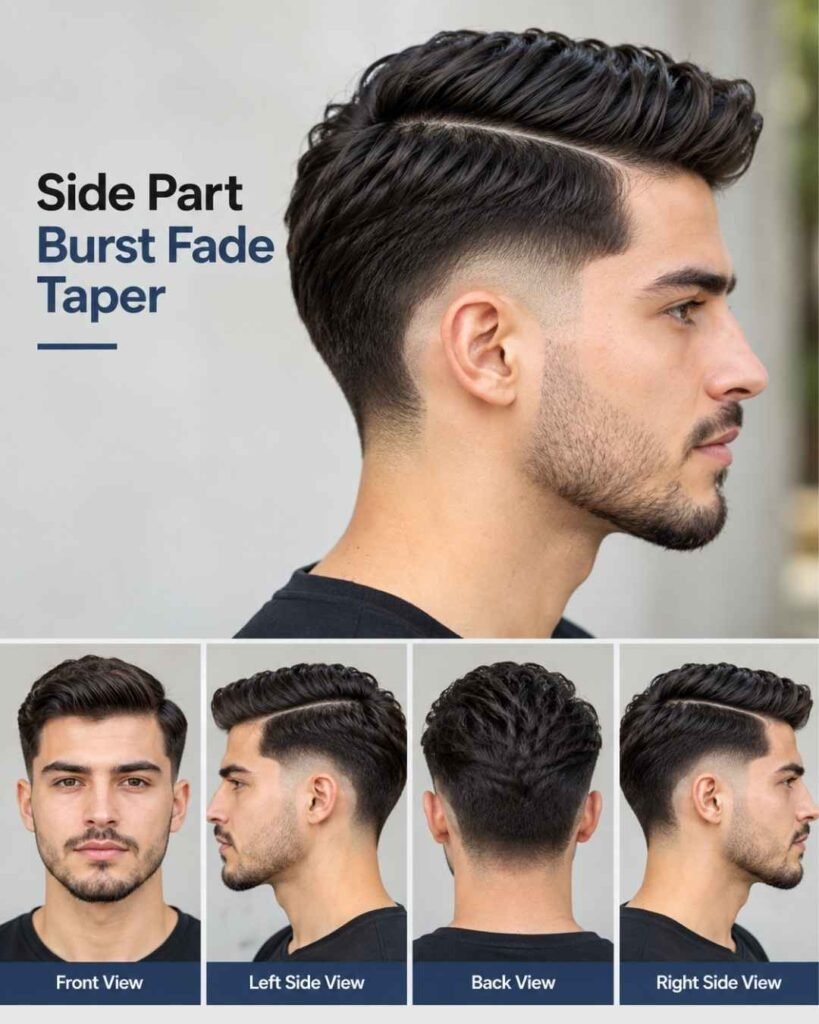
This is the most conservative option in the list. Part the hair where it naturally falls and comb it with a light-hold product. Pair it with a low burst and a taper finish instead of skin. It works for interviews and strict dress codes.
14. Hard Part Burst Fade Taper
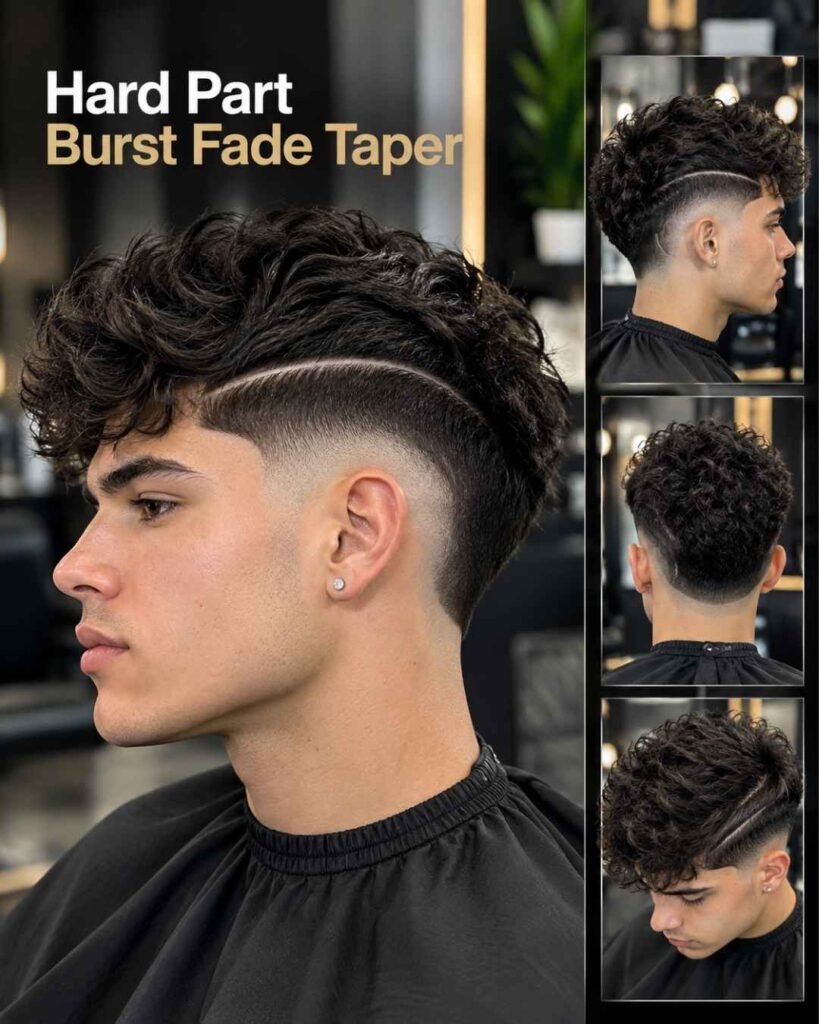
A hard part is a thin line shaved into the hair to mark the parting. With a burst, the effect is very graphic. The line softens quickly as hair returns, so plan on frequent touch-ups if you like it crisp.
15. Brush Up Burst Fade Taper

The hair is brushed upward and slightly forward, then held with a matte product. It adds volume without much length, so it helps fine hair look fuller. Two to three inches is enough for most people to get lift.
16. Messy Burst Fade Taper
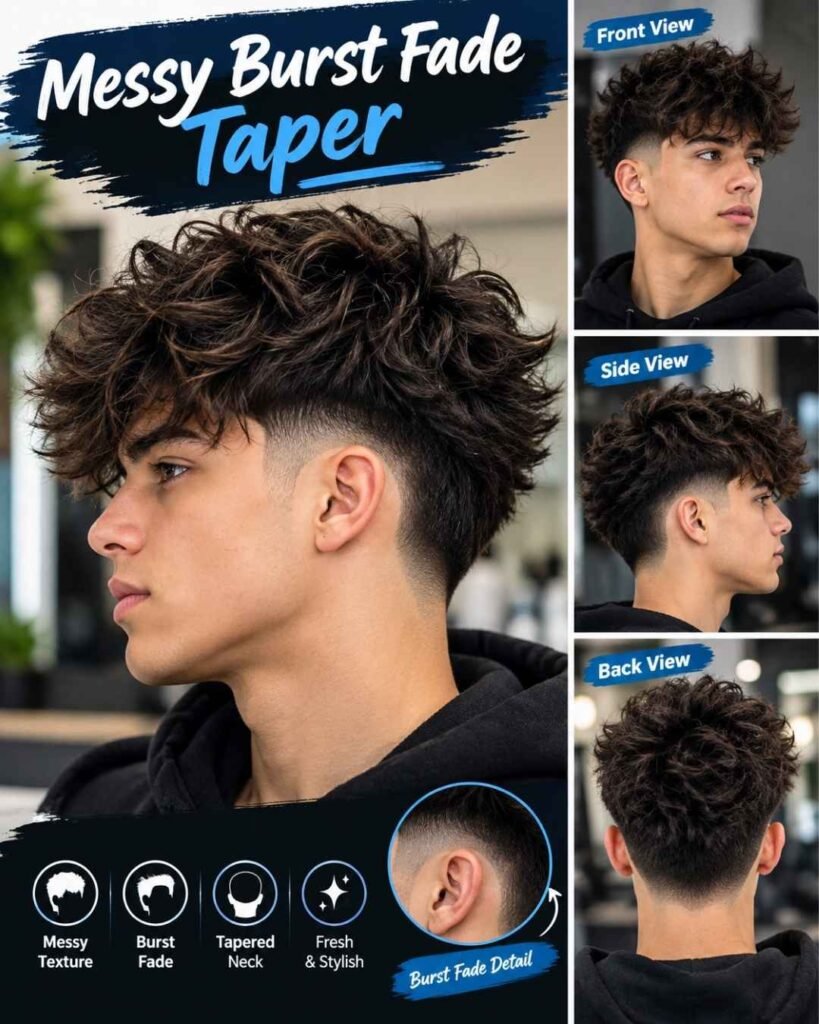
A loose, uneven top styled with texture powder or sea salt spray sits against precise sides. The contrast is the point. It is also forgiving day to day, since nobody expects a messy top to look perfect.
17. Burst Fade Taper for Thick Hair
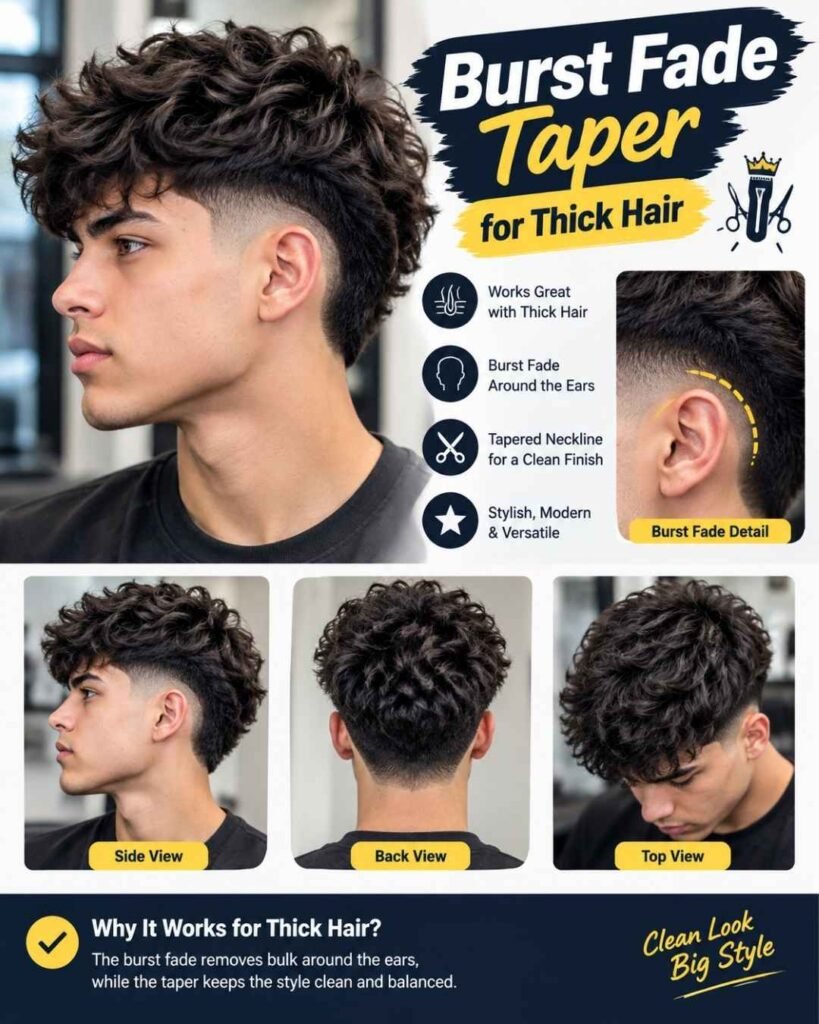
Dense hair can look bulky above a fade. Ask your barber to remove weight from the top with texturizing shears, and keep the burst clean. Blending thick hair takes more passes, so allow a little extra time in the chair.
18. Burst Fade Taper for Thin Hair
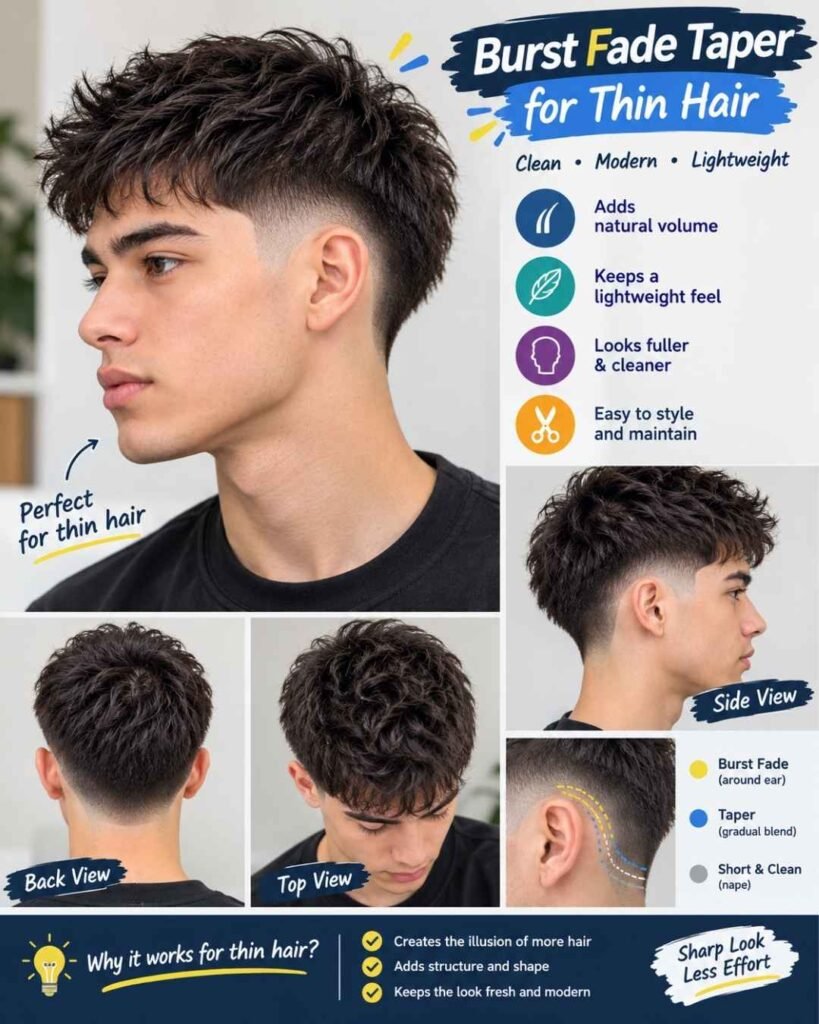
Many barbers suggest a low or mid burst for thin hair, since very high contrast can make the top look sparse. Keep the top a little longer and use texture powder for lift. Avoid heavy pomades, which can weigh fine hair down.
19. Burst Fade Taper for Black Men
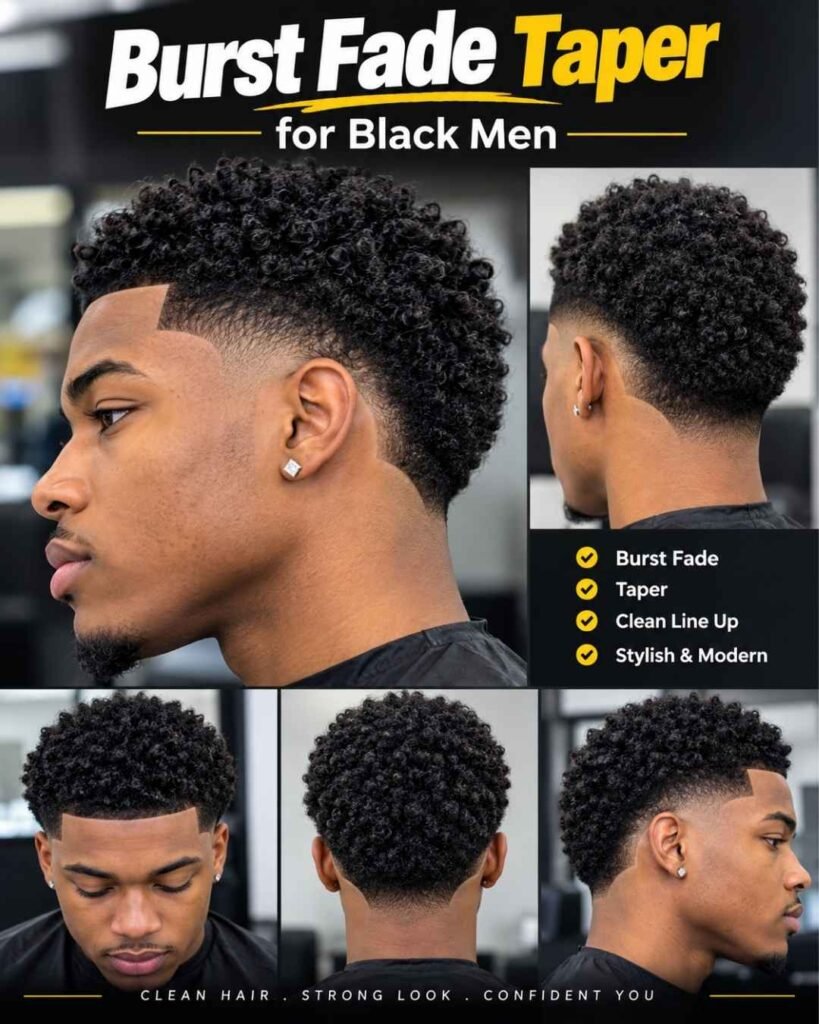
Tightly coiled hair shows a burst beautifully, because the crisp curve contrasts with dense texture on top. Choose a barber who works confidently on textured hair and blends carefully to avoid patches. The top can be short curls, twists, or brushed waves.
20. Burst Fade Taper for Teens
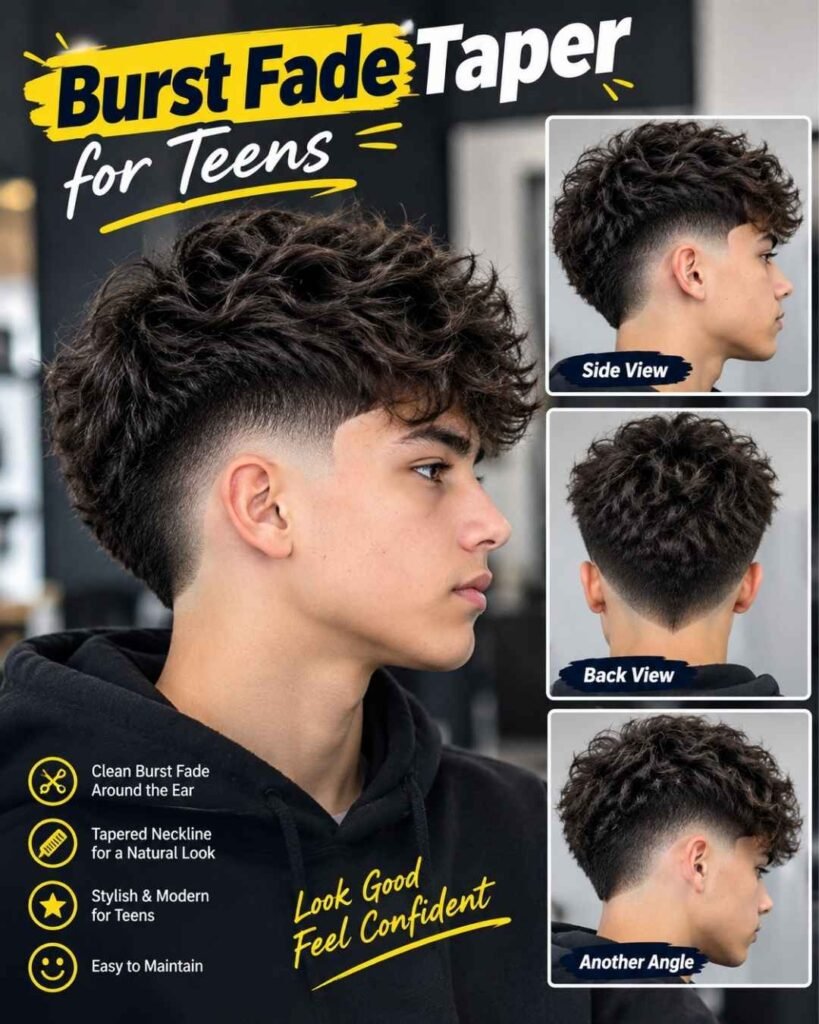
A low burst with a top that is long enough to restyle is a sensible starting point. Check school dress codes before choosing a skin fade or a shaved design, since rules differ. A textured crop is a safe, easy option.
21. Professional Burst Fade Taper
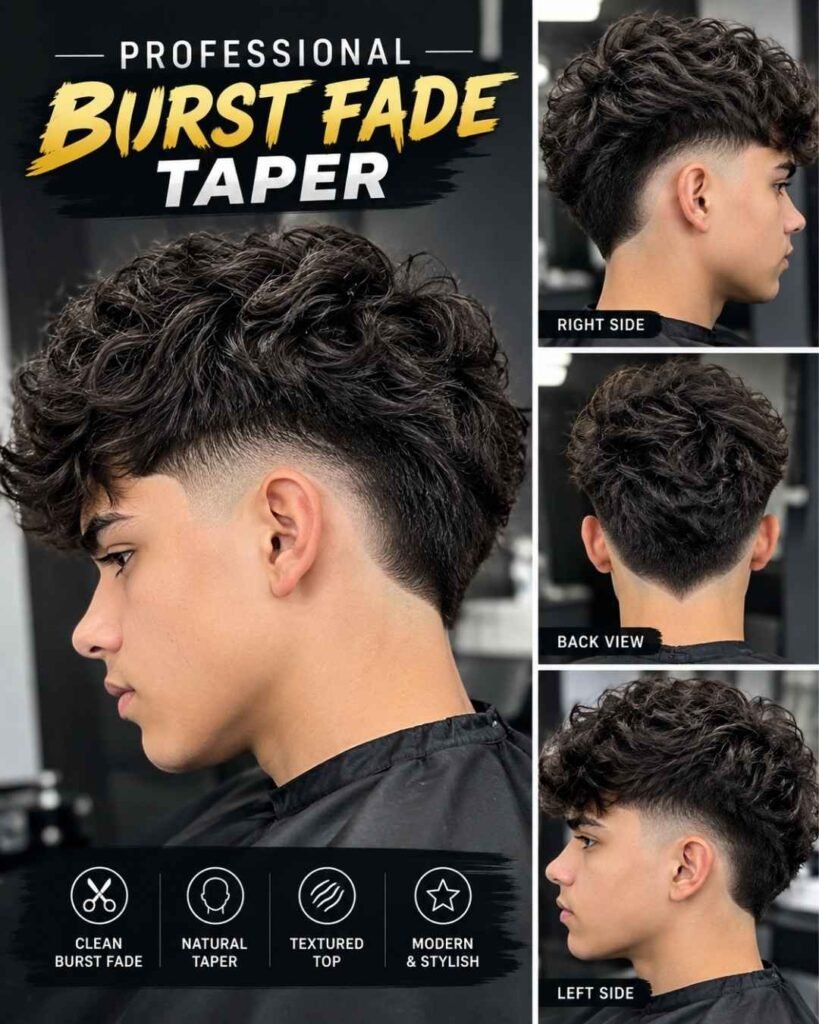
Keep the burst low, finish the shortest point at a shadow instead of skin, and leave a neat natural side part on top. Use a matte product so the hair looks tidy but unstyled. Dress codes vary, but this version fits most offices.
22. Modern Burst Fade Taper
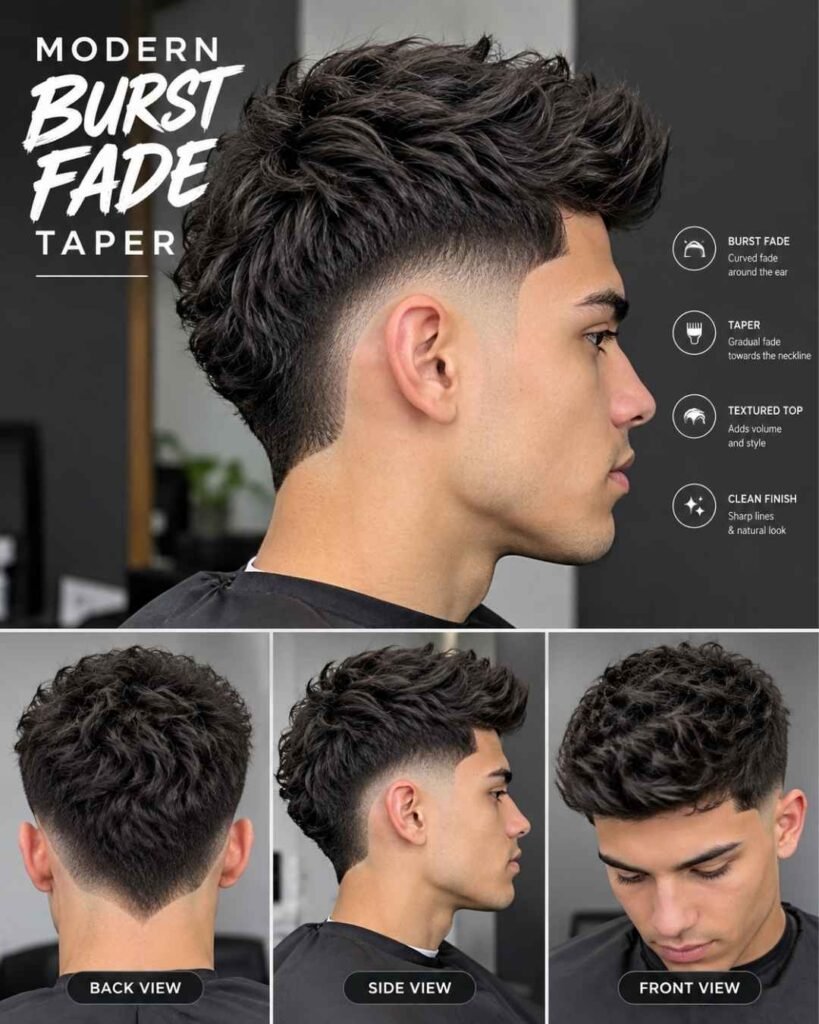
Current versions often pair the burst with a longer top, such as a curly fringe or a short mullet. The longer nape section makes the mullet look intentional rather than accidental. Add a light sea salt spray for movement.
23. Sharp Burst Fade Taper
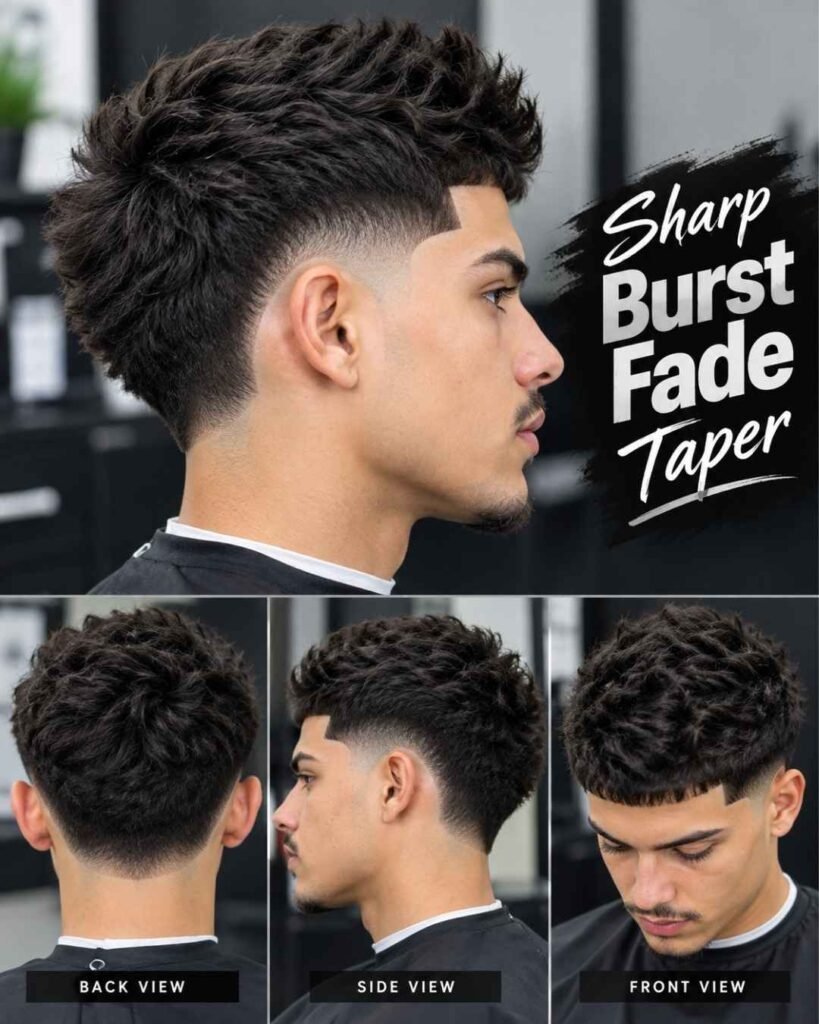
This version stacks precision on precision: a skin finish at the burst edge, a crisp line up, and a clean neckline. It looks excellent fresh and needs the most upkeep. Book the next appointment before you leave the shop.
Burst Fade Taper vs Other Popular Fade Haircuts
The main differences are the shape of the fade line and how much contrast it creates. Height (low, mid, or high) describes where the fade starts, while “burst” describes its shape. That is why a burst can be low, mid, or high.
| Haircut | Fade line | Contrast |
|---|---|---|
| Low fade | Straight, sits low | Subtle |
| Mid fade | Straight, temple height | Medium |
| High fade | Straight, starts high | Strong |
| Taper fade | Follows the natural hairline | Soft |
| Burst fade taper | Curved arc around the ear | Soft to strong |
Burst Fade Taper vs Low Fade
A low fade runs straight around the head just above the ear. A low burst starts in the same place but curves around the ear and leaves more at the nape. Choose the burst if you want the low placement with a more distinctive shape.
Burst Fade Taper vs Mid Fade
A mid fade starts around temple height and travels in a straight line. A mid burst covers similar territory but curves, so the sides look more sculpted. It is the most versatile pairing with textured tops.
Burst Fade Taper vs High Fade
A high fade begins near the top of the head and gives the sharpest contrast. A high burst makes the same statement with a rounded edge. It suits a tall top like a pompadour, but it is the boldest choice here.
Burst Fade Taper vs Taper Fade
A taper fade follows the natural hairline from the temples to the neck and shortens gradually. A burst is a bolder arc around the ear. Tapers usually grow out more quietly, so they suit people who visit the barber less often.
How to Ask Your Barber for a Burst Fade Taper
Barbershop terms are not standardized, so describing the result works better than naming it alone. Say what you can see in your mind, then confirm the details with a photo.
Explain the Fade Level
State the height: low, mid, or high. Then say where the shortest point should end. Options include bare skin, a zero, or a shadow, which leaves a little hair. Clipper guard numbers help too, since a number 1 guard commonly leaves about an eighth of an inch.
Show a Reference Photo
Bring at least one side view and, if the neckline matters to you, a back view. A front-only photo hides the burst entirely. Pick a photo with hair texture close to yours, and ask the barber how the result will adapt to your hair.
Discuss the Top Length
Give a length in inches or finger widths, and say how you plan to style it. “Long enough to push back” is clearer than “medium.” Tell the barber if you want to grow the top out, so they can leave extra length.
Mention Beard or Line-Up Preferences
Say whether you want the beard connected to the fade, and whether the line up should be sharp or natural. Ask whether these are included in the price. It avoids surprises at the register.
Decide How the Nape Should Finish
Many guides skip this. The nape can be left natural, blocked square, or tapered to a soft point. Each changes how the burst looks from behind and how it grows out, so choose before the barber starts.
Here is a sample request you can adapt:
“I’d like a low burst fade taper. Start at a zero, curve it around the ear, and keep the length at the nape. Leave about three inches on top, and clean up the sideburns and line up.”
How to Style a Burst Fade Taper Haircut (Step-by-Step Tutorial)
The fade does most of the work, so styling only concerns the top. Follow these steps for a quick, repeatable routine.
- Wash your hair and towel-dry until it is damp but not dripping.
- If you want volume, mist the roots with sea salt spray or a light pre-styler.
- Blow-dry the top in the direction you want it to sit, using your fingers or a brush.
- Warm a pea-sized amount of product in your palms until it spreads evenly.
- Work it through from the roots to the ends, starting at the back of the top.
- Shape with a comb or your fingers, then add a light spritz of hairspray if needed.
Keep product off the faded sides. It can leave them looking greasy and hides the clean gradient you paid for.
Best Hair Products for a Burst Fade Taper
Pick the product by the finish you want. This table gives general guidance, and exact hold varies by brand.
| Product | Hold | Finish | Works with |
|---|---|---|---|
| Matte clay | Strong | Matte | Textured, messy, brush up |
| Paste | Medium | Low shine | French crop, crew cut, quiff |
| Water-based pomade | Medium to strong | Shiny | Slick back, pompadour, side part |
| Sea salt spray | Light | Matte, gritty | Messy tops, wavy hair |
| Texture powder | Light | Matte | Thin hair needing lift |
| Cream | Light | Natural | Professional cuts, curls |
For curly or coily hair, a leave-in conditioner or curl cream keeps the top defined and moisturized.
Burst Fade Taper Haircut Maintenance Tips
A burst fade shows regrowth faster than a longer, softer cut, because the contrast is built into the design. These habits keep it looking deliberate.
- Book regular trims. Many barbers suggest every two to three weeks for a skin or high burst, and a little longer for low versions with a taper finish. Timing depends on how fast your hair grows.
- Return to the same barber. A consistent hand keeps the arc symmetrical from one visit to the next.
- Protect the skin. Shaved areas around the ears can burn in summer and dry out in winter. Sunscreen and a light moisturizer help.
- Watch for razor bumps. Cuts close to the skin can cause irritation, especially on tightly curled hair. Cleanse gently, avoid picking, and see a dermatologist if bumps persist.
- Leave the arc alone at home. A quick neckline clean-up is fine, but trimming the burst itself is best left to a barber.
- Plan the grow-out. As the fade softens, ask your barber to convert it into a longer taper instead of starting over.
Common Mistakes to Avoid with a Burst Fade Taper Haircut
- Naming the cut and nothing else. Without a fade height and a finish, the barber has to guess.
- Ignoring symmetry. Check both sides in the mirror before you leave. A slightly uneven arc is easy to fix in the chair and hard to fix later.
- Choosing a fade that fights your top. A common rule of thumb is a lower fade for a voluminous top and a higher fade for a short one.
- Skipping the nape conversation. The back changes the whole silhouette, so decide it up front.
- Using heavy product on the sides. Shine and residue flatten the gradient.
- Using a reference photo with a different hair type. Straight and tightly coiled hair behave very differently, even with the same cut.
- Attempting the arc with a razor at home. One wrong pass leaves a visible gap.
Frequently Asked Questions
What is a burst fade taper haircut?
It is a haircut where the sides fade or taper in a semicircle around the ear, with more length kept at the nape and on top.
Is a burst fade the same as a burst taper?
They are very similar, and many barbers use the terms interchangeably. A fade usually goes shorter, while a taper keeps more length.
How often should I get a burst fade taper?
Every two to three weeks keeps a skin or high burst sharp. Low, taper-finish versions can stretch a little longer.
Does a burst fade taper work on curly hair?
Yes. The tight sides make curls and coils on top look fuller and more defined.
Is a burst fade taper professional enough for work?
A low burst with a taper finish and a natural side part suits most offices, though dress codes vary.
Can I cut a burst fade taper at home?
It is possible but difficult, since the arc must match on both sides. A barber is the safer choice.
Does a burst fade taper suit thin hair?
A low or mid burst with a slightly longer top usually works better than a high, high-contrast version.
Conclusion
The burst fade taper haircut earns its popularity by combining a clean fade with a shape that follows the ear. It works with short crops and long mullets, with straight hair and tight coils. The best version for you depends on fade height, finish, and how much upkeep you accept.
Bring a clear reference photo, describe the nape and top length, and pick a product that matches your style. Do that, and the cut will look sharp from the chair through the weeks that follow.
