


A Caesar haircut is a short men’s cut with a straight fringe brushed forward across the forehead, usually paired with tapered or faded sides. In 2026, the most popular versions pair a textured top with a low or mid fade, though the classic even-length crop still holds up well.
This guide covers 20 Caesar styles, how to ask your barber for each, and how to match the cut to your face shape and hair type. It also explains where the Caesar cut came from and how to keep it looking sharp between appointments.
What Is a Caesar Haircut?
The Caesar cut keeps hair short on top, cuts the fringe horizontally, and combs it toward the forehead. The sides and back are trimmed short, either at an even length or with a taper or fade. Top length varies by barber, from about half an inch to a few inches.
The name comes from Julius Caesar. The ancient biographer Suetonius wrote that Caesar combed his thinning hair forward from the crown and prized the right to wear a laurel wreath. The modern cut is an homage, not a reconstruction, but that forward-combed logic is why it still flatters receding hairlines.
The style returned in the 1990s, and George Clooney’s cut on ER is widely credited with the revival. Today’s versions borrow from fades, crops, and textured cuts, which is why one barbershop’s “Caesar” can look different from another’s.
Caesar Cut vs. Similar Short Cuts
| Cut | Fringe | Sides and back |
|---|---|---|
| Caesar | Short, straight, forward | Short, even or tapered |
| French crop | Longer, often choppy | Usually faded shorter |
| Ivy League | Side-swept, longer | Tapered |
| Crew cut | Short, brushed up | Tapered short |
The French crop is the closest relative. It generally carries a longer, more textured fringe and shorter sides, while the Caesar keeps the fringe shorter and the overall shape more uniform.
20 Best Caesar Haircut Styles for Men
1. Classic Caesar Cut
The original: even length on top, roughly an inch or so, with the fringe cut straight and brushed forward. Nothing is faded, so regrowth looks even. It suits straight to slightly wavy hair and men who want a haircut they never have to think about. A dab of matte paste is optional.
2. Modern Caesar with Low Fade
Here the fade starts just above the ear and neckline, so most of the side length stays. It looks cleaner than a classic Caesar without being dramatic. This is the safest first fade for office settings. Ask for a low fade with a textured top and a straight fringe.
3. Textured Caesar Cut
The barber cuts into the top with point cutting so the fringe looks broken up instead of blocky. Fine hair looks fuller, and thick hair feels lighter. Be careful with heavy texturizing, because overdone cuts leave visible gaps. Style with clay or a few sprays of sea salt spray.
4. Short Caesar Cut
Keep the top around half an inch to an inch and the fringe barely touches the hairline. It suits hot climates, gym routines, and men who shower and go. The tradeoff is less hair to shape a fringe or cover temples, and very fine hair can show scalp at this length.
5. Long Caesar Cut
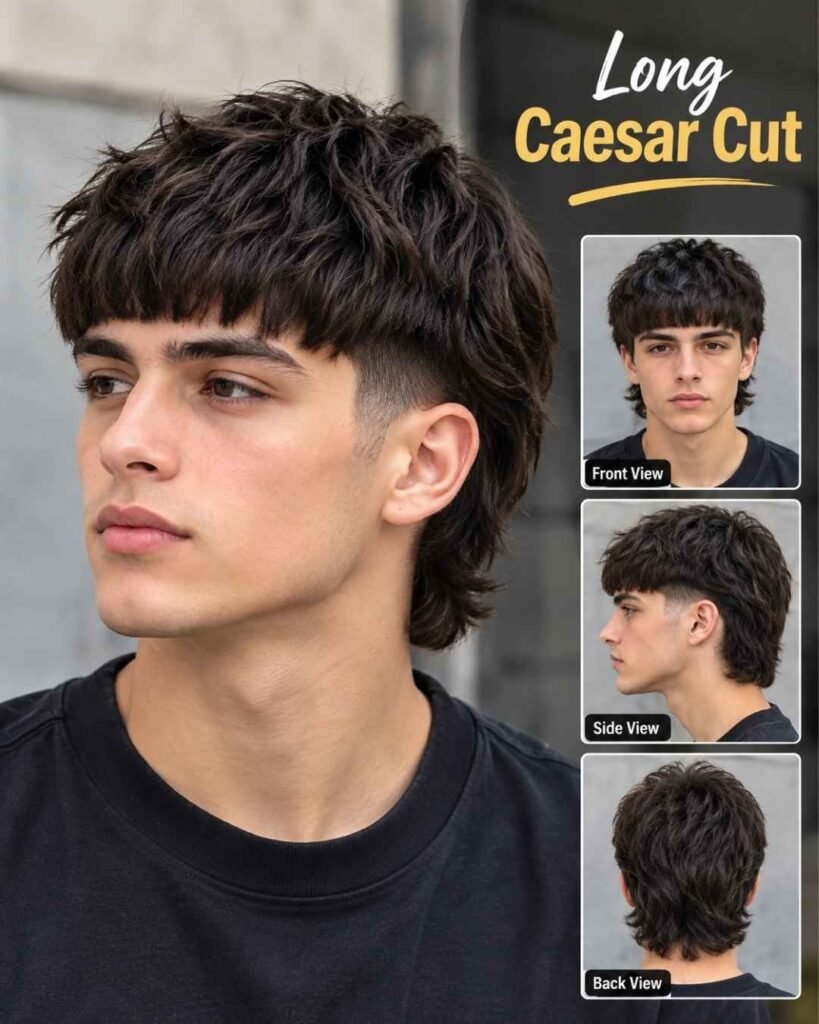
With three inches or more on top, the fringe can be pushed forward, swept aside, or lifted. It needs a comb or a quick blow-dry to look intentional. Wavy hair does this best. Book trims a little more often, because a longer fringe loses its line quickly.
6. Caesar Mid Fade
The fade reaches the level of the temples, which balances subtle and sharp. The contrast puts the spotlight on the fringe. It works on most face shapes and hair types. Expect the sides to look grown-out after two to three weeks.
7. Caesar High Fade
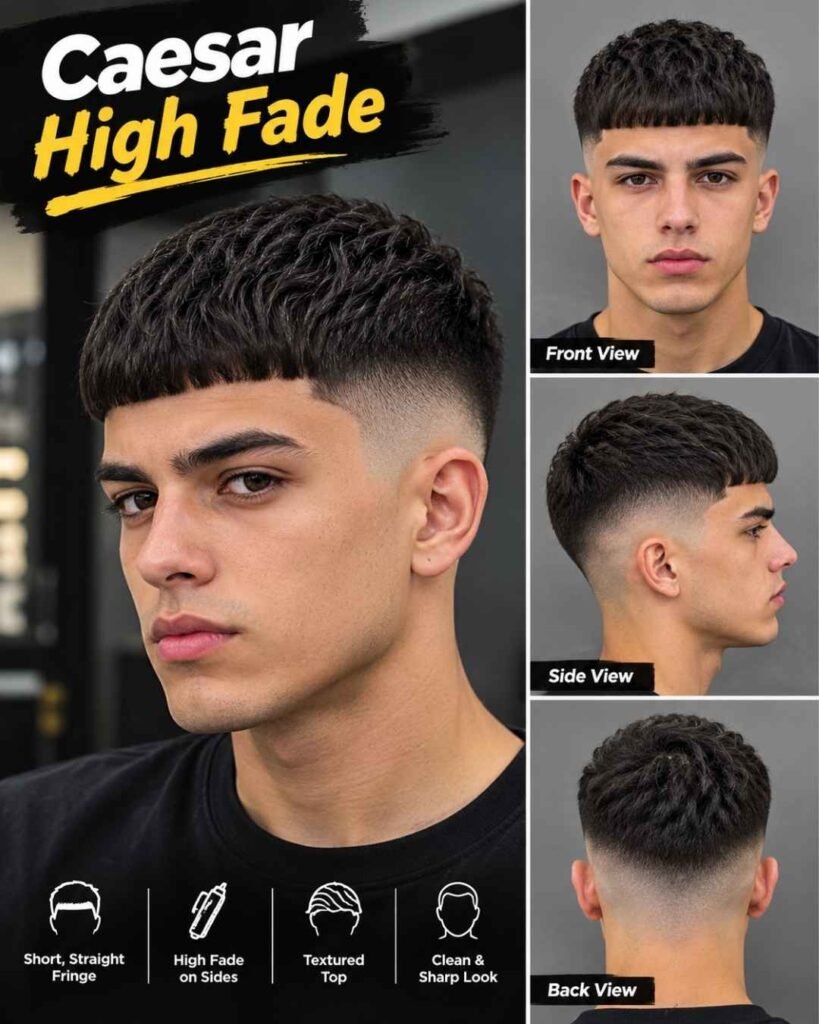
The fade climbs high, near the temple line, leaving a lot of bare or nearly bare side. The contrast makes a short top look fuller. It also demands frequent upkeep, since even small regrowth blurs the line. Plan on a trim every two to three weeks.
8. Caesar Skin Fade
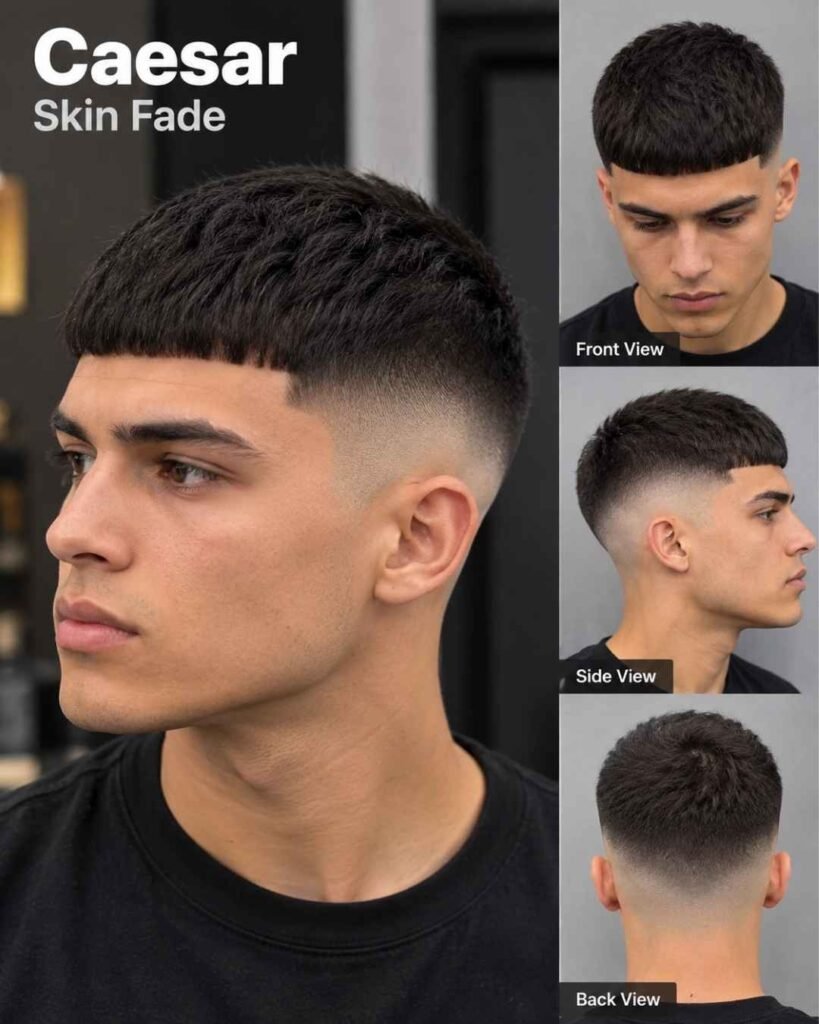
Sides go down to bare skin, usually finished with a foil shaver. It is the sharpest option and shows every detail, including scars and uneven skin tone. Newly exposed skin also sunburns easily, so wear sunscreen or a hat the first few days.
9. Caesar Taper
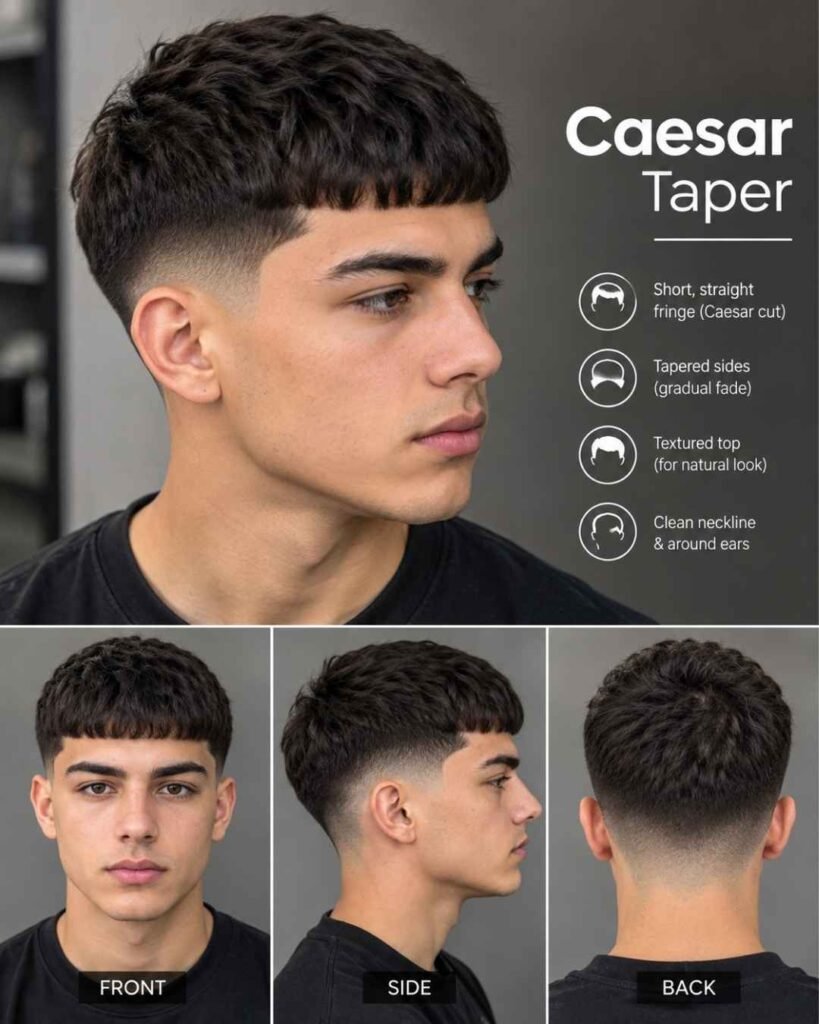
A taper shortens only the sideburns and neckline, gradually, without going to skin. It is the most conservative choice and grows out gracefully. If you work somewhere formal or simply dislike high-contrast cuts, this is the version to request.
10. Caesar Drop Fade
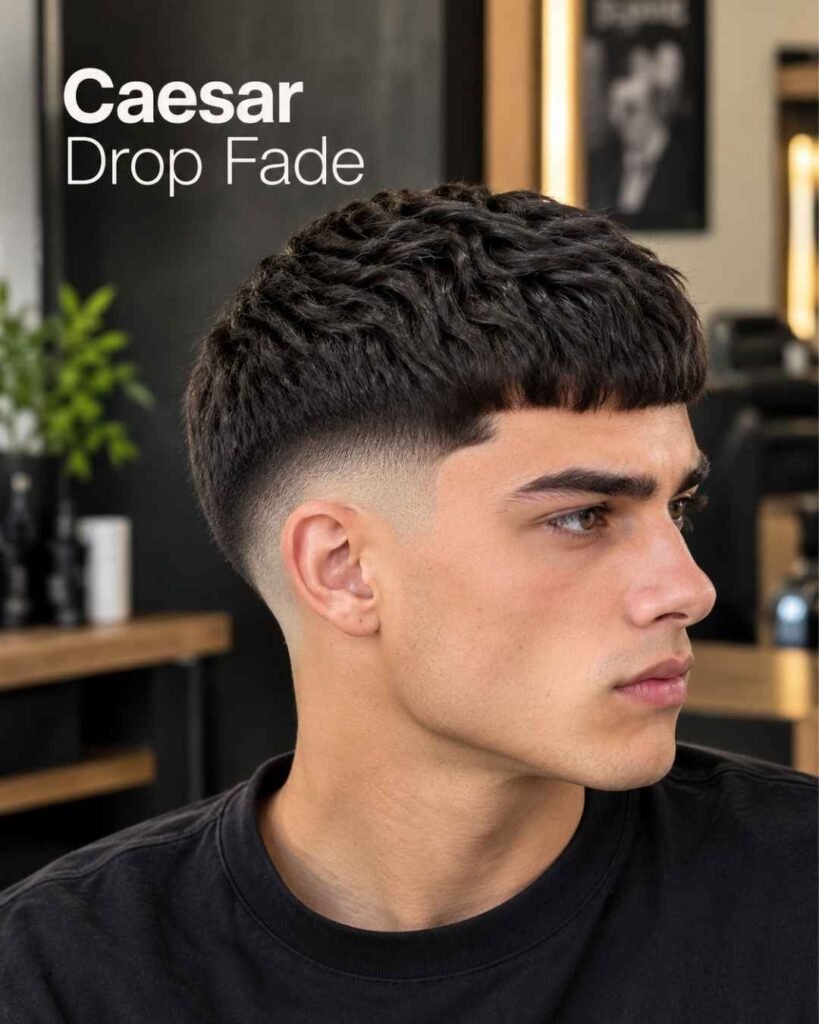
The fade line curves down behind the ear, following the shape of the skull. That arc adds definition from the back and side, where a flat fade looks plain. It suits men with a well-shaped head, and it pairs nicely with either a textured or a slicked fringe.
11. Caesar Buzz Cut
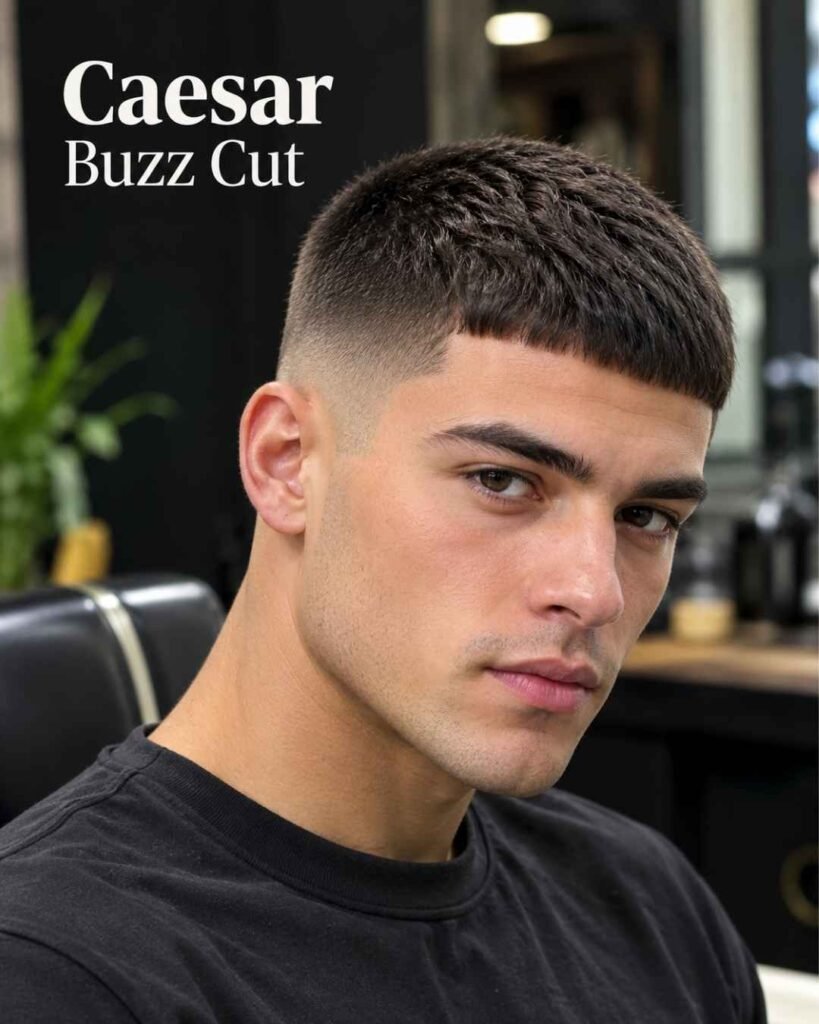
Everything stays short, with the top only a guard or two longer than the sides. Barbers often suggest something like a 4 or 5 on top and lower guards on the sides. It is a reasonable stepping stone if you are moving from a full buzz toward growing hair out.
12. Messy Caesar Cut
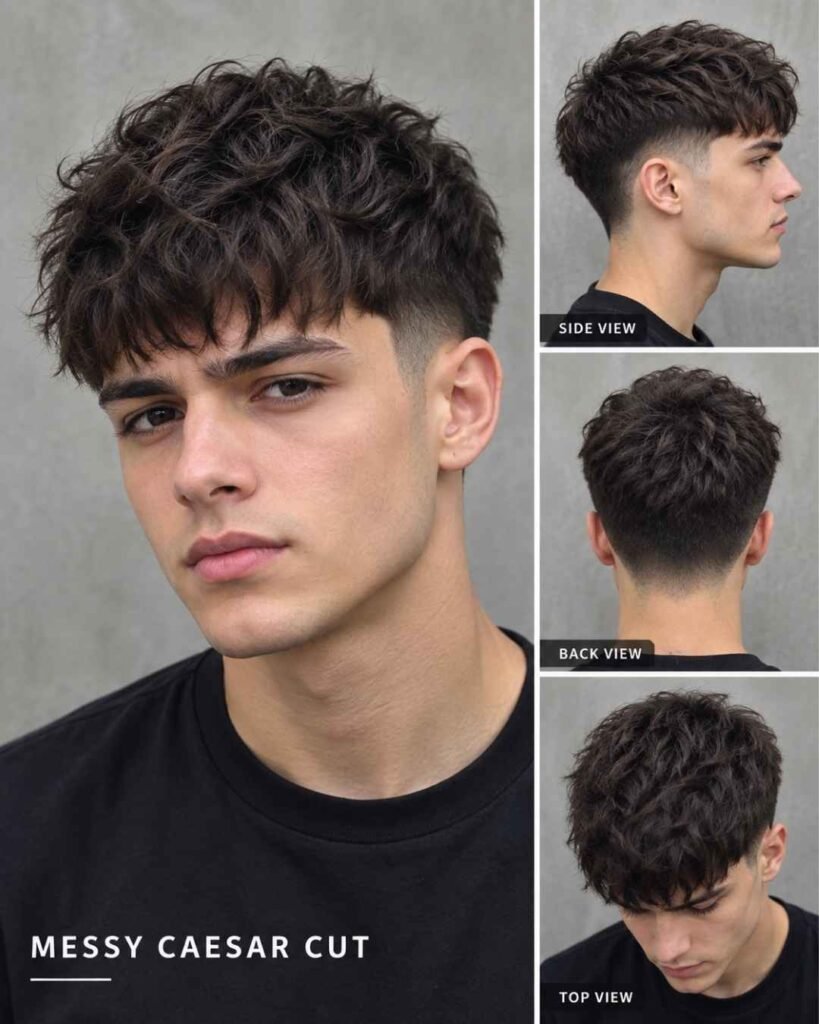
The fringe is pushed forward with fingers and left slightly uneven on purpose. Because there is no razor-straight line to protect, small growth or a bad morning does not ruin it. Use matte paste and a light salt spray, and resist the urge to comb it neat.
13. Curly Caesar Cut
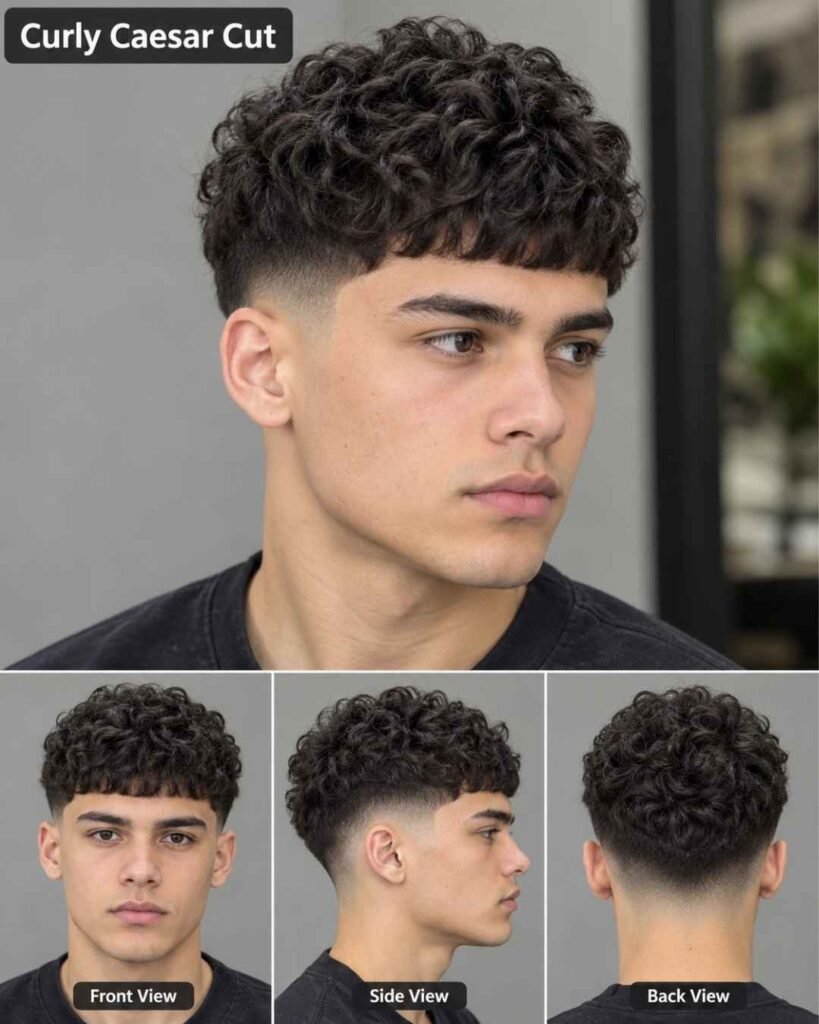
Curls shrink when they dry, so a straight-across fringe can jump up an inch. Ask your barber to cut it dry and leave the fringe slightly longer. Tapered sides make the curls stand out. Use a curl cream instead of gel, which tends to make curls crunchy.
14. Wavy Caesar Cut
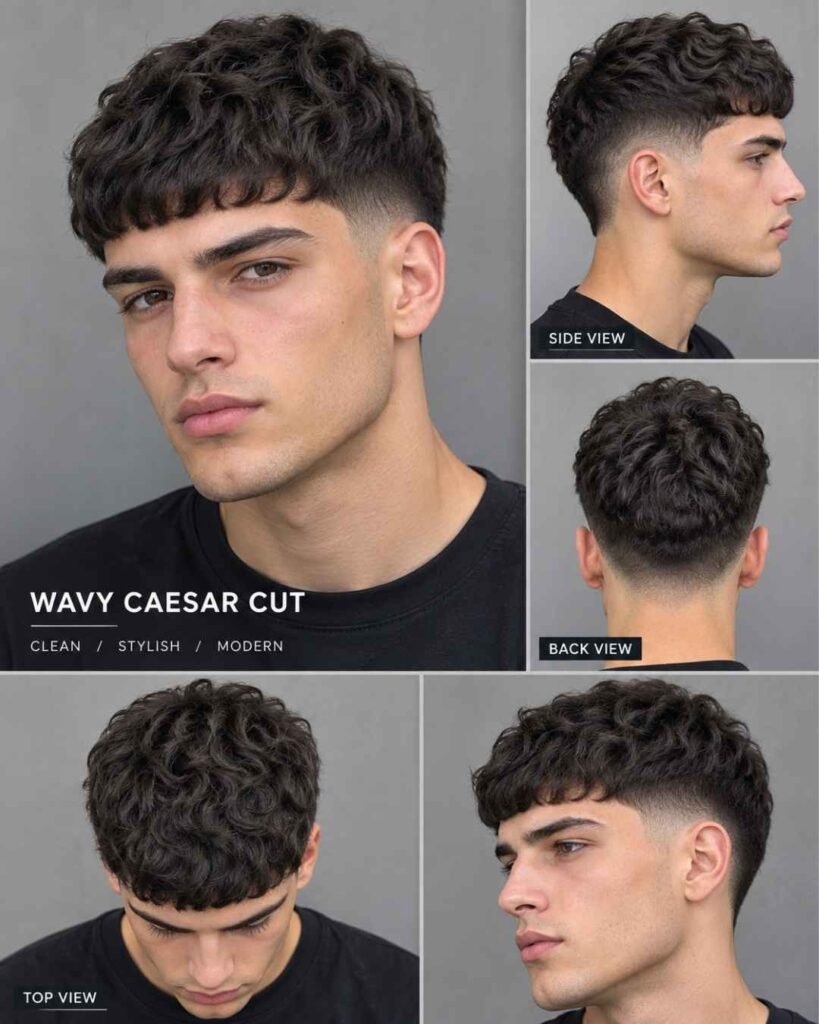
Waves give the fringe soft movement without much effort. Air-dry with a little mousse and shape the front with your fingers. Heavy pomades flatten waves and make the cut look greasy, so skip them. This is one of the easiest versions to live with.
15. Caesar for Receding Hairline
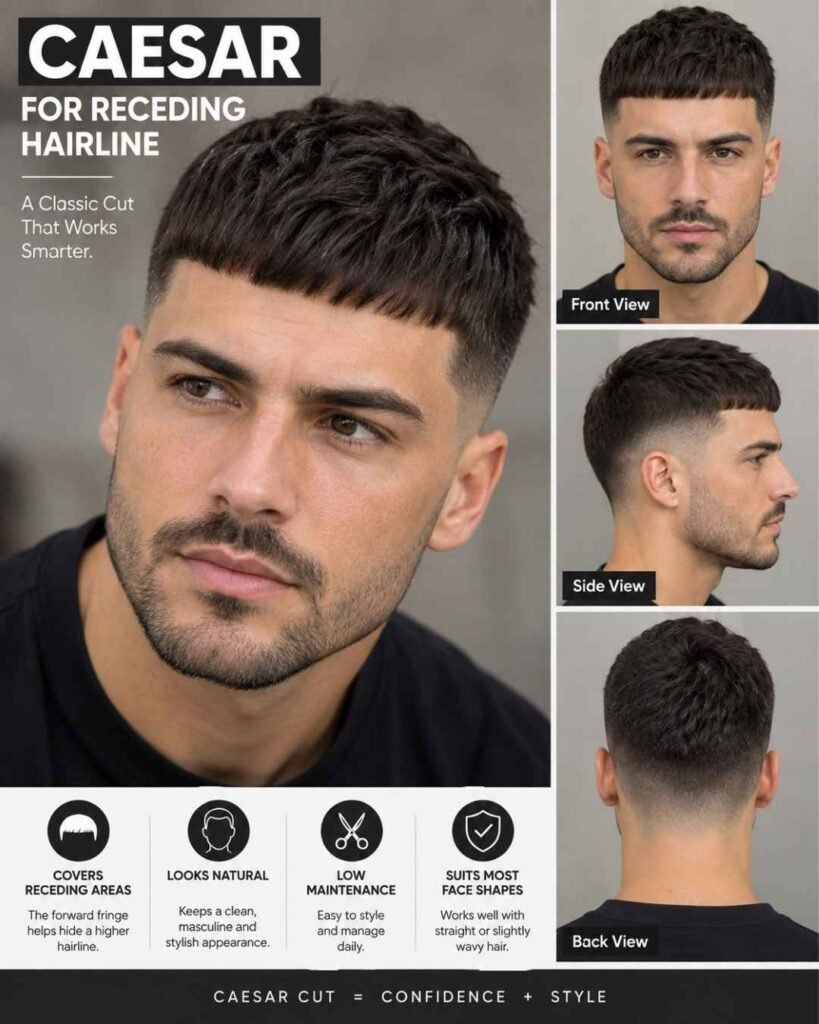
Keep the fringe a bit longer at the center, brush it forward, and keep the sides short so the temples draw less attention. It works well for mild to moderate recession. If the hairline has retreated far back, a very short buzz can look better than forcing a fringe.
16. Caesar Undercut
The sides are clipped very short with a hard disconnect from the top, rather than a gradual blend. The top can run two to three inches. It reads bolder than a fade and needs more upkeep, because the sharp line disappears as the sides grow in.
17. Caesar Mullet
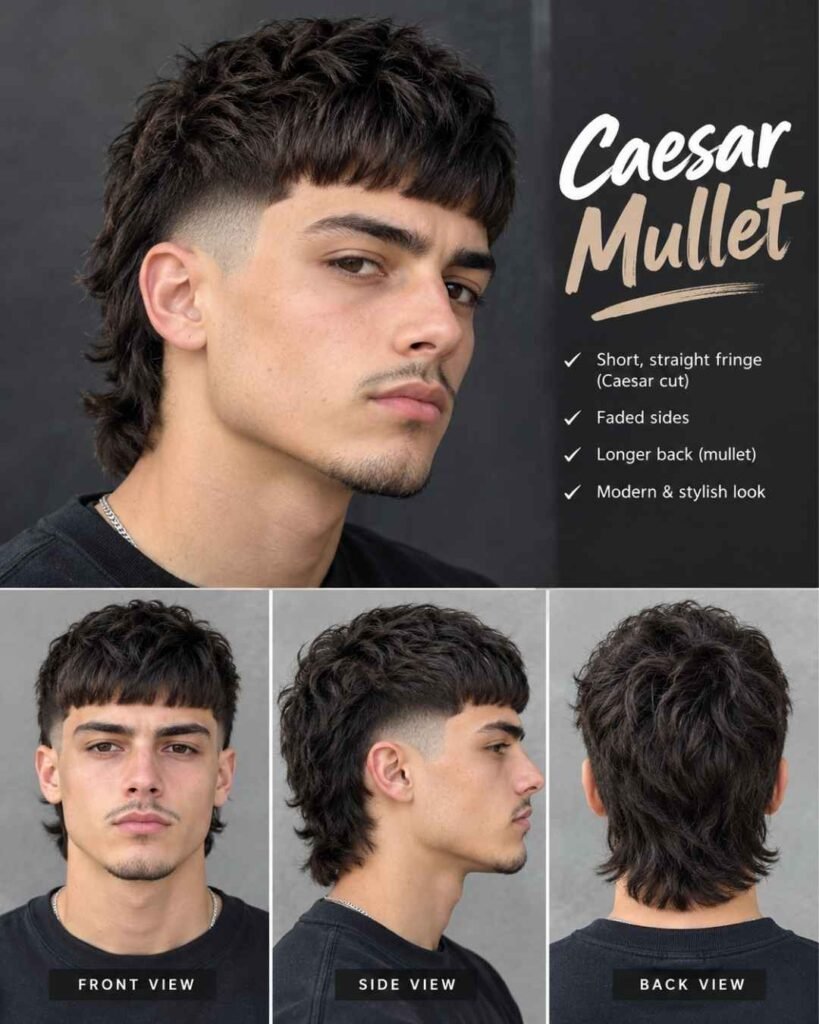
A trend-driven hybrid: short fringe in front with extra length left at the back of the neck. It is fashion-forward and not for every workplace. Ask for a clean neckline shape and ensure the top stays neat, or it drifts into a shaggy mullet.
18. Dark Caesar (Black Men)
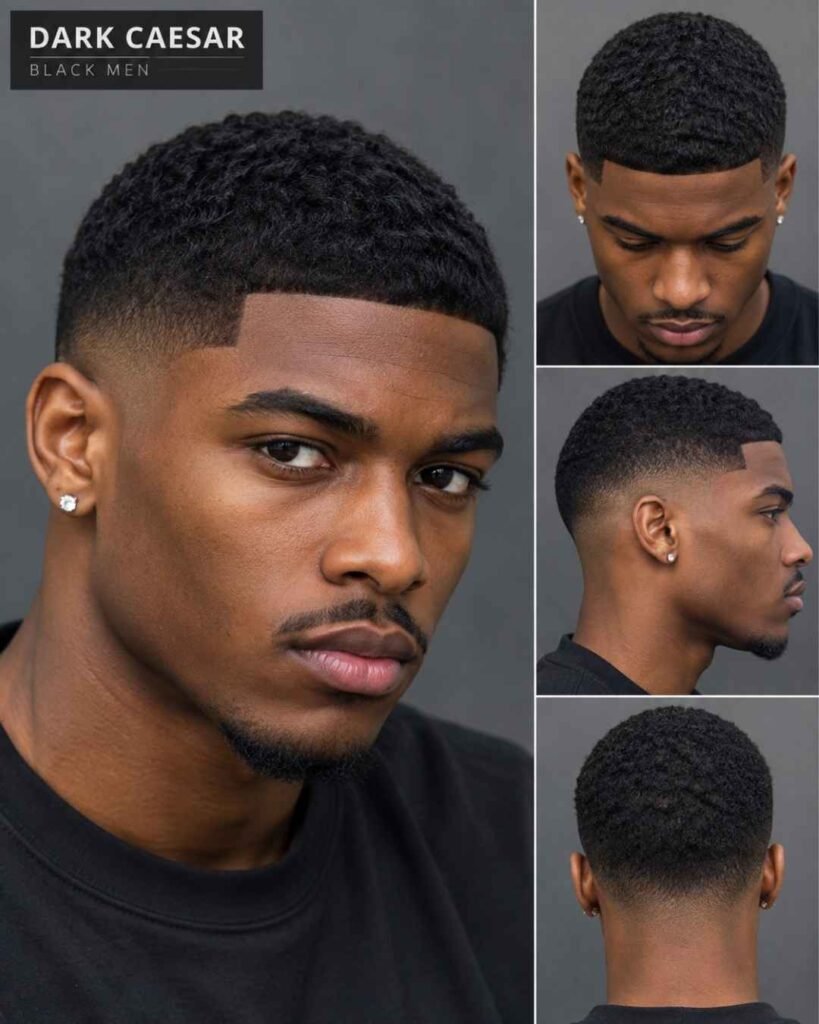
Among Black men, the Caesar is often worn with tight fades, a defined edge-up, and brushed waves on top. Moisturizing products and regular brushing help waves form. If a razor around the neckline causes bumps, ask your barber to use clippers or trim with the grain.
19. Caesar with Beard
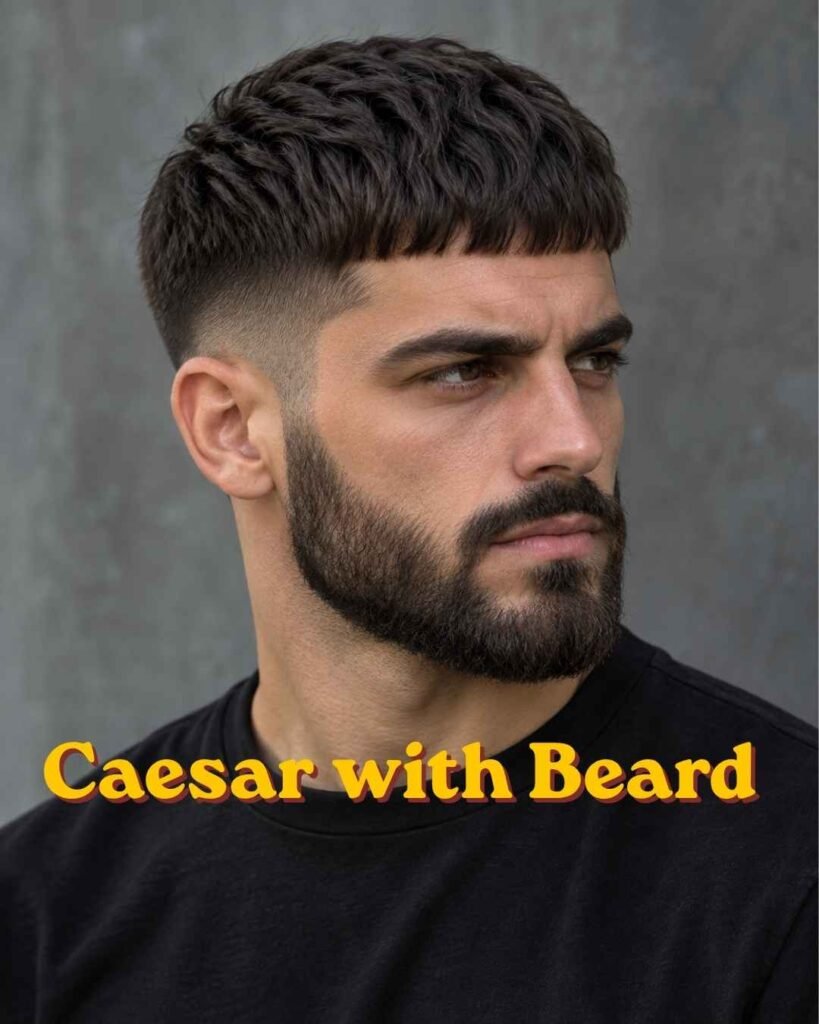
A tapered fade blends the sides into the beard, so the two read as one shape. Keep the fringe short enough that hair and beard are not competing for attention. Define the beard neckline with a clean line, since a fuzzy edge undercuts an otherwise sharp haircut.
20. Layered Caesar Cut
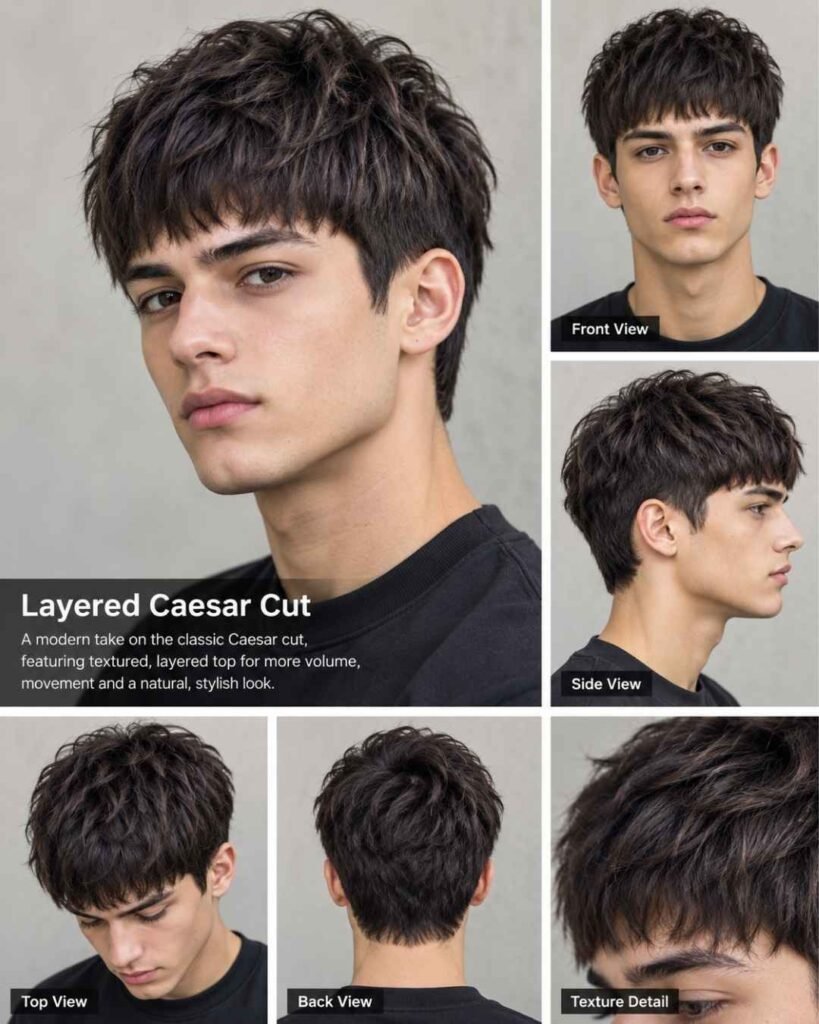
Light layers on top keep the fringe from sitting like a solid slab. The result has more movement and suits thick hair. It relies on the barber’s skill, so bring a photo. Done well, it looks natural in the morning without much product.
How Do You Choose the Right Caesar Cut for Your Face Shape?
Face shape is a guide, not a rulebook. Hairline, hair density, and your own taste matter just as much. These pairings reflect common barbering logic and are a starting point for the conversation with your barber.
| Face shape | Cut that tends to work | Why |
|---|---|---|
| Oval | Almost any version | Balanced proportions handle most fringe lengths |
| Round | High or mid fade, textured top | Contrast adds angles and a bit of height |
| Square | Textured or messy Caesar | Softens a strong jaw |
| Long or oblong | Classic or short Caesar with a straight fringe | The fringe visually shortens the forehead |
| Heart | Longer fringe, low fade | Balances a wider forehead against a narrow chin |
| Diamond | Textured fringe, taper | Keeps the cheekbones from looking wider |
If two rows seem to describe you, choose based on your hairline first. A fringe that suits your face shape but fights your cowlick will never sit right.
How to Ask Your Barber for a Caesar Cut
Barbers use the same name for different results, so describe the outcome instead of only saying “Caesar.” Bring a photo showing the front, side, and back if you can. Then cover four points:
- Top length: in inches or a guard number.
- Fringe: how far it should fall and whether it should be blunt or textured.
- Sides: even length, taper, or a fade (low, mid, or high).
- Neckline: blocked, rounded, or tapered.
Guard numbers help but are not identical across brands. The table below shows the usual sizing on most American clipper sets.
| Guard | Length (approx.) |
|---|---|
| #1 | 1/8 inch |
| #2 | 1/4 inch |
| #3 | 3/8 inch |
| #4 | 1/2 inch |
| #5 | 5/8 inch |
| #6 | 3/4 inch |
Some sources list slightly different lengths for certain numbers, so confirm your barber’s setup instead of relying on the number alone.
How to Style a Caesar Cut
Start with clean, towel-dried hair. Apply a small amount of matte paste, light clay, or texture cream and push the fringe forward with your fingers. Break it up slightly so it does not look like one solid block. Glossy pomade only makes sense if you want a retro finish.
Fine hair does best with a light mousse or sea salt spray for grip. Thick hair needs slightly more hold, but keep the amount small, because product weighs down a short fringe quickly. Style dry and add only what you need.
How Often Should You Get a Caesar Cut Trimmed?
It depends on the version. Faded and skin-faded Caesars look best when trimmed every two to three weeks. Classic and tapered cuts can go four to six weeks. These intervals come from general barbering practice and vary by how fast your hair grows and how crisp you want the edges.
Between visits, a barber can tidy the neckline and sideburns quickly if you want to stretch the gap. Do not trim the fringe yourself unless you are comfortable with scissors, since a fringe that is too short is the hardest mistake to fix.
Common Caesar Cut Mistakes to Avoid
- Cutting the fringe too short. It leaves nothing to brush forward. Start longer and adjust.
- Ignoring your cowlick. A fringe fighting a hair whorl will stick up. Tell the barber where it is.
- Using too much product. Short hair looks flat and oily fast.
- Over-thinning the top. Heavy texturizing can leave gaps.
- Choosing a high fade for the wrong reasons. It needs frequent trims.
- Skipping the photo. Words like “short on the sides” mean different things to different people.
Frequently Asked Questions
Is the Caesar cut good for thinning hair?
Yes, for mild to moderate thinning. The forward fringe covers the temples and short sides keep the look tidy. For advanced hair loss, a closer buzz often looks better.
What is the difference between a Caesar cut and a French crop?
A Caesar has a shorter, straighter fringe and a more uniform shape. A French crop usually has a longer, choppier fringe and shorter sides.
How long should hair be for a Caesar cut?
Top length is usually about half an inch to a few inches. Most barbers work in the one to two inch range for a classic version.
What guard number is a Caesar cut?
There is no single number. Many barbers use a 4 or 5 on top and lower guards on the sides, but the fringe is usually finished with scissors.
How often should you trim a Caesar cut?
Every two to three weeks for fades and every four to six weeks for classic or tapered versions.
Can you get a Caesar cut with curly hair?
Yes. Ask for a slightly longer fringe to allow for curl shrinkage, and use a curl cream to keep definition.
What product is best for a Caesar cut?
A matte paste, light clay, or texture cream. Avoid heavy gels and shiny pomades unless you want a retro look.
Does a Caesar cut suit a round face?
It can. A fade with a textured top adds angles and height, which helps balance a rounder shape.
Conclusion
The Caesar haircut lasts because it is simple, adaptable, and easy to live with. Pick a classic version for zero fuss, a fade for sharper contrast, or a textured or curly variation to work with your natural hair. Match the fringe to your hairline and face shape, and bring a photo to the barber.
Start with a low fade or taper if you are unsure, then adjust from there.
