

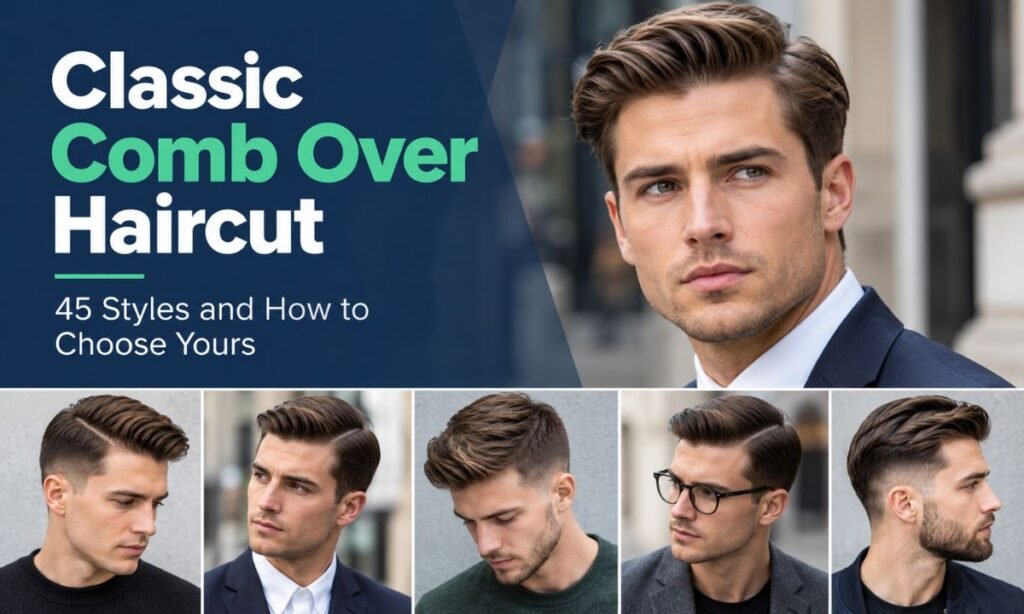
The classic comb over is a neat, side-parted cut where longer hair on top is combed across the head, usually over shorter sides. It suits offices, weddings, and weekends alike. This guide covers 45 versions, plus the face shape, hair type, and product advice you need to pick one and get it cut correctly.
What Is a Classic Comb Over Haircut?
A classic comb over keeps the top long enough to be combed to one side, while the sides and back are cut shorter. A defined part, either natural or shaved in, separates the two lengths. The result looks tidy and deliberate, whether the sides are tapered, faded, or scissor cut.
People often confuse it with the older, unflattering idea of sweeping thin hair over a bald spot. The modern version is different. It is a planned haircut with contrast, shape, and a clean line, and it works on full heads of hair as well as thinning ones.
Comb Over vs. Side Part vs. Slick Back
| Style | Direction | Typical finish |
|---|---|---|
| Comb over | Sideways across the top | Neat, defined part |
| Side part | Sideways from a natural part | Softer, less contrast |
| Slick back | Straight back | Smooth, no part |
The line between a comb over and a side part is blurry. In practice, the more contrast between top and sides, the more people call it a comb over.
Core Classic Comb Over Styles (1 to 11)
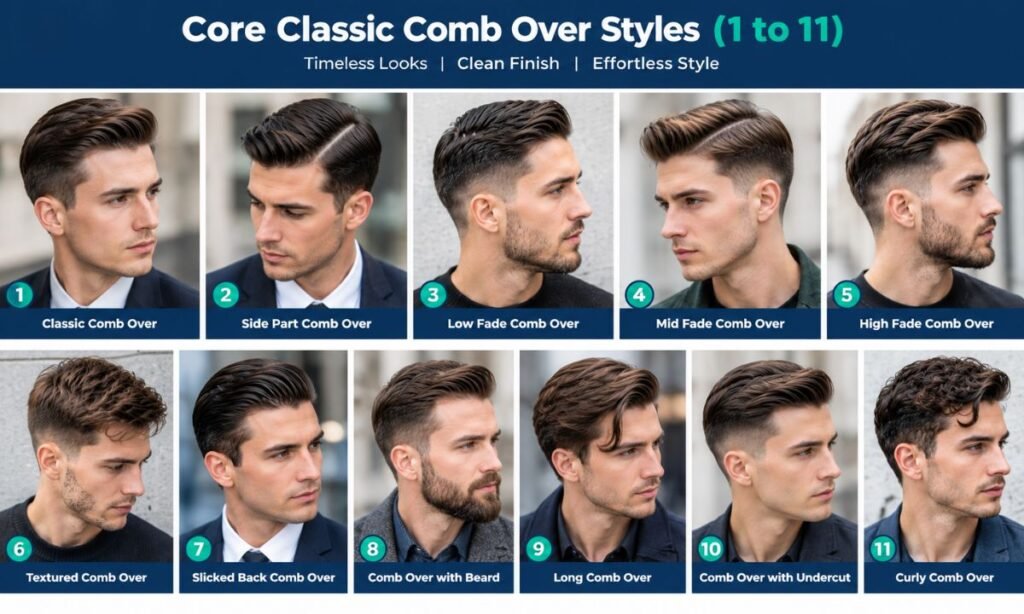
1. Classic Comb Over
The original: a clean side part, sides tapered short, top about 2 to 4 inches. Hair is combed over and set with light product. It is the safest choice for a first-time request and suits most hair types.
2. Slick Classic Comb Over
This version uses a shinier product, such as a water-based pomade, to hold every strand flat. It looks polished and formal, so it works well for interviews and events. Expect to restyle it after wind or rain.
3. Textured Classic Comb Over
Here the top is cut with point cutting or thinning shears, then finished with matte clay. The hair still sweeps sideways, but with visible separation. It looks more relaxed and hides fine flyaways.
4. Modern Comb Over
The modern version pairs a tighter fade with a slightly longer, heavier top. Contrast is the point. It reads as current and sharp, and it needs a trim every three to four weeks to stay crisp.
5. Natural Comb Over
No hard part, no shine. The hair falls to the side following its own growth pattern, with a light cream to control frizz. It suits men who want a tidy look without daily styling effort.
6. Vintage Comb Over
Inspired by mid-century barbering, this style uses a high-shine finish, a defined part, and classic tapered sides. Oil-based or heavier pomades give the authentic look, though they take more washing to remove.
7. Ivy League Comb Over
A slightly longer take on the crew cut, with a short back and sides and a top long enough to part. It is understated and conservative. It works well for students and professionals who want low fuss.
8. Deep Side Part Comb Over
The part sits far from center, often above the outer corner of the eye, creating a dramatic sweep. It flatters men with a stronger jawline and looks best when the sides are kept short and clean.
9. Short Classic Comb Over
Here the top is around 1.5 to 2.5 inches. It needs little product and stays neat through a workday. It is a good option for men with thick hair who find longer tops heavy.
10. Medium Length Comb Over
With 3 to 5 inches on top, this length gives you the most styling flexibility. You can wear it slick for evenings or tousled for weekends. It also grows out gracefully between cuts.
11. Long Hair Comb Over
Top length runs 5 inches or more, with the sides kept shorter. It needs a blow dryer and a strong hold product. Regular trims prevent the top from looking stringy at the ends.
Fade and Undercut Versions (12 to 19)
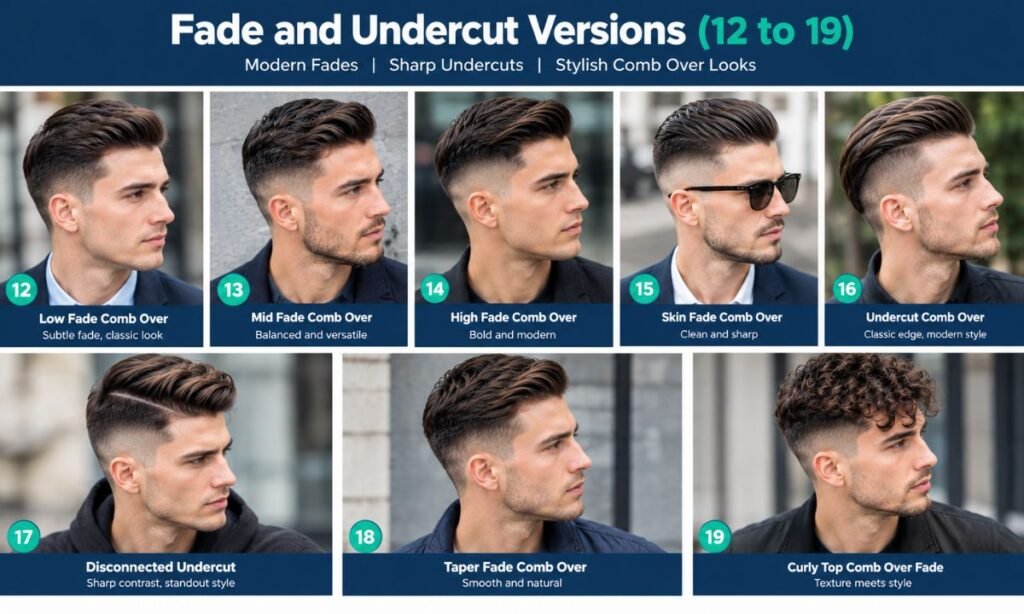
The fade you choose changes the whole personality of the cut. Here is a quick guide before the individual styles.
| Fade type | Where it starts | Best for |
|---|---|---|
| Low | Just above the ears | Conservative, office looks |
| Mid | Around the temples | Balanced, most popular |
| High | Upper temple area | Bold, high contrast |
| Skin | Shaved down to skin | Sharpest finish |
| Taper | Only sides and nape | Subtle, natural |
12. Classic Comb Over with Low Fade
The fade begins low near the ear and neckline, leaving most of the side hair intact. It is subtle and professional. This is a good starting point if you are new to fades.
13. Classic Comb Over with Mid Fade
The fade starts around the temple, giving noticeable contrast without going extreme. Most barbers consider it the most versatile option, and it pairs well with medium-length tops.
14. Classic Comb Over with High Fade
Shorter sides begin high on the head, so the top appears to stand out more. This suits men with strong head shapes and works best when the top has enough volume to balance the contrast.
15. Classic Comb Over with Skin Fade
The sides blend down to bare skin using a zero guard or foil shaver. It gives the cleanest look but grows out visibly within about two weeks, so plan on frequent visits.
16. Classic Comb Over with Taper Fade
Only the sideburns and nape are shortened, leaving the rest of the sides longer. It is the gentlest option and the most forgiving, since it grows out without an obvious line.
17. Classic Comb Over with Drop Fade
The fade line curves down behind the ear instead of running straight around the head. This adds shape and suits men who want a modern detail without a drastic change.
18. Classic Comb Over with Burst Fade
A burst fade curves around the ear in a semicircle, leaving length at the back. It looks bold from the side and pairs well with a longer top and a visible part.
19. Classic Comb Over Undercut
The sides are clipped very short, with no gradual blend, and the top stays long. This is stark and high contrast. It suits men with thick hair who want a defined, dramatic silhouette.
Modern and Creative Twists (20 to 31)
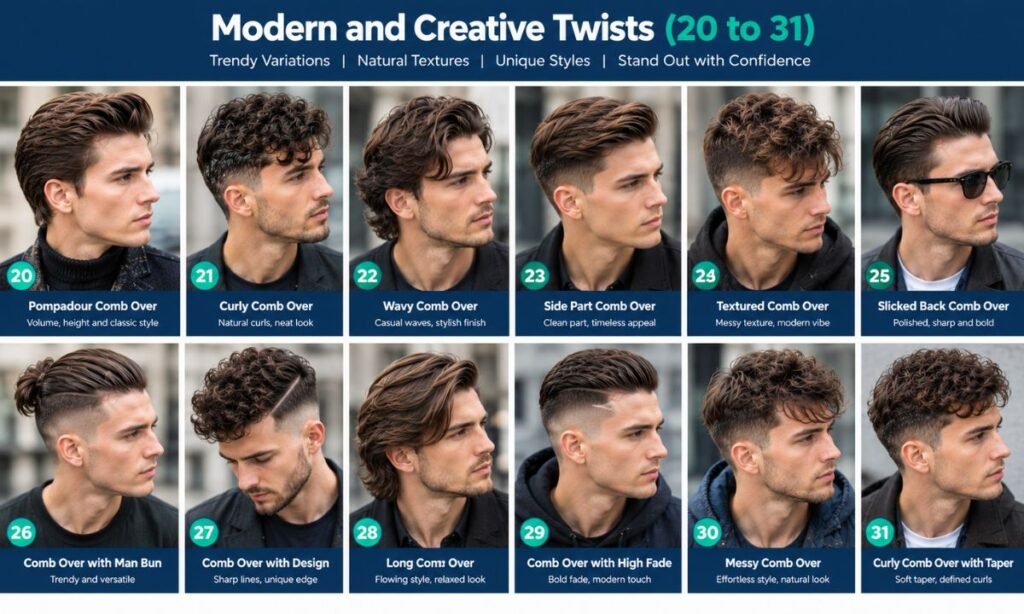
20. Disconnected Comb Over
Top and sides are cut with no transition between them. The sharp break makes the top look like a separate shape. It needs strong hold and regular upkeep to keep the contrast crisp.
21. Hard Part Comb Over
A barber shaves or trims a thin line where the part sits, creating a permanent guide. It stays visible even when the hair moves. The line needs touching up every couple of weeks.
22. Comb Over with Design
A shaved pattern, such as lines or a small shape, is added near the part or on the sides. It suits confident personalities. Ask to see the design drawn on paper before committing.
23. Side Sweep Comb Over
The top is brushed to one side in a soft, relaxed sweep with no rigid part. It looks casual and youthful, and works well on wavy hair that resists being pressed flat.
24. Rolling Comb Over
The hair is combed back and over in one continuous motion, giving a wave shape near the front. It takes some practice and a blow dryer, but the look is distinctive and full.
25. Comb Over Pompadour
Extra volume is lifted at the front, then swept sideways. It combines the retro shape of a pompadour with the order of a part. Use a strong hold pomade and a round brush to build height.
26. Comb Over Quiff
A quiff has a bit less height than a pompadour and a looser finish. The front is lifted and pushed to the side. It suits men with medium to thick hair and moderate styling time.
27. Comb Over Mohawk
The center strip is kept long and combed to one side, while the sides are clipped tight. It is edgier than most versions here, though still clean enough for many workplaces.
28. Comb Over Mullet
Short on top and sides, longer at the back, with the top swept over. This is a fashion-forward choice and not for everyone. Ask your barber to blend it so it looks intentional.
29. High and Tight Comb Over
The sides are almost shaved, and the top is short but still long enough to part. It has a military feel and is one of the lowest maintenance options in this guide.
30. Spiky Comb Over
The front is pushed upward and to the side with matte paste, giving a lively, informal texture. It works on thick, straight hair and is easier to style than it looks.
31. Brushed Up Comb Over
Hair is brushed upward from the forehead, then swept to the side. It adds height without full pompadour volume. A light spray or cream keeps it in place without stiffness.
Best Comb Overs by Hair Type (32 to 36)
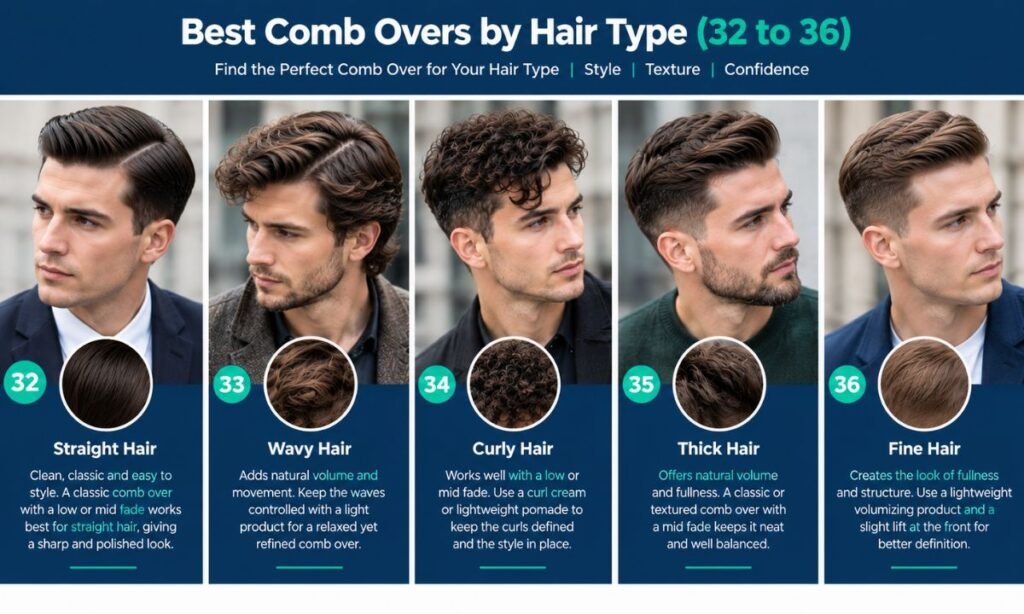
Hair type matters more than trend when choosing a style, because texture decides how well the hair holds its direction.
32. Classic Comb Over for Straight Hair
Straight hair holds a part well and shows every line clearly. It can look flat, so ask for some texture on top. A light pomade or cream gives shine without weight.
33. Classic Comb Over for Wavy Hair
Waves add natural volume and movement. Keep the top a bit longer so the pattern shows, and use a sea salt spray or cream to define it while keeping the sweep intact.
34. Classic Comb Over for Curly Hair
Curls need moisture and a longer top, around 4 inches or more, to sit properly. Use a curl cream, then diffuse to dry. A shorter fade on the sides keeps the shape controlled.
35. Classic Comb Over for Thick Hair
Thick hair benefits from thinning at the top so it lies flat instead of puffing. A firm-hold pomade or wax helps. Regular trims stop the sides from ballooning outward.
36. Classic Comb Over for Fine or Thin Hair
Fine hair looks fuller with a matte powder or light clay, and a layered cut adds body. Avoid heavy oils, which clump strands and make the scalp show through more.
Best Comb Overs by Face Shape and Hairline (37 to 42)
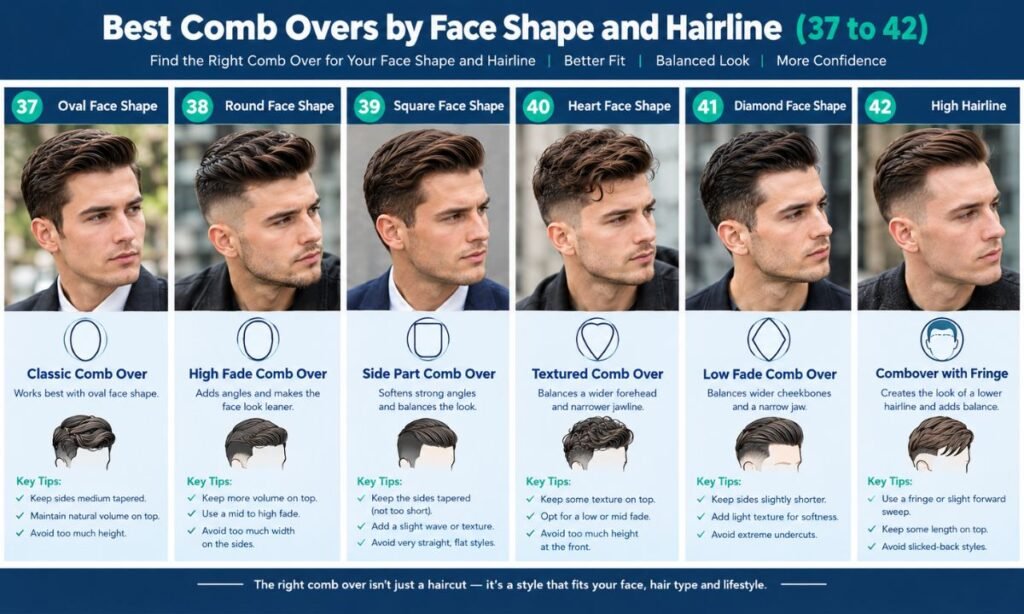
| Face shape | Suggested comb over |
|---|---|
| Round | Higher volume, tighter sides |
| Square | Softer texture, medium fade |
| Oblong | Shorter top, less height |
| Oval | Almost any version works |
37. Classic Comb Over for Round Face
Add height at the front and keep the sides short to create length. A high or mid fade with a pompadour-style lift works well, while flat, wide tops tend to emphasize roundness.
38. Classic Comb Over for Square Face
A strong jaw already gives structure, so a softer, textured top balances it. A medium fade with a natural or slightly messy sweep prevents the look from becoming too severe.
39. Classic Comb Over for Oblong Face
Avoid too much height, which lengthens the face further. Choose a shorter top with some side volume, and keep the fade low. A deep part can help widen the look.
40. Classic Comb Over for Receding Hairline
Sweeping hair forward and slightly across softens the temples. Keep the sides shorter to draw attention away from the hairline, and use matte products that do not highlight thin areas.
41. Classic Comb Over for Older Men
A conservative length, a low taper, and a natural finish look dignified and easy to maintain. Silver hair often shows off texture nicely, so skip heavy shine and let the color work.
42. Classic Comb Over for Balding Men
Where thinning is moderate, a short top with tight sides gives a cleaner result than trying to cover more scalp. When the crown is thin, shorter is usually more flattering than longer strands stretched across.
Beard, Stubble, and Asian Hair Variations (43 to 45)

43. Classic Comb Over with Beard
A full beard pairs best with a fade that blends into it, so the sides and beard read as one shape. Keep the beard trimmed at the neckline and cheeks for a polished finish.
44. Classic Comb Over with Stubble
Stubble adds a rugged edge to a formal cut. Keep it at a consistent length, usually one to three millimeters, and clean up the neck and cheek lines every few days.
45. Asian Comb Over
Asian hair is often straight, thick, and strong, which makes it hold a part well but resist lying flat. Thinning the top and using a firm matte product gives a controlled, natural sweep.
How to Choose the Right Classic Comb Over
Start with hair type, then face shape, then lifestyle. Hair type decides what is physically possible, face shape decides what looks balanced, and lifestyle decides what you will actually keep up. A style that needs 15 minutes a day will not last if you rarely have five.
Consider your work and daily routine too. A skin fade with a hard part looks sharp, but it needs a barber visit every two to three weeks. A low taper with a natural finish can go four to six weeks between trims.
If you are unsure, bring two or three reference photos and ask your barber which fits your head shape. A good barber will adjust length, fade height, and part placement for you. Photos work better than descriptions since terms like “short” mean different things to different people.
What to Tell Your Barber
Being specific saves time and disappointment. These details cover most of what a barber needs to hear:
- Your preferred top length in inches or as a finger width
- The fade type and where it should start
- Which side you want the part on
- Whether you want a natural or shaved part line
- How much time you will spend styling each morning
Clipper guard numbers are a common shorthand. A number 1 guard leaves about one eighth of an inch, a number 2 leaves about a quarter inch, and a number 3 leaves about three eighths of an inch. Most barbers also use these on the sides before blending.
What Products Does a Classic Comb Over Need?
The right product depends on the finish you want and your hair type. Using too much or the wrong kind is the most common reason a comb over looks greasy or falls flat.
| Product | Finish | Best for |
|---|---|---|
| Water-based pomade | High shine, strong hold | Slick, formal looks |
| Clay | Matte, firm hold | Textured, thick hair |
| Styling cream | Natural, light hold | Wavy or curly hair |
| Sea salt spray | Texture, light hold | Fine or straight hair |
| Hairspray | Finishing hold | Windy days |
You will also want a fine-tooth comb for a clean part and a blow dryer for setting direction. A round brush helps if you want lift at the front.
How to Style a Classic Comb Over at Home
- Wash and towel dry until the hair is damp, not soaking.
- Apply a small amount of pre-styler, such as sea salt spray, if your hair is fine.
- Blow dry the top in the direction you want it to sit, using your fingers or a brush.
- Rub a pea-sized amount of product between your palms and work it through from the back to the front.
- Use a fine-tooth comb to draw the part, then sweep the top across.
- Finish with a light mist of hairspray if you need extra hold.
Start with less product than you think you need, since you can always add more. Applying it to damp hair that has been blow dried gives a better hold than putting it on wet hair.
Maintenance and Common Mistakes
Trim frequency depends on the fade. Skin fades look best when refreshed every two to three weeks, while tapers can stretch to four to six. A comb over with a hard part needs a line refresh at every visit.
Common mistakes include using too much product, choosing a length that does not suit your hair texture, and skipping conditioner, which leaves the top dry and unruly. Washing daily with a harsh shampoo can also strip natural oils, so consider washing every other day if your scalp allows.
Another frequent error is combing hair over thinning areas in a way that highlights them. If you notice this happening, ask your barber about shortening the top rather than stretching it further.
Frequently Asked Questions
What is a classic comb over haircut?
It is a side-parted style where longer top hair is combed across the head over shorter, tapered or faded sides.
Does a comb over work for thinning hair?
Yes, if the top is kept short and the sides tight, though covering large bald areas with long strands usually looks worse.
How long should hair be for a comb over?
Roughly 2 to 4 inches on top works for most men, and longer hair suits sweeping or pompadour versions.
What is the best fade for a classic comb over?
A mid fade suits most people, while a low fade or taper is better for a conservative look.
How often should I get a comb over trimmed?
Every two to three weeks for skin fades, and every four to six weeks for tapers or natural finishes.
Which product is best for a comb over?
Water-based pomade gives shine and hold, while clay or cream gives a matte, natural finish.
Can curly hair have a comb over?
Yes, with a top of about 4 inches or more, moisturizing cream, and a short fade on the sides.
What is the difference between a comb over and a side part?
A comb over usually has more contrast between top and sides, while a side part is softer and more natural.
Conclusion
The classic comb over is not one look but a flexible framework. With the right fade, top length, and finish, it works on straight, wavy, and curly hair, on round and square faces, and across ages. The 45 styles above give you enough options to find one that fits.
Pick a style based on your hair type first, then adjust the fade and part to suit your face and routine. Bring photos to your barber, invest in a couple of good products, and plan regular trims. A well-cut comb over needs very little effort to look good.
