

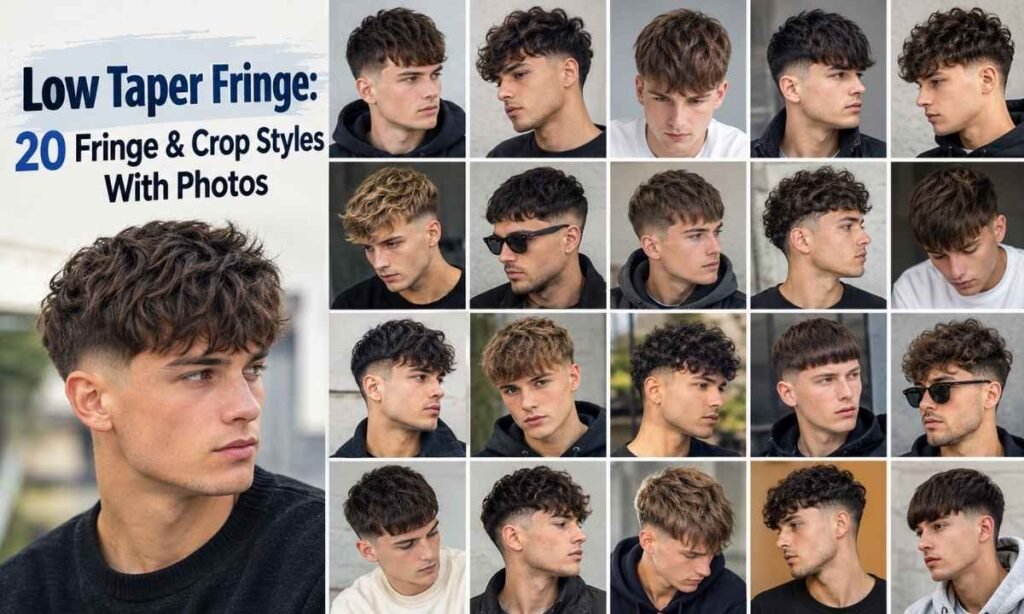
A low taper fringe is a haircut with short sides that taper gently from just above the ears and neckline, paired with longer hair on top that falls forward over the forehead. The sides stay neat while the top stays easy and textured.
This guide shows 20 styles with photos and explains which ones suit your face shape and hair type. You will also get barber wording you can copy, home styling steps, product types, upkeep timing, and a clear look at cost.
What is a low taper fade fringe?
A low taper fade fringe is a haircut where the sides and back taper short starting low near the ears and neckline, while the hair on top stays longer and is styled forward into a fringe. The taper keeps the edges clean, and the fringe adds texture.
Think of it as two parts. The taper is a gradual shortening of the hair on the sides and back. The fringe is the longer section on top that sits across the forehead, either brushed forward, swept to one side, or cut straight.
The word “low” tells you where the taper starts. It begins close to the bottom of the head, so most of the sides keep some length. That makes the cut softer than a mid or high fade. People search it as both low taper fringe and low taper fade fringe.
What it looks like from the front, side, and back
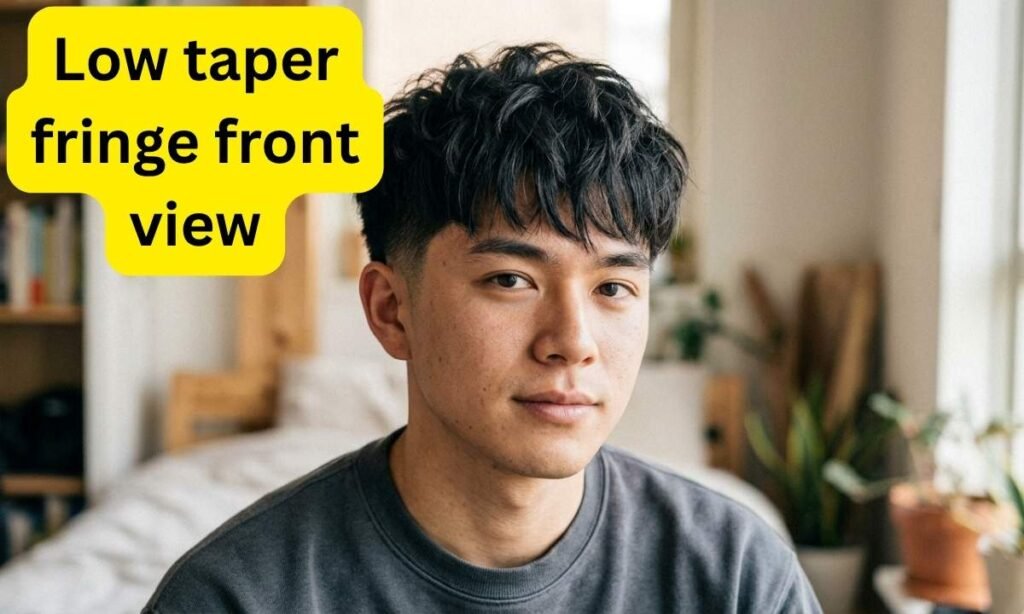
From the front, you see the fringe first. It sits above the eyebrows or across the forehead, and the shortened sides frame the face without drawing attention. The contrast between the longer top and tidy sides is the main feature of this cut.
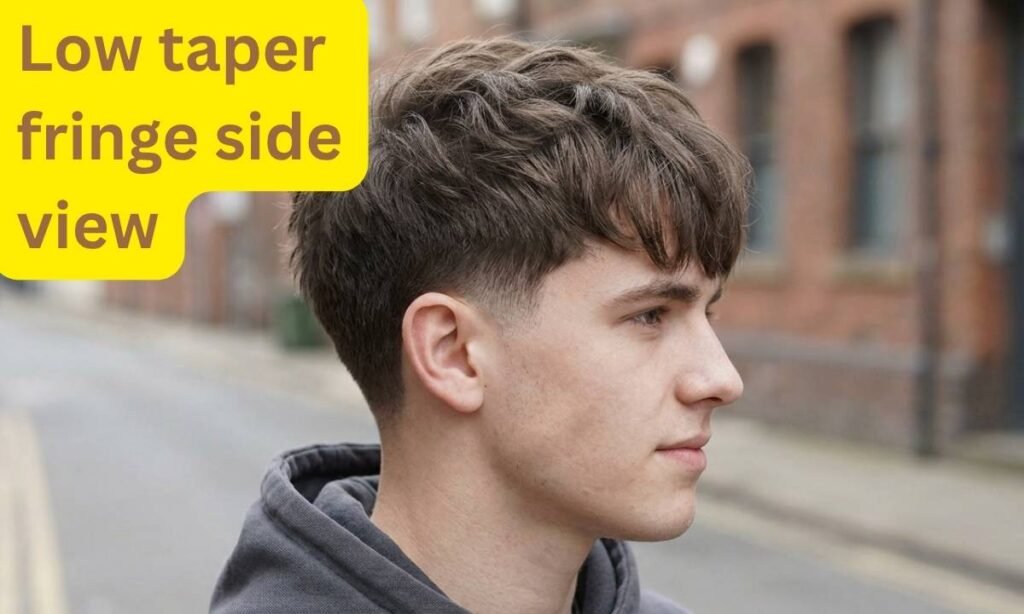
From the side, the taper is easy to spot. The hair is shortest right around the ear and sideburn, then gets gradually longer as it moves up the head. A good blend has no visible line where the lengths change.
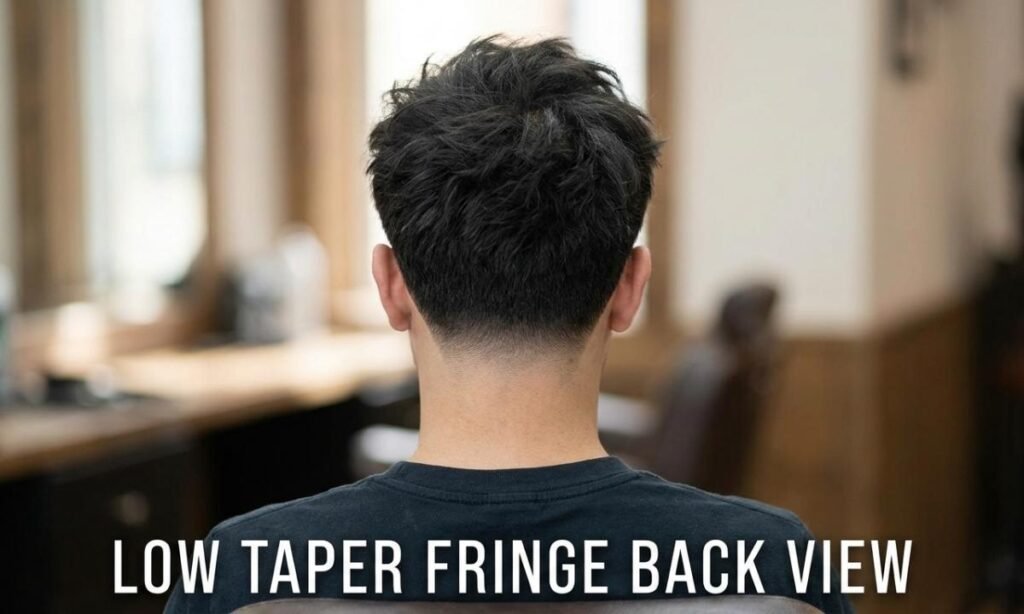
From the back, the taper follows the natural neckline. The hair is shortest at the nape and grows longer toward the crown. The neckline can be rounded, squared, or left natural, depending on how you want the cut to grow out.
How it compares to similar cuts
Many people mix up these cuts because they share short sides and a longer top. The main differences are where the short section starts and how much skin shows. The table below keeps the comparison simple.
| Cut | Sides | Skin shows? | Upkeep |
|---|---|---|---|
| Low taper fringe | Short only at ears and neckline | Very little | Lower |
| Mid taper fringe | Short from mid-head down | Some | Medium |
| Low fade fringe | Blends down to skin | Yes, at the bottom | Higher |
| Textured crop | Varies, often a fade | Varies | Medium |
A low taper keeps more length on the sides than a fade, which means it grows out in a tidier way. A low fade goes shorter at the bottom and needs more frequent cleanups to keep the blend looking sharp.
Who does it suit?
The low taper fringe works on most hair types. Straight hair gives a sharp, flat fringe. Wavy hair gives a relaxed, textured look. Curly hair gives a fuller fringe with natural volume. Thick hair needs thinning at the top, and fine hair needs light layers.
It also suits different settings. The clean sides look neat at an office, and the textured top looks casual on weekends. If you prefer a haircut that does not demand daily effort, this is a practical choice.
Check with your barber first if you have a strong cowlick at the front or a receding hairline. A fringe that fights your hair growth will not sit well, and a barber can suggest a shorter or side-swept version instead.
Best fringe for your face shape
The fringe is the part you can adjust to fit your face. Use these notes as a starting point, then ask your barber what works with your hairline and growth pattern.
- Oval: Most fringe types work. A textured or side-swept fringe keeps the balance.
- Round: Choose a longer, angled fringe with height on top to add length to the face.
- Square: A soft, textured fringe breaks up a strong jawline.
- Heart: A side-swept or longer fringe balances a wider forehead.
- Diamond: A fringe with some volume softens the cheekbones and balances the forehead.
20 best low taper fade fringe styles
Each style below pairs the low taper with a different fringe. Pick one that matches your hair type, then bring the photo to your barber.
1. Textured fringe
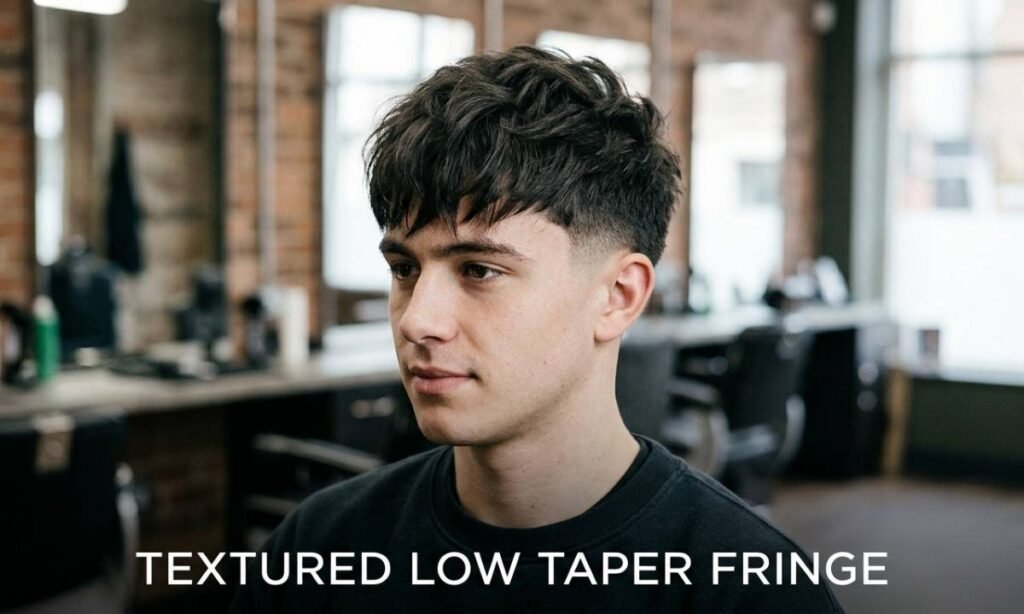
Choppy layers on top create movement and a lived-in look. This is the most flexible version of the cut, and it works well on straight and slightly wavy hair with a little matte product.
2. Straight fringe
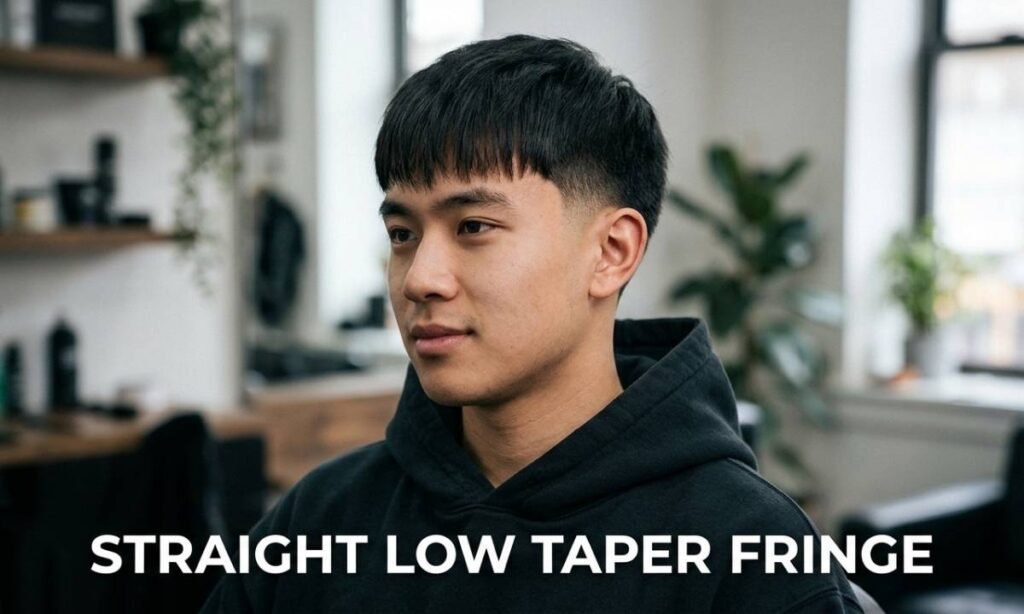
A blunt, even fringe cut straight across the forehead gives a sharp, deliberate look. It works best on straight, thick hair and needs regular trims to keep the line crisp.
3. Side-swept fringe
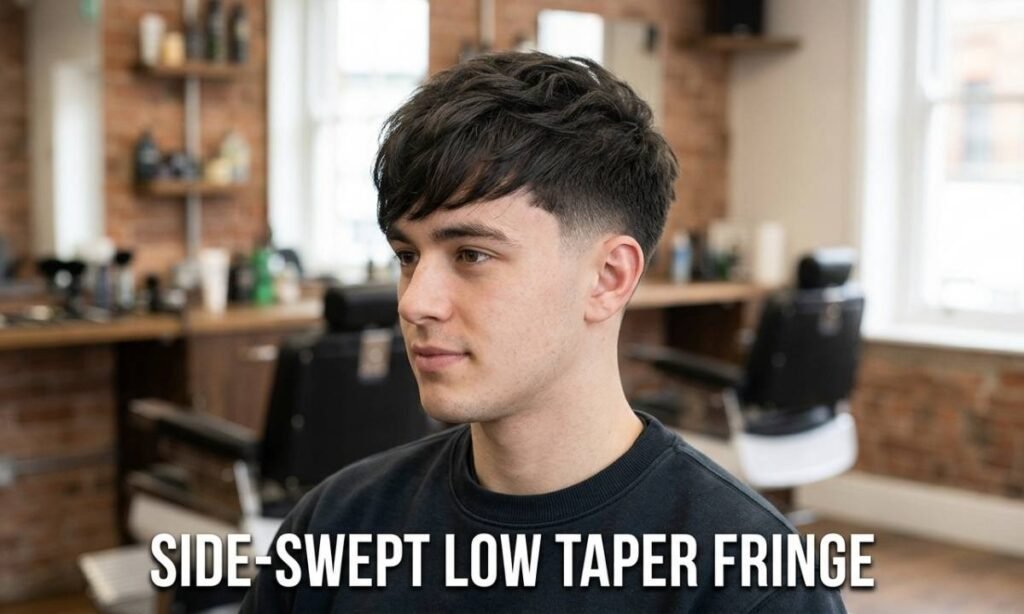
The fringe is combed to one side, which opens up the forehead and shows more of the face. It is a good option if you want a neater look than a full forward fringe.
4. Messy fringe
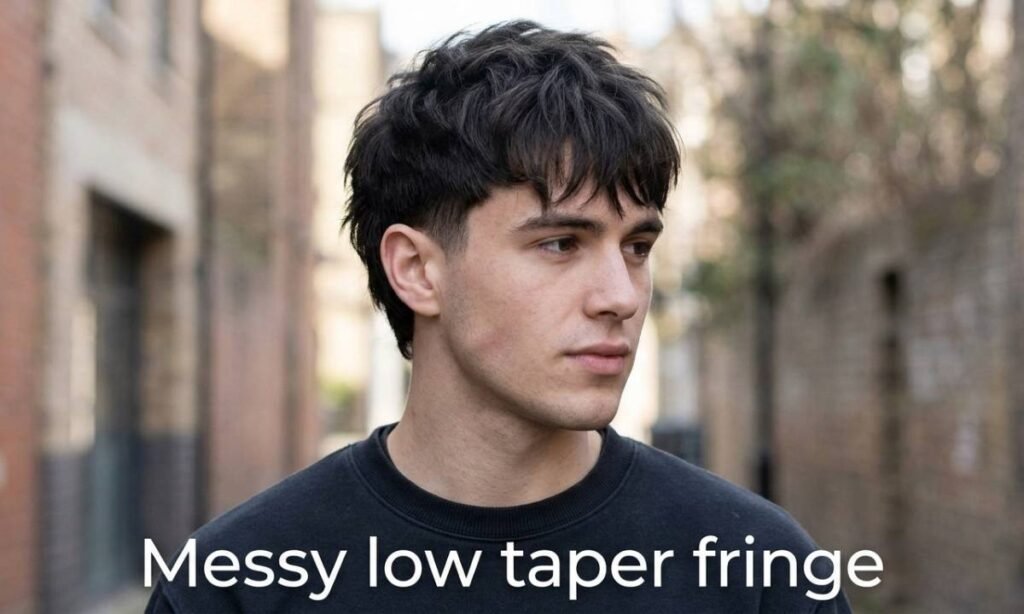
A rough, uneven finish with plenty of separation. Use clay or paste and rub it through with your fingers. It suits people who want the cut to look undone after a few seconds of styling.
5. Long fringe
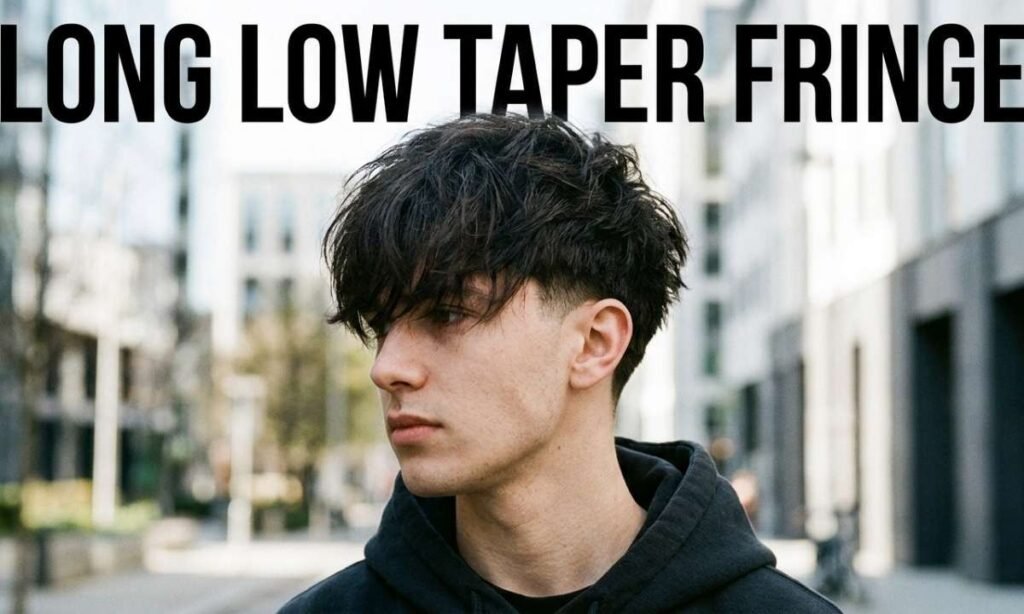
Longer hair on top falls well below the eyebrows and can be pushed aside or tucked behind the ear. This style needs more length, so plan on growing the top for a few months.
6. Short crop fringe
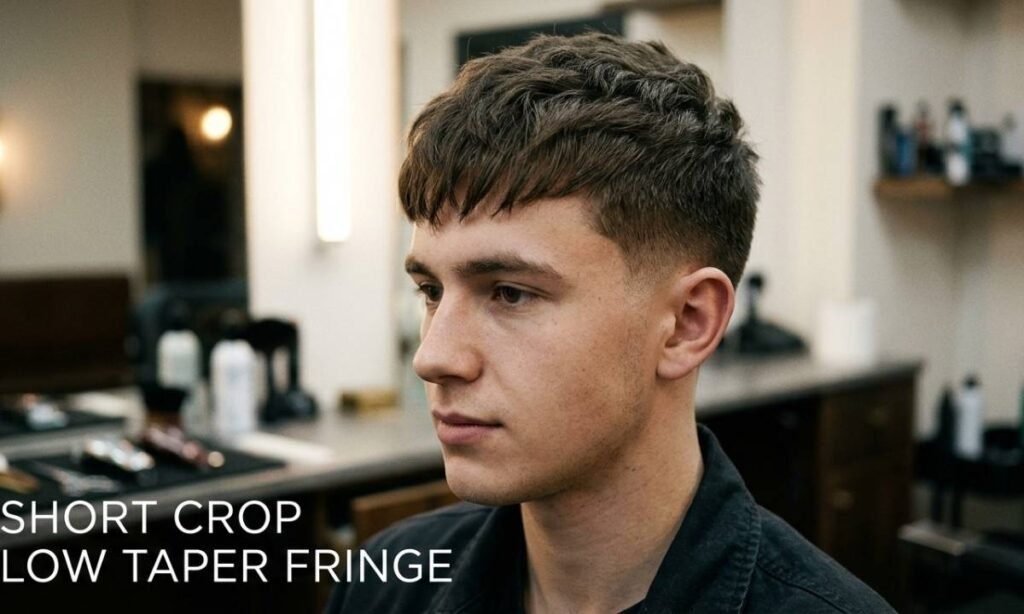
A shorter, cropped top with a small fringe that sits just above the brow line. It is easy to manage, dries fast, and works well if you want minimal daily styling.
7. Textured crop
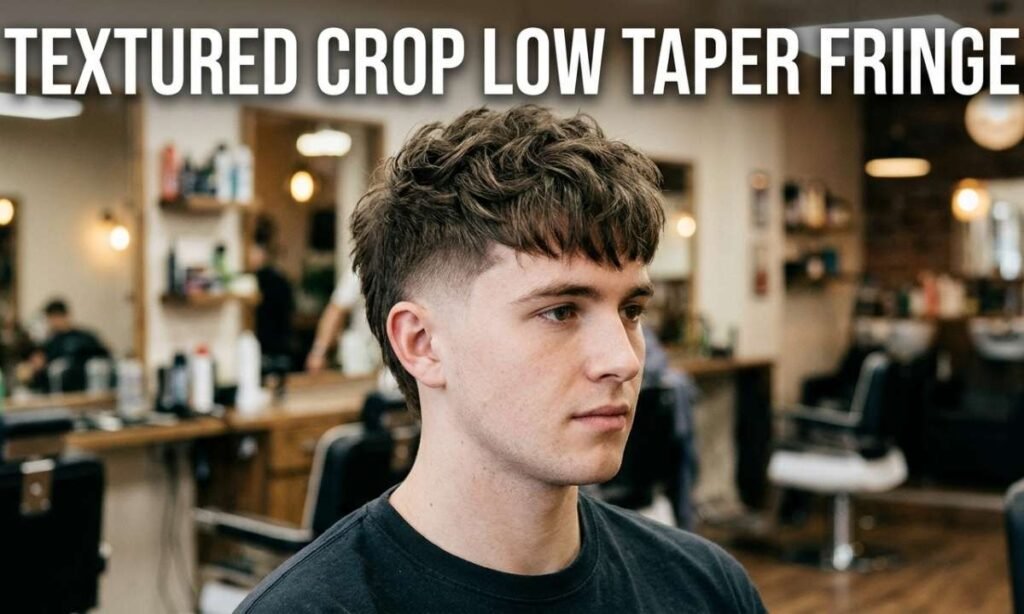
A cropped top cut with scissors and point cutting for a broken-up texture. The fringe is short and forward, and the low taper keeps the sides tidy and uncomplicated.
8. Choppy fringe
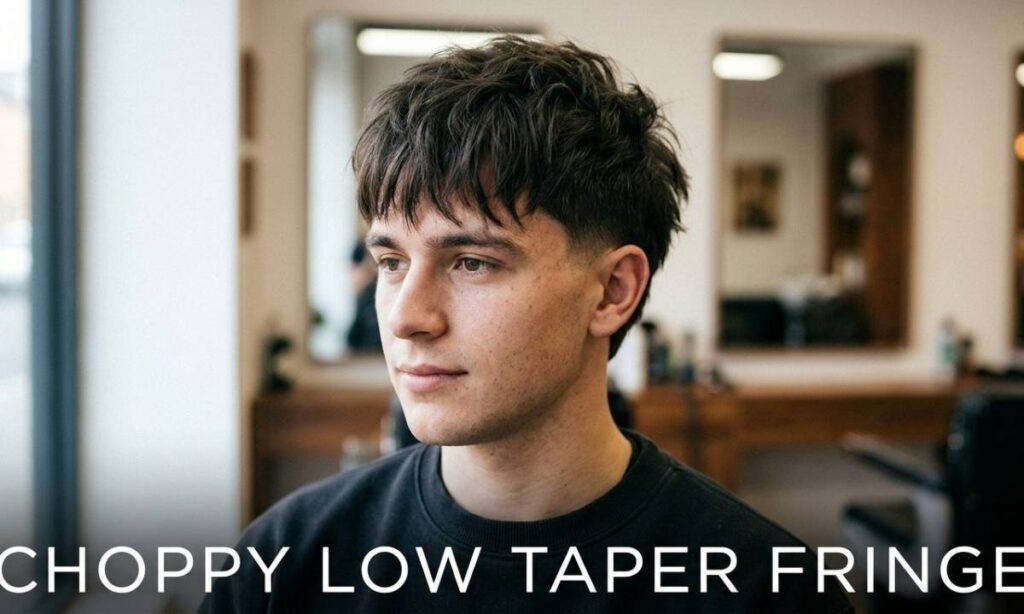
Short, uneven pieces across the front give a more dramatic edge. Ask your barber to point cut the fringe so the ends look broken and not blunt.
9. Curly fringe
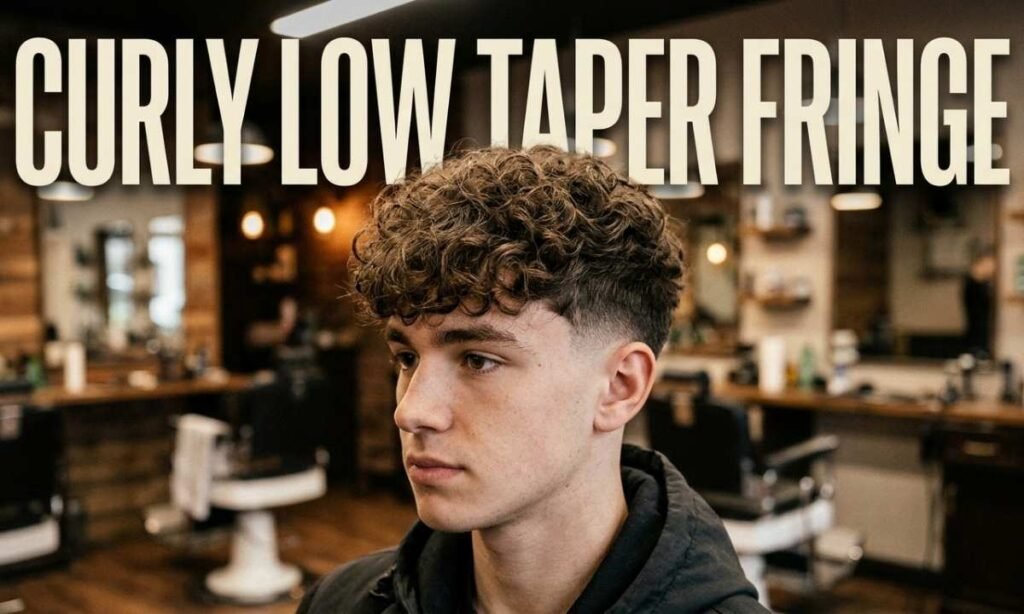
Natural curls fall forward as a soft, full fringe, and the low taper keeps the sides from adding bulk. Use a curl cream to define the shape and reduce frizz.
10. Wavy fringe
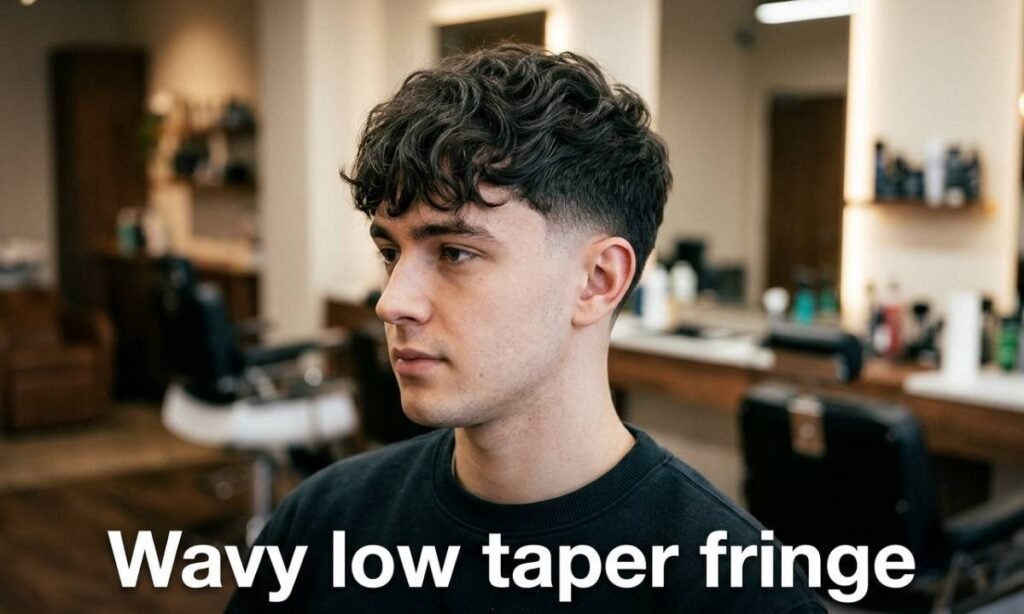
Loose waves create a fringe with gentle movement. A light sea salt spray and air drying are enough to bring out the shape without making it stiff.
11. Brushed-forward fringe
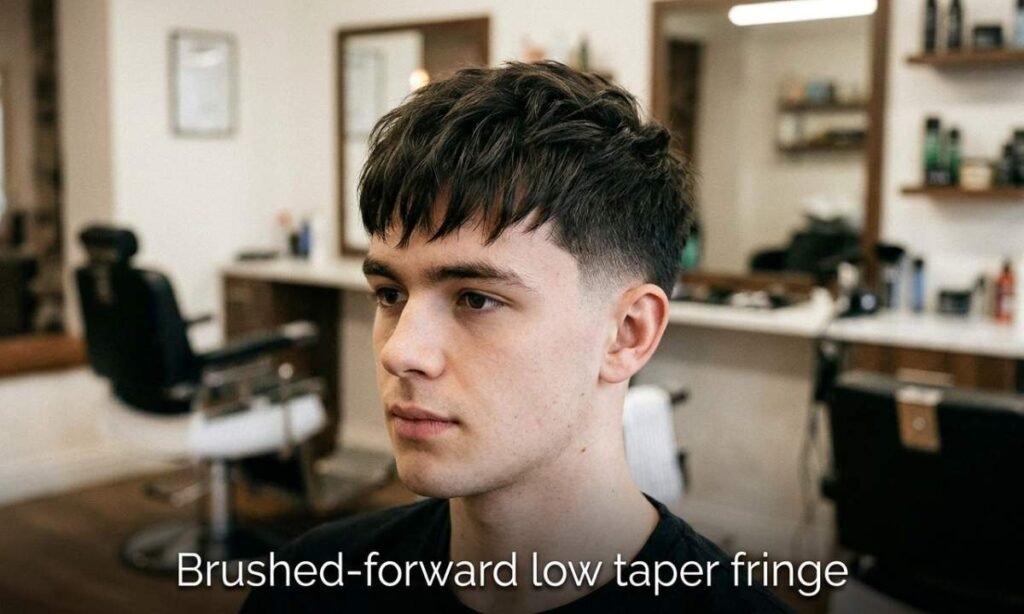
The hair is combed straight down and forward, then trimmed to the brow. It is a clean, simple version that works best on straight hair with some density.
12. Micro fringe
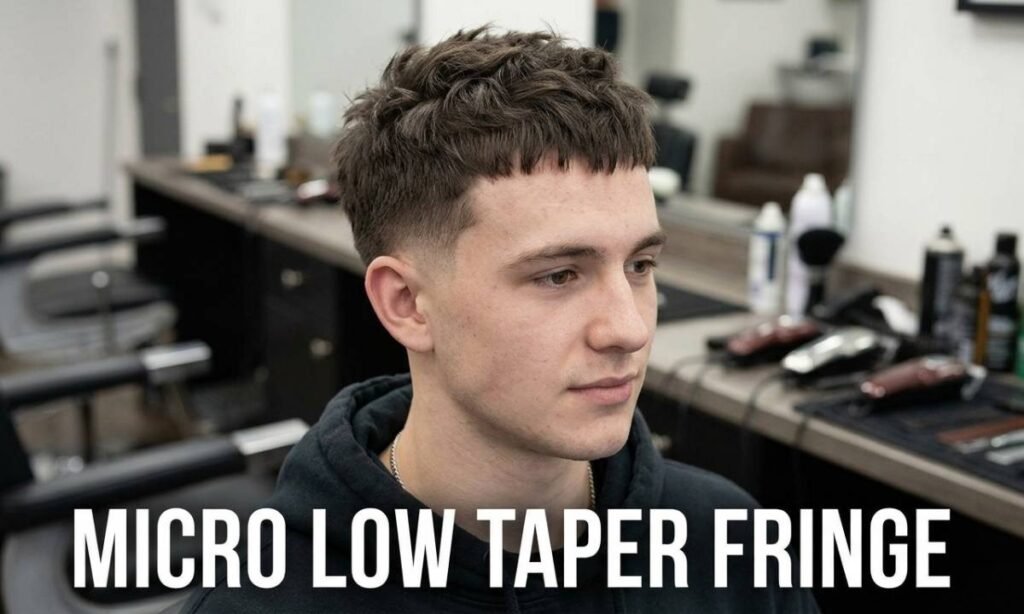
A very short fringe cut close to the hairline. It shows more forehead and suits those who like a bold, cropped look with almost no daily effort.
13. Fringe with a beard
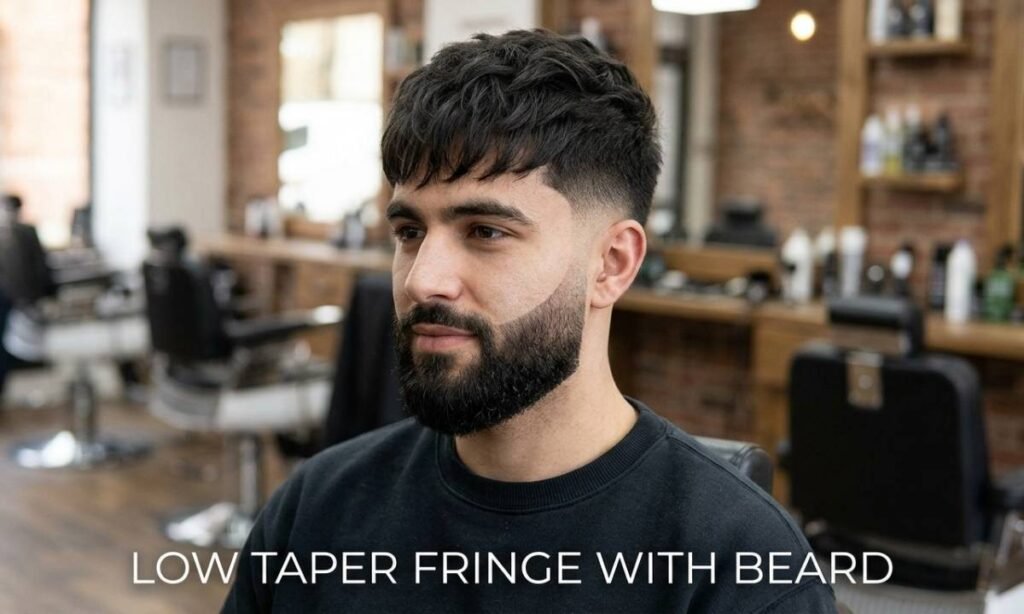
The low taper can blend into a short beard, so the sideburns and cheek line connect without a hard break. Ask for the taper and beard to be cut as one shape.
14. Fringe with a line-up
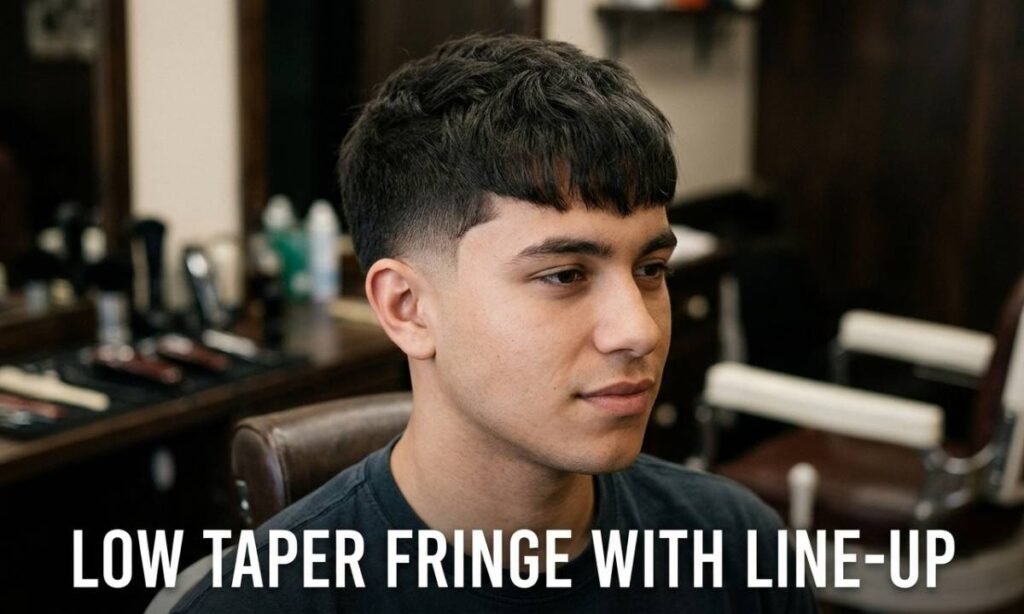
A sharp edge-up along the hairline and temples makes the fringe stand out. It gives a crisp finish, though it needs a touch-up every couple of weeks to stay clean.
15. Lifted fringe
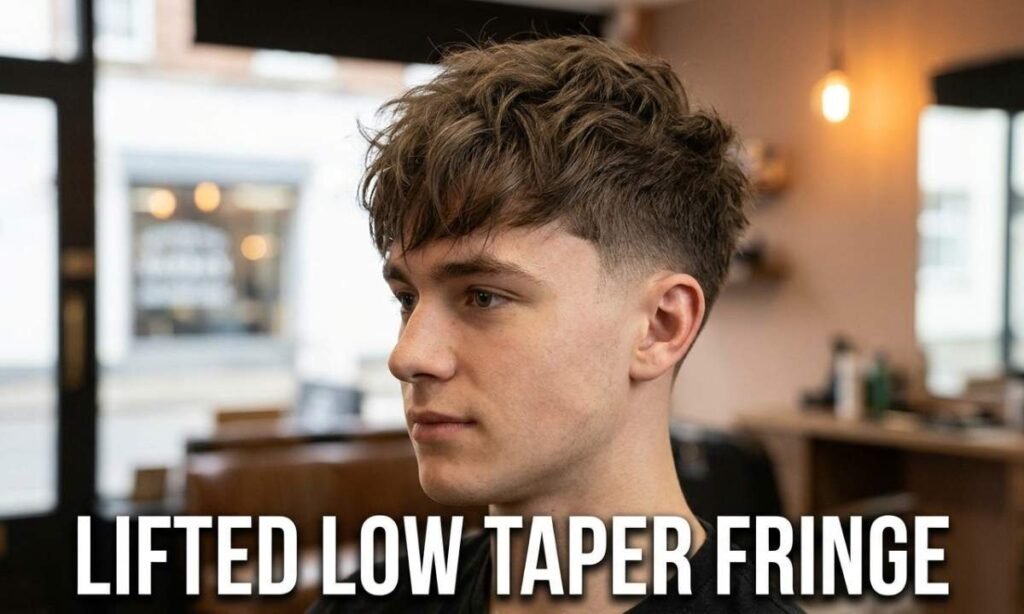
The front is blow dried up and slightly forward for volume. A light-hold product keeps it in place. This one suits round faces and anyone who wants extra height at the front.
16. Fringe with a hard part

A shaved or clipped part line adds a sharp detail to the side-swept fringe. It gives a structured look and pairs well with a smooth low taper.
17. Layered fringe
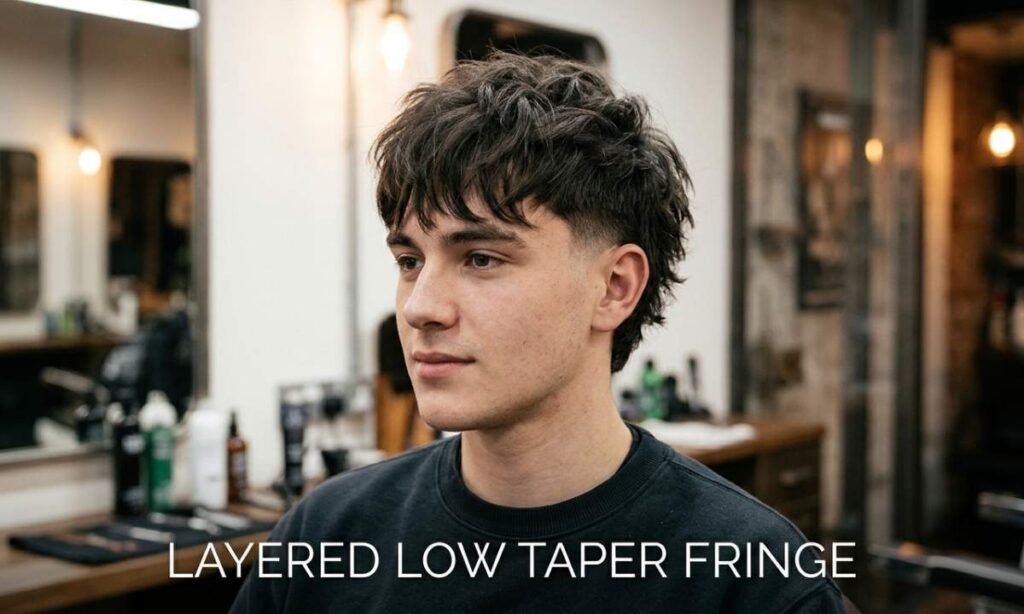
Soft layers on top let the fringe fall in light sections instead of one solid block. This adds movement and helps thick hair sit flatter and look lighter.
18. Spiky fringe
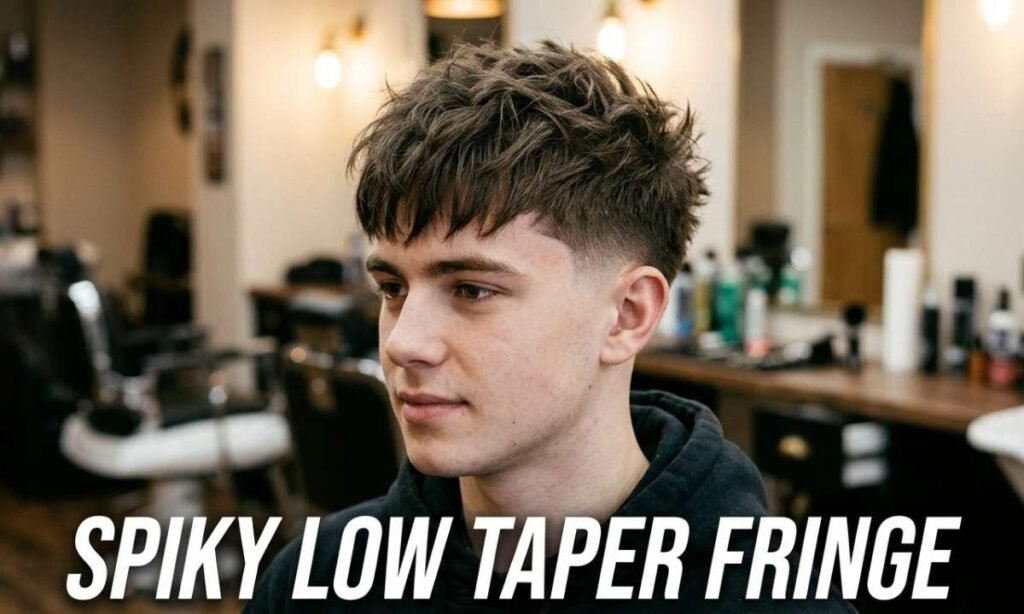
The front is styled up and forward into small points using paste or wax. It is a playful version of the cut, and the tapered sides keep it from looking too busy.
19. Fringe for thin hair
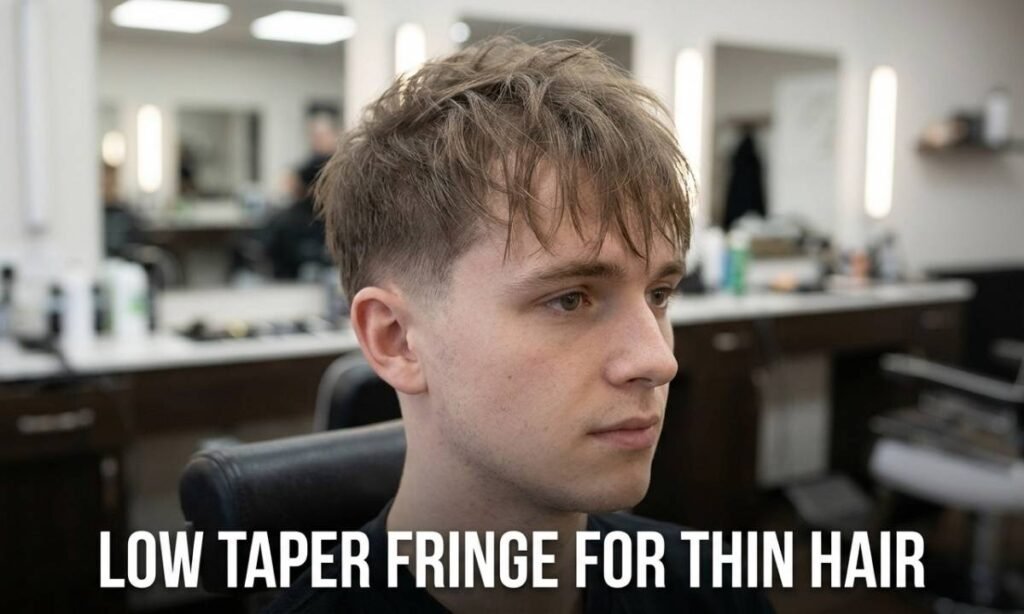
A shorter, lightly textured fringe makes fine hair look fuller. Avoid heavy products, which can weigh the hair down, and use a light texturizing spray for body.
20. Grown-out fringe
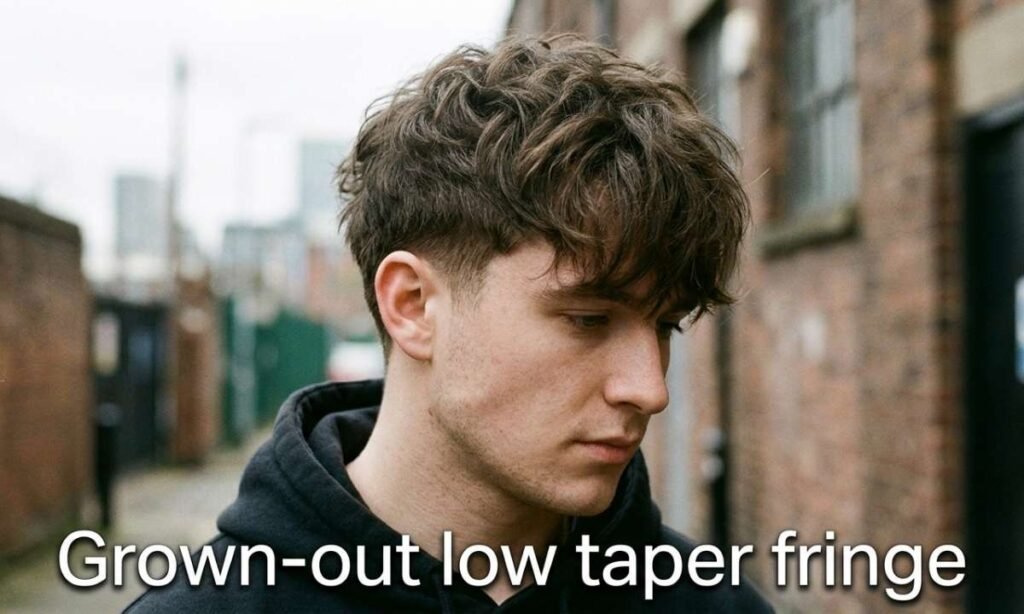
A longer, relaxed fringe that falls naturally across the forehead. The low taper helps this stage look intentional, because the sides stay neat as the top grows.
How long should your hair be?
For a fringe to sit forward, the hair on top needs to be long enough to reach your brow line when combed down. For many people that is roughly two to three inches, though growth patterns vary.
The sides are cut much shorter near the ears and neckline. Barbers usually use clipper guards for this part, and the number depends on how short you want the taper to go. Ask your barber to recommend a guard size for your head shape.
If your hair is too short for a fringe, you do not have to start over. Ask for a short crop style now, then grow the top for a couple of months and return for the full fringe.
In the barber’s chair: what to ask for and what to expect
A photo is the most reliable way to explain the cut. Use these steps to make the conversation clear and short.
- Show a photo of the fringe style you want, ideally from the front and side.
- Say “low taper” and point to where the short section should start.
- State how long you want the fringe to be, such as at the brow or just above it.
- Ask for texture on top, such as point cutting or thinning, if your hair is thick.
- Confirm the neckline shape, either natural, rounded, or squared.
You may hear a few terms from your barber. The “guard” is the clipper attachment that sets length. The “blend” is the smooth transition between short and long hair. The “weight line” is the visible edge where the length changes.
Expect the appointment to include clipper work on the sides, scissor work on top, and a cleanup around the neckline and ears. Most barbers will style the finished cut so you can see how it should look.
How to style it at home
Good styling takes about five minutes once you learn what your hair does. Follow these steps for a basic daily routine.
- Start with towel-dried hair, not soaking wet.
- Apply a pea-sized amount of product to your palms and rub it together.
- Work the product through the top, focusing on the fringe.
- Blow dry the hair forward and slightly down, using your fingers to shape it.
- Finish by separating the ends of the fringe with your fingertips.
Straight hair needs a light-hold product for control. Wavy hair does best with a sea salt spray and air drying. Curly hair needs a curl cream applied while damp, then gentle scrunching to define the pattern.
Best products
The right product depends on your hair type and the finish you want. Choose by type first, then by brand. Check ingredients and reviews before buying, since formulas change.
- Matte clay: Gives hold and a flat finish. Good for textured and messy fringes.
- Sea salt spray: Adds grip and body. Good for wavy hair and lived-in styles.
- Light cream: Adds softness with little hold. Good for fine hair and short crops.
- Pomade: Adds shine and control. Good for side-swept and lifted fringes.
- Curl cream: Defines curls and reduces frizz. Good for curly fringes.
Maintenance and upkeep
The low taper holds its shape longer than a skin fade because the short area is small. Many people book a trim every few weeks to keep the neckline and ears clean, though the right timing depends on how fast your hair grows.
The fringe tends to need attention sooner than the sides. Once it starts poking into your eyes or losing its shape, it is time for a trim. Ask your barber how often to return based on your growth rate.
Between visits, wash your hair regularly and use a lightweight conditioner on the fringe to keep it soft. A clean scalp helps the top sit properly, and a small amount of product is better than layering more each day.
When you grow the cut out, the low taper helps it look tidy. The sides become softer rather than shaggy, and the longer top can be restyled as a side-swept or pushed-back look.
Common mistakes to avoid
- Asking for the wrong taper height. A mid or high taper changes the whole look, so say “low” clearly and point to where it should start.
- Cutting the fringe too short. You cannot add length back, so ask for a longer fringe first and trim later.
- Using too much product. Heavy layers weigh the fringe down and make it look greasy.
- Skipping texture. Thick hair can look blocky without thinning or point cutting on top.
- Ignoring your growth pattern. A cowlick can push the fringe in the wrong direction, so ask your barber to cut with it.
Pros and cons
What works
The low taper fringe is easy to wear and easy to adjust. The short, clean sides make the cut look tidy, and the top can be styled several ways. It also grows out gracefully, so you can stretch the time between visits.
What to consider
The cut still needs regular neckline cleanups to stay sharp. The fringe can fall flat on very fine hair or fight a strong cowlick. You also need to grow the top long enough before you can get a full fringe.
How much does it cost?
The price depends on your location, the type of shop, and your barber’s experience. A barbershop usually charges less than a salon, and a busy city shop usually charges more than a small town one. Add-ons such as a beard trim or line-up can raise the total.
Prices vary too widely for one number to be reliable. Check your local barber’s price list or call ahead, and ask if the quote includes the taper, the fringe, and the styling together.
Frequently Asked Questions
Is a low taper fringe the same as a low fade fringe?
Not exactly. A taper shortens gradually and keeps more length at the sides, while a fade usually blends closer to the skin.
How long does hair need to be for a fringe?
The top should reach your brow line when combed forward, which is often around two to three inches.
Does a low taper fringe work on thin hair?
Yes. A shorter, lightly textured fringe adds the look of fullness, and light products keep the hair from looking flat.
How often should I get it cut?
Many people return every few weeks, but your growth speed and how sharp you want the neckline decide the timing.
What should I ask my barber for?
Bring a photo and ask for a low taper on the sides, plus a fringe at your preferred length with texture on top.
