


A mid taper fade is a haircut where the sides and back shorten gradually from the top length down to skin or a very short guard, with the blend starting around temple and ear level.
This guide covers how the cut works, how it compares with similar fades, who it suits, the best top styles, the exact words to use with your barber, and how to keep it sharp between visits.
What is a mid taper fade?
The mid taper fade sits between the subtle low taper and the dramatic high taper. The shortest section forms a clean horseshoe at mid-height, so the cut looks neat without removing as much hair as a high fade does.
Where does the taper begin, and what hair is removed?
The taper typically begins about an inch or two above the ear, roughly where the head starts to curve toward the temple. Hair below that line is cut closest, often with a zero guard or a foil shaver.
Removed hair includes the sideburn area and the nape, plus the sections around each ear. Everything above the taper line keeps length and blends upward, so the transition defines the finished look more than the bulk does.
Why can “mid taper fade” mean different things?
Barbers use the terms loosely. Some say taper when they mean a gradual length change with no skin showing, while others say fade when the sides reach bare skin. Many clients get a hybrid by accident.
Regional habits add confusion. In some shops a mid taper fade is a skin fade at mid-height, while elsewhere it keeps a short guard at the bottom. Naming the shortest length removes nearly all of the guesswork.
Mid taper fade vs similar haircuts
Mid taper fade vs mid fade
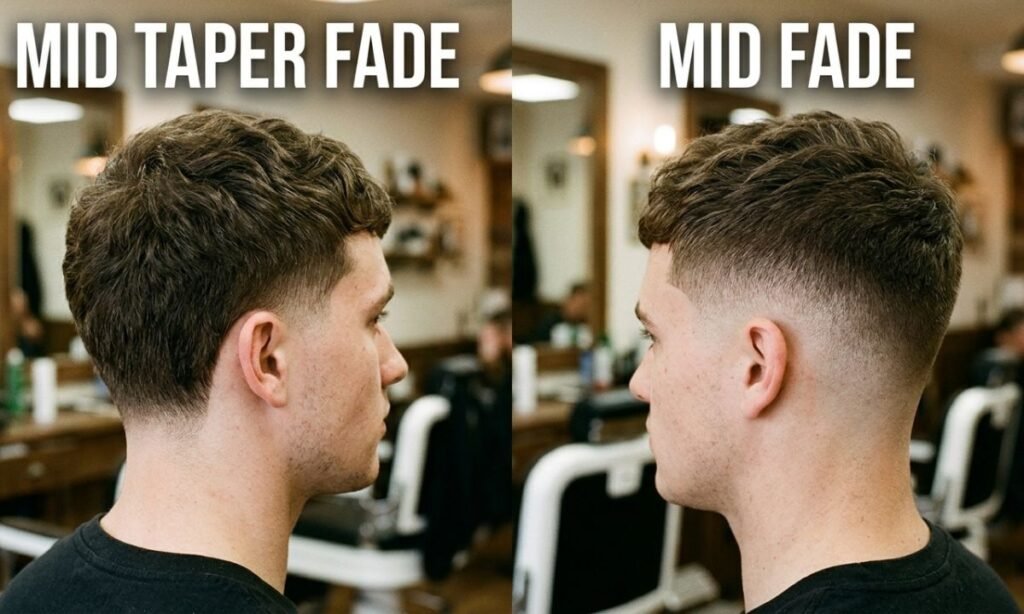
A mid fade usually drops to skin and shows a visible gradient, while a mid taper fade can stay slightly longer at the bottom. The taper reads cleaner and more conservative, while the fade reads sharper.
Mid taper vs low taper vs high taper
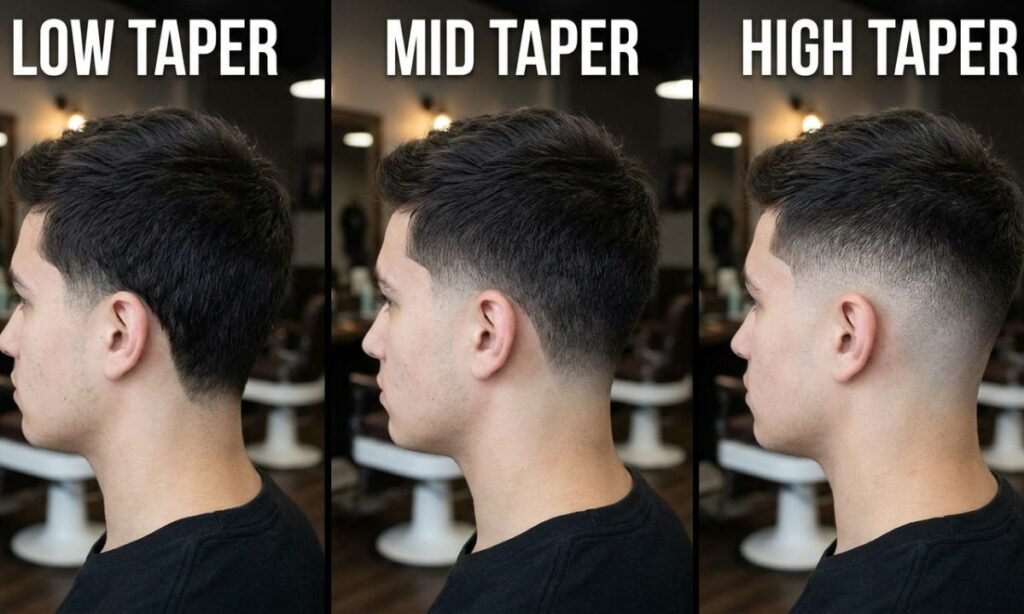
Placement is the main difference. A low taper starts near the ear’s base and removes little hair, a mid taper starts around the ear’s top, and a high taper begins near the temple and exposes much more of the head.
| Style | Where it starts | Contrast | Best for |
|---|---|---|---|
| Low taper | Near the ear’s base | Subtle | Conservative offices |
| Mid taper | Around the ear’s top | Moderate | Most people and settings |
| High taper | Near the temple | Strong | Bold, high-contrast looks |
Choose low for office-friendly subtlety, high for strong contrast, and mid when you want a clear shape that still looks polished at work. Mid is the safest pick if this is your very first fade.
Mid taper fade vs temple fade and classic taper
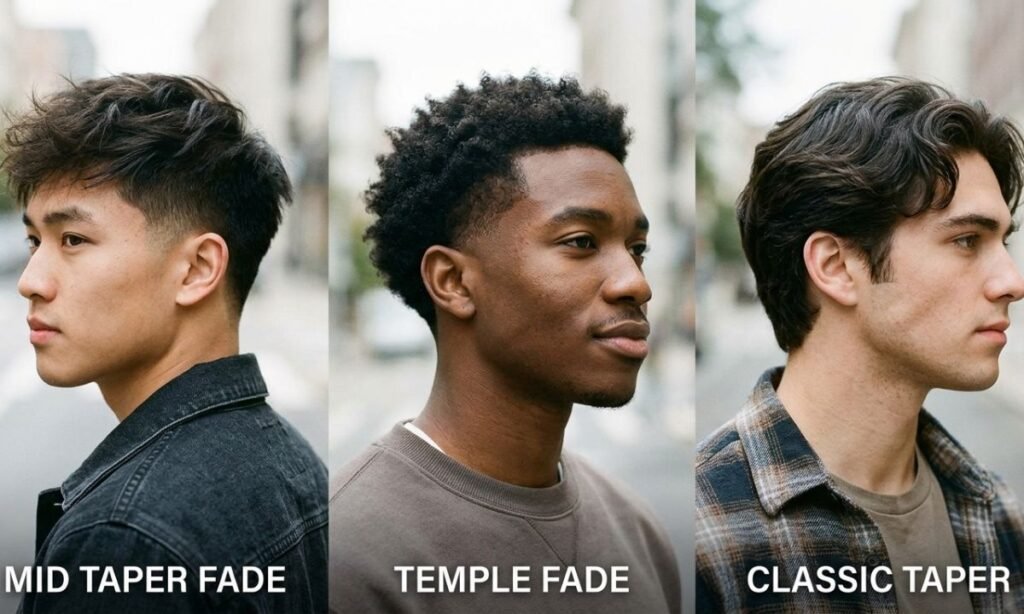
A temple fade, often called a temple taper, focuses only on the sideburns and nape, so the sides stay longer overall. A mid taper fade shortens the whole side panel, which makes it a bigger visual change.
A classic taper is the traditional scissor-cut version. It follows the same gradual idea but uses shears or clippers over comb and leaves more length. It suits conservative workplaces and anyone who wants no visible skin.
Is a mid taper fade right for you?
Hair type, density, and growth pattern
Most hair types take a mid taper well, but density changes the result. Thick hair benefits from the weight removed on the sides, while very fine hair can look sparse if the contrast is too strong.
Growth pattern matters too. A strong crown swirl or a low nape line can make the blend look uneven, so ask your barber to check both before choosing the starting height and the shortest guard length.
Face and head shape and the desired silhouette
The cut shapes your silhouette. A mid taper narrows the sides, which adds visual height and suits round or square faces. Oval faces handle almost any version, and long faces look best with a little more side length.
Head shape counts as well. Flat spots and bumps show more under clippers than under longer hair, so start with a number one guard if you are unsure. That slightly longer guard hides most of them.
Lifestyle, dress code, and upkeep tolerance
Be honest about upkeep. A mid taper fade looks best for about two weeks, and the sides grow out visibly by week three. If you cannot visit a barber that often, a classic taper ages more gracefully.
Dress code matters too. Most US offices and schools accept a mid taper fade, though some strict grooming policies, including military ones, limit how short the sides can go. Check the rules before choosing the bottom length.
Best mid taper fade styles by top shape and texture
Short and textured tops

Short textured tops, such as a crop or messy quiff, pair well with a mid taper because the contrast stays clean. Ask for one to two inches of top length, point-cut for movement, and style with matte clay.
The French crop is the shortest option, with a blunt fringe that sits forward. It needs almost no product and works well for thinning hair because the forward fringe covers the hairline and takes under a minute to style.
Medium and longer tops
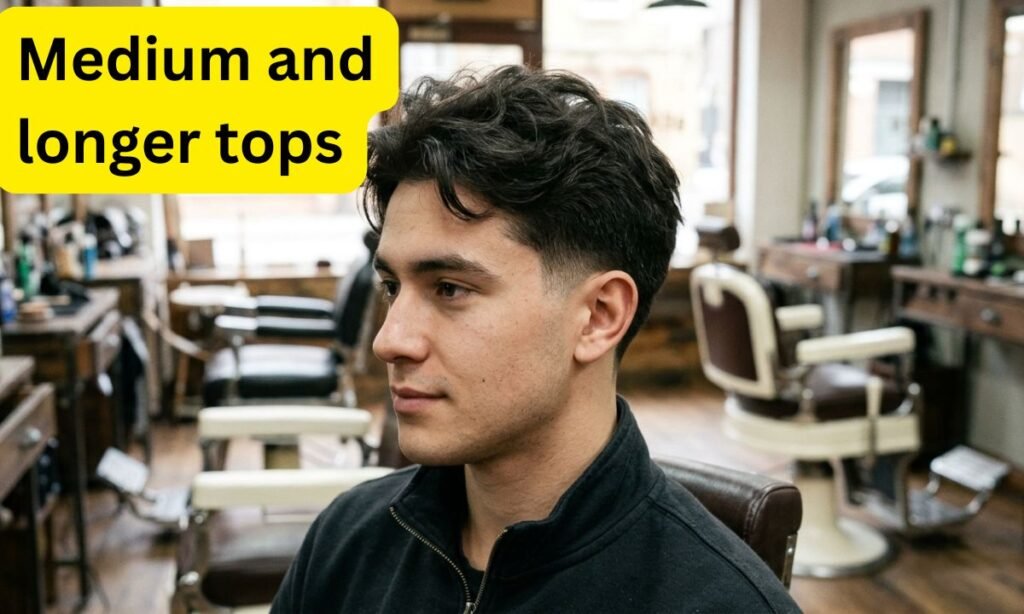
Medium tops, between three and five inches, suit the textured quiff and the side part. The mid taper gives these styles a structured base, so longer hair on top looks deliberate rather than merely overgrown.
Longer tops, such as a slick back or a long flow, need more gradual blending. Ask for a slower, longer transition so the sides do not look pinched beneath the extra weight sitting on top.
Curly, coily, and protective-style combinations
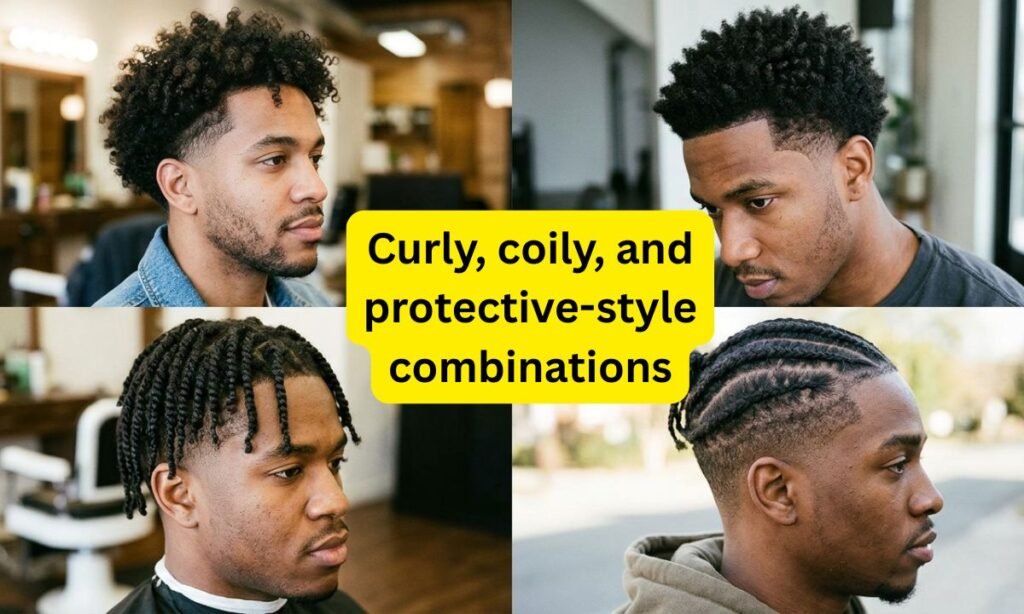
Curly and coily hair look striking with a mid taper because the defined sides frame the curls on top. Ask your barber to cut the top dry or lightly damp so length matches the curl pattern.
Popular combinations include a sponge-twist top and a taper with short locs or braids. In both cases the taper keeps the sides clean while the top carries the texture. Barbers with curly-hair experience handle these cuts best.
Finish options that change the look
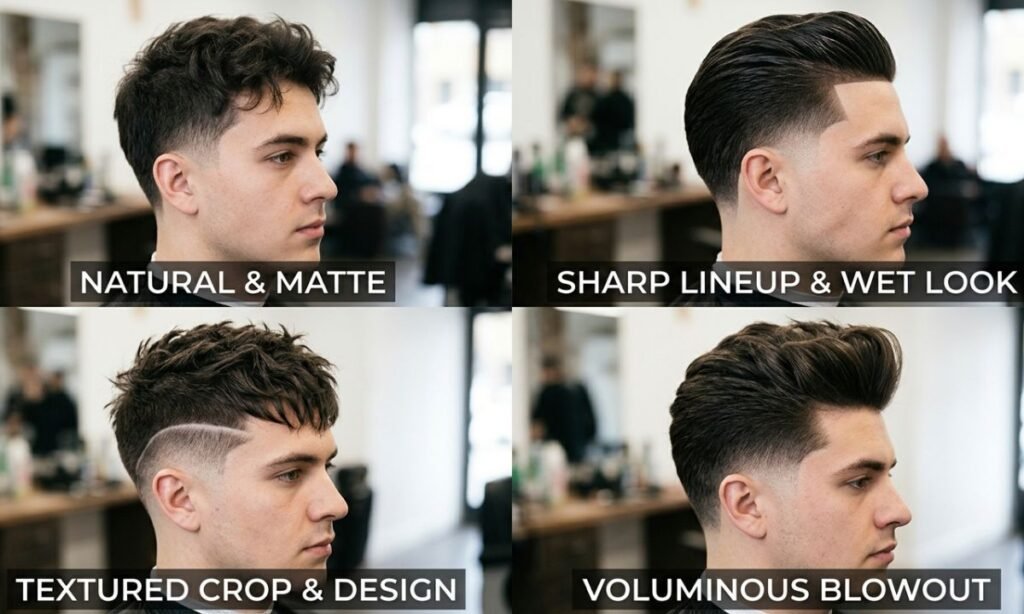
The finish changes the look more than most people expect, especially in photos and strong daylight. A skin finish gives the sharpest contrast, while a shadow finish keeps a faint stubble layer for a softer result.
Small details add polish. A shaved hard part or a lined edge-up adds definition, but each extra raises upkeep, so pick only one if you want a cut that grows out cleanly over three weeks.
How do you ask a barber for a mid taper fade?
Tell your barber three things: where the taper starts, how short the sides get, and how much length stays on top. Add a reference photo and you remove nearly every chance of an unwanted surprise.
Set the placement, shortest length, and amount of bulk
Start with placement: say “mid taper” and point to the spot above your ear where the blend should begin. Then name the shortest length at the bottom of the cut, such as skin or a number one guard.
Bulk is the third detail. Ask whether you want the sides tight, which looks sharper, or a little fuller, which looks softer and grows out less noticeably. Your hair density usually decides the best answer.
Specify the top length, texture, and transition
Give the top length in inches or with your fingers, and say whether you want it textured or smooth, and how you plan to style it. Barbers read finger measurements faster than vague words like “short” or “medium.”
Then describe the transition: ask for a gradual blend with no visible line between the taper and the top. If you prefer a faster change, mention that you want more contrast between the sides and the top.
Bring useful reference photos and confirm all three angles
Bring photos that show the cut from the front, side, and back, ideally on a hair type similar to yours. A photo of a different texture can mislead the barber about how the blend will behave.
Before the clippers start, confirm the plan by repeating it back: placement, shortest length, and top length. This takes ten seconds and catches most miscommunication. Speak up early, while the barber can still adjust the blend.
Use a concise barber-request script
A short script keeps the conversation fast and the result predictable. Read or paste this version and swap in your own numbers before you sit down, since most barbers appreciate clear instructions during busy hours.
I would like a mid taper fade. Start the taper about an inch above my ear, take the sides down to a number one guard, and keep them fairly tight. Leave two inches on top, textured, and blend it with no visible line. I will style it with matte clay.
Adjust the numbers to your own preferences. If you want skin at the bottom, say “skin fade finish” so the barber knows to use a foil shaver instead of a guard. Keep the top instruction in inches whenever possible.
How do you style and maintain a mid taper fade?
Maintain a mid taper fade by styling the top daily and booking a touch-up every two to three weeks. The sides lose their sharp contrast quickly, so regular visits matter more than any product you buy.
Daily styling by hair type and finish
Straight hair needs a light pomade or sea salt spray for texture, while thick wavy hair responds well to matte clay. Apply a pea-sized amount to towel-dried hair and shape the top with your fingers.
Curly and coily hair needs moisture instead of hold. Use a leave-in conditioner or curl cream on damp hair, define the curls with a brush or fingers, and let them air dry or diffuse on low heat.
A skin finish needs daily care too. A light, fragrance-free moisturizer on the shaved areas reduces dryness and flaking, and it keeps the contrast looking crisp instead of dull. Apply it after washing, since freshly shaved skin loses moisture quickly.
When to book a touch-up
Book every two weeks for a skin finish and every three weeks for a longer guard. Notice when the transition line softens or the neckline fuzzes up, because that is the signal the cut has lost its shape.
Fast growers and men with dark, dense hair see the fade fill in sooner, sometimes within ten days. Slower growers can stretch visits to four weeks, especially with a taper that keeps a longer bottom guard.
Safe at-home cleanup between appointments
Between visits, tidy only the neckline and the area around the ears, using a trimmer with no guard or a small foil shaver. Never try to recreate the fade itself, because the blend needs a steady hand.
Work on dry, clean skin under good light. Trim in the direction of growth with short strokes, and avoid going higher than the existing edge. Clean the blade before and after to reduce irritation and infection risk.
What problems or edge cases should you consider?
A mid taper fade fits most people, but skin sensitivity and hair-growth quirks can change how the barber should cut it. Mention any concerns before the clippers start so the plan fits your actual head.
Razor bumps, neck irritation, and scalp sensitivity
Razor bumps, or pseudofolliculitis barbae, appear when cut hair curls back into the skin, mostly on the neck and nape. Skin fades and foil shavers raise the risk, especially for people with tightly curled hair.
If you get bumps, ask for a short guard finish instead of bare skin, shave in the direction of growth, and use a warm towel before and a soothing aftershave afterward. Persistent or painful bumps deserve a dermatologist visit.
Sensitive scalps can react to hot clipper blades and fragranced products. Ask the barber to use a cool blade and clean clippers, and switch to fragrance-free aftercare if redness or itching shows up within a day.
Receding hairlines, thinning areas, cowlicks, and uneven growth
A mid taper fade can flatter a receding hairline because tight sides draw attention away from the front. Keep the top slightly longer and brushed forward, and skip a harsh edge-up that would highlight thinning at the temples.
Thinning crowns work best with a shorter top and a longer bottom guard, which reduces contrast between hair and scalp. Cowlicks need a longer top at that spot, since cutting too short makes them stand up.
Uneven growth, such as a double crown or patchy sideburns, is common and manageable. Ask your barber to blend slowly around the problem area and to start the taper a little higher or lower to hide it.
Which alternatives should you choose instead?
Choose a low taper if you want subtle neatness, or a high fade if you want stronger contrast. A classic scissor taper suits anyone who dislikes visible clipper lines and wants the lowest upkeep of all.
Other options include a burst fade for curly tops and a drop fade for a curved back line. Skip fades altogether with a longer natural crop if you prefer minimal upkeep and a softer outline.
Whichever you pick, a good barber consult matters more than the name of the cut itself. Bring photos and state your numbers, then ask what will grow out well for your hair type and schedule.
Frequently asked questions
What is the difference between a mid taper and a mid fade?
A mid taper keeps a short guard or faint stubble at the bottom, while a mid fade usually blends down to bare skin. Both start at the same height, so the main difference is how much contrast shows.
How often should you get a mid taper fade touched up?
Every two to three weeks suits most people. Skin finishes look best at two weeks, while longer guards can last four. Fast growers with dense hair may need a visit sooner. Watch the neckline, since it softens first.
Does a mid taper fade work on thin hair?
Yes, with adjustments. Keep the top slightly longer and choose a longer bottom guard to reduce contrast. A French crop or forward-brushed texture helps hide thinning areas while the tapered sides keep the cut tidy.
Is a mid taper fade professional?
Yes. It is widely seen as business-appropriate because the blend looks controlled and the top can stay conservative. A skin finish is more casual, so choose a short guard if your workplace has strict grooming rules.
Can you get a mid taper fade with long hair on top?
Yes. Longer tops need a slower, more gradual blend so the sides do not look pinched. Tell your barber the top length you want to keep, and ask for the taper to start at mid-ear height.
Conclusion
A mid taper fade works because it balances neatness and length, suiting most hair types and workplaces. Success depends on clear instructions, so state where the taper starts and how short the sides go, plus the top length.
Use the barber script and bring photos, then book touch-ups on a steady schedule. If the first cut feels off, bring the same photos back and ask for one small adjustment, such as a slightly higher or lower start point.
